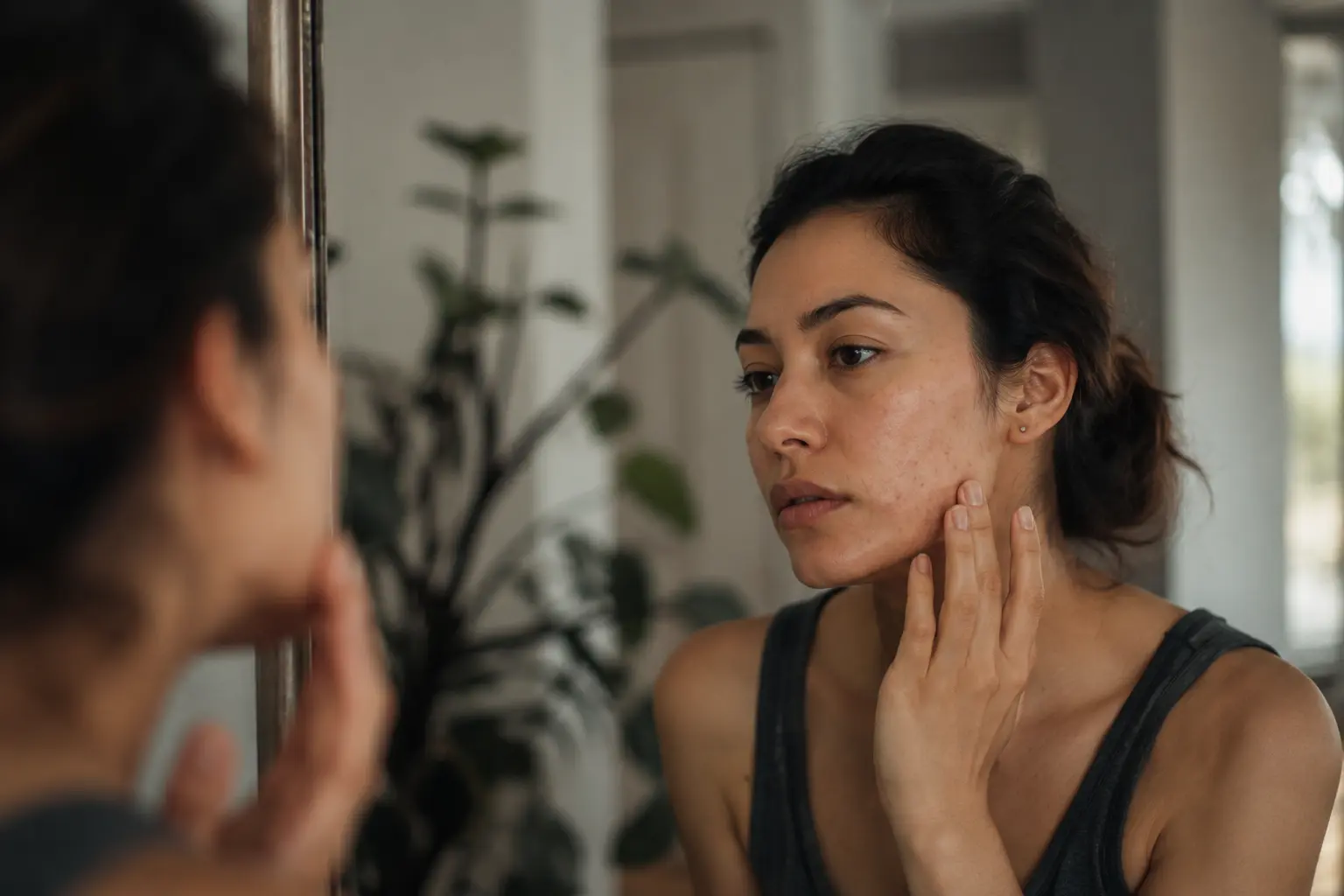
Your skin used to be predictable, and now hormonal skin changes are throwing everything off balance, leaving you frustrated and searching for answers that actually make sense.
Identifying hormonal skin changes
Hormonal fluctuations during your 20s and 30s can manifest in ways that feel sudden and confusing. You might wake up with a cluster of breakouts along your jawline that weren’t there yesterday, or notice your skin has shifted from balanced to oily within weeks. These changes happen because hormones like estrogen and testosterone directly influence sebum production, skin cell turnover, and inflammation levels. The key is learning to distinguish between hormonal skin changes and temporary reactions to products or weather. Start by tracking patterns: do breakouts appear around the same time each month? Does your skin feel congested in specific zones like the chin, jawline, or forehead? These patterns are your body’s way of signaling hormonal shifts. Some people experience increased oiliness across the T-zone while others develop unexpected dryness and sensitivity. Understanding your unique pattern helps you respond with the right approach rather than guessing.
- Track breakout timing and location for at least two months to identify hormonal patterns.
- Notice if oiliness or dryness correlates with your menstrual cycle or stress levels.
- Document which products or ingredients trigger reactions versus which ones calm your skin.
- Schedule a dermatology appointment if skin issues persist beyond three months despite consistent care.
Skincare routine adjustments
Once you recognize hormonal skin changes, your skincare routine needs to adapt rather than stay static. Non-comedogenic products become essential because they won’t clog pores that are already prone to congestion from hormonal shifts. Salicylic acid works well for oily, breakout-prone skin by gently exfoliating and unclogging pores without stripping moisture. If your hormonal changes bring dryness and sensitivity, hyaluronic acid becomes your ally, drawing moisture into the skin and supporting the barrier. The mistake many people make is using the same routine year-round or switching products too frequently. Instead, establish a baseline routine and adjust specific steps based on what your skin needs each month. For example, you might use a gentle cleanser daily, add a targeted treatment with salicylic acid three times weekly during high-breakout phases, and switch to a hydrating serum during drier periods. Consistency matters more than complexity. A simple routine you actually follow beats an elaborate one you abandon after two weeks.
📘 Fix your day in under 2 minuteschoose where to begin:
Balancing internal factors
Hormonal skin changes don’t exist in isolation from the rest of your body and lifestyle. What you eat, how much you move, your stress levels, and your sleep quality all influence hormone regulation and skin health. A nutrient-rich diet supports hormone balance by providing the vitamins and minerals your body needs to regulate estrogen and other hormones effectively. Foods rich in omega-3 fatty acids, antioxidants, and B vitamins help reduce inflammation that shows up as breakouts or sensitivity. Regular exercise improves circulation, which delivers oxygen and nutrients to skin cells while helping your body process hormones more efficiently. Stress management is equally important because cortisol spikes trigger sebum production and inflammation, worsening hormonal breakouts. Even 10 minutes of daily breathing exercises, meditation, or a short walk can reduce cortisol levels. Sleep is where your body repairs and regenerates, including skin cells. Seven to nine hours nightly allows your hormones to regulate properly and gives your skin time to heal from daily stress. These internal factors work together to either amplify or reduce hormonal skin changes.
Professional treatment options
When lifestyle adjustments and skincare routines aren’t enough to manage hormonal skin changes, dermatologists have several evidence-based treatments available. Prescription-strength retinoids increase cell turnover and reduce breakout severity by normalizing how skin cells shed. Oral medications like spironolactone can help regulate androgen hormones that trigger excess sebum production, making it particularly effective for hormonal acne. Chemical peels use controlled acids to remove damaged outer layers, reducing post-breakout marks and evening skin texture. Laser therapy targets inflammation and bacteria while stimulating collagen production, improving both active breakouts and scarring. Some people benefit from hormonal birth control, which stabilizes estrogen and progesterone levels, reducing hormonal fluctuations that trigger skin changes. The right treatment depends on your specific skin concerns, medical history, and how severe your hormonal skin changes are. A dermatologist can assess your situation and recommend a personalized plan, sometimes combining multiple approaches for better results. Professional guidance ensures you’re using treatments safely and effectively rather than experimenting on your own.
Consistency and patience
Managing hormonal skin changes is a marathon, not a sprint, and this reality frustrates many people expecting overnight results. Most skincare treatments require four to twelve weeks of consistent use before you see meaningful improvement because skin cells have a natural turnover cycle. Your body also needs time to adapt to new routines, dietary changes, or stress management practices. During this waiting period, it’s easy to abandon what’s working because you don’t see results fast enough. Instead, commit to a timeline: choose your approach, follow it consistently for at least eight weeks, and document changes with photos taken in the same lighting. This removes emotion from the equation and helps you see subtle improvements you might otherwise miss. Hormonal skin changes will likely fluctuate throughout your 20s and 30s as your body continues to evolve, so flexibility matters too. What works perfectly one year might need adjustment later. Building a sustainable approach you can maintain long-term, combined with professional support when needed, sets you up for lasting skin health rather than temporary fixes.
Managing hormonal skin changes in your 20s and 30s requires recognizing your unique patterns, adjusting your skincare routine to match your skin’s current needs, supporting hormone balance through nutrition and lifestyle, exploring professional treatments when necessary, and committing to consistency over weeks and months rather than days.
How long does it take to see improvements in hormonal skin changes?
Most people notice visible improvements within four to twelve weeks of consistent skincare adjustments and lifestyle changes. The timeline varies based on how severe your hormonal skin changes are, how closely you follow your new routine, and whether you’re also making internal adjustments like stress management or dietary changes. Professional treatments like laser therapy or chemical peels may show results faster, sometimes within two to four weeks. A dermatologist can give you a more specific timeline after assessing your individual situation.
Can hormonal skin changes in your 20s and 30s lead to long-term skin issues?
Hormonal skin changes during this period are temporary and normal, but neglecting them can lead to lasting concerns like post-breakout scarring, persistent hyperpigmentation, or a compromised skin barrier. The good news is that addressing these changes early with appropriate skincare, lifestyle adjustments, and professional treatment when needed prevents most long-term damage. Starting preventive care now sets you up for healthier skin in your 40s and beyond.
Disclaimer: This article is for informational purposes only and is not a substitute for professional medical advice. Always consult a healthcare professional for personal guidance.
This guide has been prepared and reviewed by the GlobalHealthBeacon editorial team and reflects current medical research as of 2026. It provides structured, evidence-based information to support informed health decisions.

