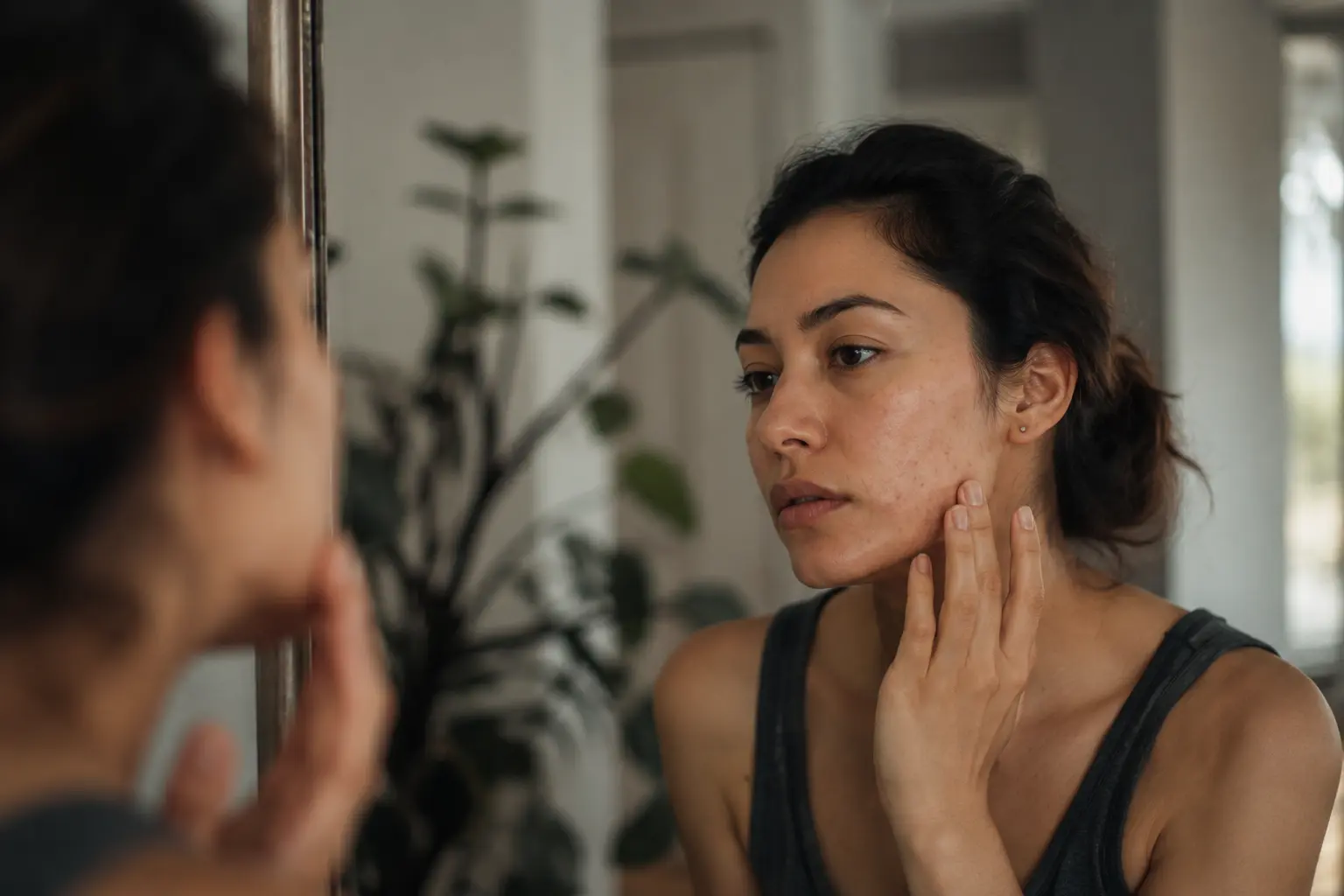
Your skin feels like a stranger during certain times of the month or year, breaking out one week and flaking the next, and you’re exhausted trying to figure out what’s actually happening with hormonal skin changes.
The science behind hormonal skin changes
Your skin is essentially a living organ that responds to the chemical messengers circulating through your body. When hormonal fluctuations occur, whether during your menstrual cycle, pregnancy, perimenopause, or menopause, your skin’s behavior shifts dramatically. Increased androgen levels, for instance, stimulate your sebaceous glands to produce more oil, which is why many women notice breakouts during specific phases of their cycle. Conversely, declining estrogen levels reduce the skin’s natural ability to retain moisture and produce collagen, the protein responsible for firmness and elasticity. Think of estrogen as your skin’s moisture guardian and collagen factory manager. When estrogen drops, both operations slow down significantly. A woman in her forties experiencing perimenopause might suddenly notice her previously balanced skin becoming dry and sensitive, while simultaneously dealing with hormonal acne around her jawline. This dual challenge happens because different hormones affect different skin functions simultaneously, creating a complex cascade of changes that can feel unpredictable and frustrating.
Effects of hormones on skin texture
Hormonal shifts don’t just cause occasional breakouts; they fundamentally alter your skin’s structural integrity and appearance. When estrogen declines, the dermis (your skin’s deeper layer) becomes thinner, which is why many women notice sagging, fine lines, and a loss of that plump, youthful quality they once had. The skin also loses its ability to maintain hydration effectively, leading to a dull, papery texture. On the flip side, elevated androgens trigger sebum overproduction, which clogs pores and creates an environment where acne-causing bacteria thrive. A woman might experience this as painful cystic acne along her lower face and neck, areas particularly sensitive to hormonal fluctuations. Some women also notice changes in skin tone, with hyperpigmentation or redness becoming more pronounced. The texture changes can be subtle or dramatic. One woman might describe her skin as feeling like sandpaper, while another notices her pores becoming visibly enlarged. These aren’t cosmetic concerns alone; they reflect real biological changes in how your skin functions, produces oils, retains water, and repairs itself.
Maintaining your skin barrier: a practical approach
Your skin barrier is like a brick wall, with dead skin cells as bricks and lipids (fats) as mortar. When hormones fluctuate, this wall becomes compromised, allowing moisture to escape and irritants to penetrate. Rebuilding it requires a methodical, gentle approach. Start with cleansing: harsh soaps and hot water strip away the protective lipid layer, making everything worse. A creamy, pH-balanced cleanser removes dirt and makeup without disrupting your barrier. Many women find that switching from a foaming cleanser to a milk or balm cleanser during hormonal flare-ups makes an immediate difference in how their skin feels. Next, hydration is non-negotiable. Products containing ceramides (which mimic your skin’s natural lipids) and hyaluronic acid (which holds up to 1000 times its weight in water) actively repair the barrier. Apply these to damp skin to lock in moisture. Sun protection is equally critical because UV damage accelerates collagen breakdown and worsens hormonal skin changes. A broad-spectrum SPF 30 or higher should be worn daily, even on cloudy days. Consider this scenario: a woman in her early forties notices her skin becoming increasingly reactive and dry. She switches to a gentle cleanser, adds a ceramide-rich moisturizer, and commits to daily sunscreen. Within three weeks, her skin feels less tight, looks less irritated, and her makeup applies more smoothly. This isn’t magic; it’s barrier repair in action.
- Use a gentle, creamy cleanser twice daily, avoiding hot water and vigorous scrubbing.
- Apply a hydrating moisturizer containing ceramides or hyaluronic acid to damp skin morning and night.
- Wear a broad-spectrum sunscreen with at least SPF 30 every single day, reapplying every two hours if outdoors.
🔬 Science-backed benefits in 2 minuteschoose where to begin:
Managing hormonal acne and dryness
Hormonal acne and dryness often coexist, creating a frustrating paradox where your skin is simultaneously oily and dehydrated. This happens because hormones trigger oil production while simultaneously compromising your barrier’s ability to retain moisture. For acne-prone areas, targeted ingredients like salicylic acid (a beta-hydroxy acid that penetrates oily pores) or benzoyl peroxide (which reduces acne bacteria) can help, but they must be used carefully to avoid over-drying. Start with low concentrations and use them only on affected areas, not your entire face. Many women find that using salicylic acid two to three times weekly works better than daily use, which can trigger rebound oiliness. For dryness, niacinamide (which strengthens your barrier and regulates sebum) and squalane (a lightweight oil that mimics skin’s natural sebum) are game-changers. A woman dealing with hormonal acne along her jawline while her cheeks feel parched might use a gentle salicylic acid treatment on her chin and jaw three times weekly, then layer a niacinamide serum and squalane oil over her entire face. This targeted approach addresses both concerns without creating new problems. Avoid the common mistake of using multiple acne treatments simultaneously, which can severely damage your barrier and worsen inflammation.
Diet and lifestyle tips for healthy skin
What you consume directly influences your skin’s hormonal response and repair capacity. Antioxidants like vitamins C and E neutralize free radicals that accelerate skin aging, while omega-3 fatty acids (found in fatty fish, flaxseeds, and walnuts) reduce inflammation and support your skin barrier’s lipid structure. Vitamin A promotes cell turnover and collagen production. A woman experiencing hormonal skin changes might notice improvement by increasing her intake of salmon, leafy greens, berries, and nuts. Hydration matters too; drinking adequate water supports your skin’s ability to maintain moisture and flush out toxins. Beyond diet, stress management is crucial because cortisol (your stress hormone) can trigger or worsen hormonal acne and inflammation. Even 10 minutes of daily meditation, yoga, or walking can reduce cortisol levels. Sleep is equally important; during deep sleep, your body increases blood flow to your skin and rebuilds collagen. A woman who consistently gets seven to nine hours of sleep often notices her skin looks clearer, plumper, and more resilient. Conversely, poor sleep increases cortisol and impairs your skin’s natural repair processes. Consider this: a woman struggling with hormonal breakouts adds omega-3 rich foods to her diet, starts a gentle yoga practice three times weekly, and prioritizes sleep. Combined with her skincare routine, these lifestyle shifts often produce visible improvements within four to six weeks.
Seeking professional advice
While self-care is powerful, persistent or severe hormonal skin changes warrant professional evaluation. A dermatologist can distinguish between hormonal acne, rosacea, eczema, and other conditions that might look similar but require different approaches. They can also assess whether your skin changes correlate with underlying hormonal imbalances that might benefit from additional investigation or treatment. Some women find that addressing hormonal acne requires prescription-strength treatments like topical retinoids or oral medications, which a dermatologist can prescribe based on your specific situation. Others discover that their skin concerns improve dramatically once they address hormonal imbalances with their gynecologist or primary care provider. A woman in her late thirties with sudden, severe hormonal acne might benefit from blood work to check hormone levels, thyroid function, and other factors. A dermatologist can also recommend professional treatments like chemical peels or laser therapy if needed, and create a personalized skincare routine tailored to your skin type and concerns. Don’t hesitate to seek professional guidance; hormonal skin changes are common, but your specific situation is unique and deserves expert assessment.
Hormonal skin changes are a natural response to fluctuating hormones, but understanding the biology behind them empowers you to respond effectively. By implementing a barrier-focused skincare routine, addressing both acne and dryness with targeted ingredients, supporting your skin through diet and lifestyle, and seeking professional guidance when needed, you can navigate these transitions with confidence and resilience.
Can hormonal skin changes be reversed?
While hormonal skin changes cannot be completely reversed, proactive skincare, lifestyle adjustments, and professional guidance can effectively manage their effects and minimize visible signs. Many women see significant improvement in skin texture, clarity, and resilience within weeks of implementing targeted strategies.
Are hormonal skin changes permanent?
Hormonal skin changes are often temporary and fluctuate with your hormonal cycles, but some changes may persist depending on your age and life stage. With consistent skincare, appropriate professional treatment when needed, and lifestyle support, you can mitigate their impact and maintain healthy, resilient skin throughout hormonal transitions.
Others also read:
Disclaimer: This article is for informational purposes only and is not a substitute for professional medical advice. Always consult a healthcare professional for personal guidance.
This article has been prepared and reviewed by the GlobalHealthBeacon editorial team and is based on current medical research and published scientific literature available in 2026. It provides structured, evidence-based information to support informed health decisions.

