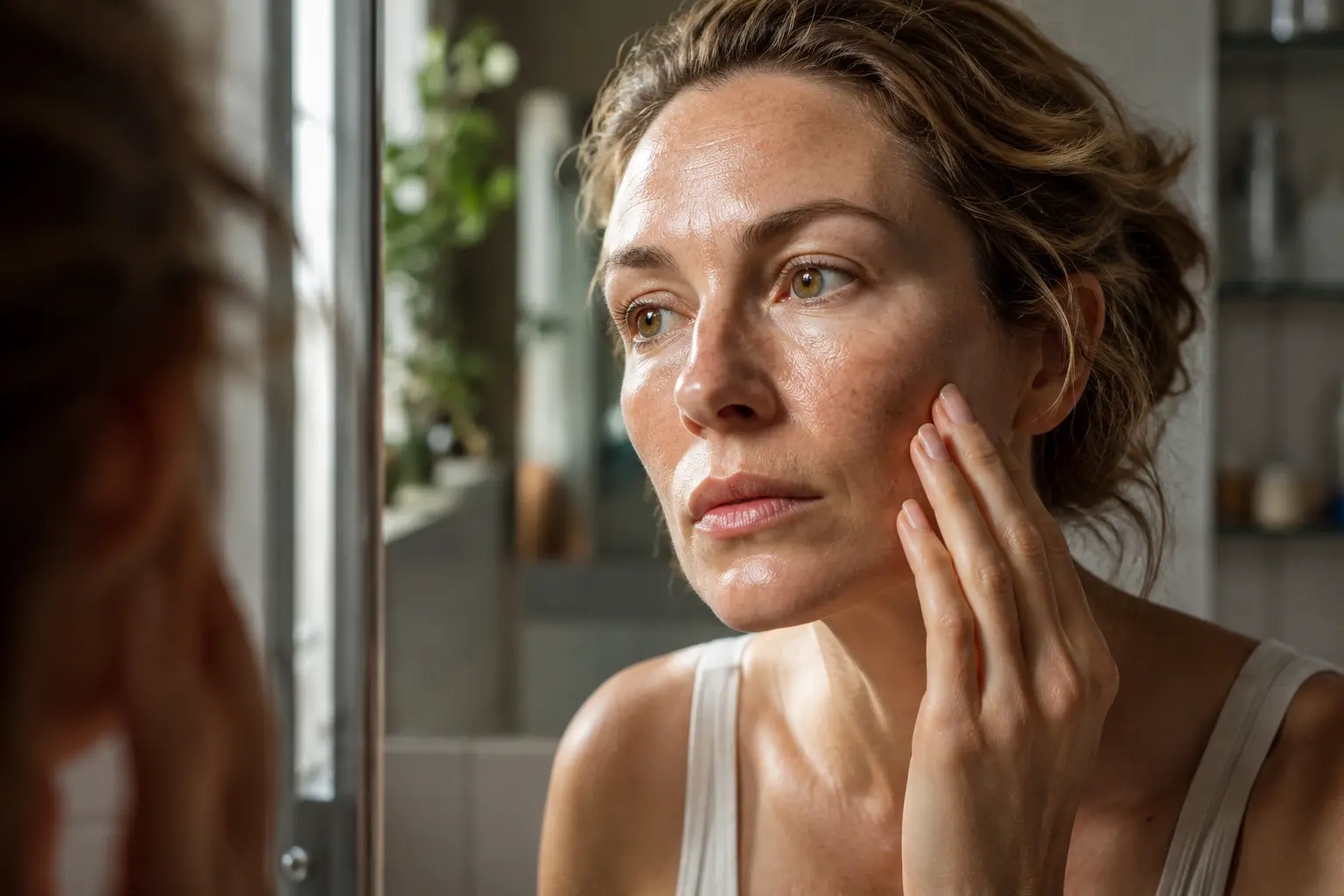
Those brown spots, leathery patches, and stubborn wrinkles staring back at you in the mirror aren’t permanent – your sun damage repair routine starts right now with proven steps that actually work.
Understanding sun damage repair routine
Sun damage accumulates over decades, layer by layer. Your skin cells have been exposed to UV rays countless times, breaking down collagen and creating those telltale spots and texture changes you see today. To effectively repair this damage, start with gentle exfoliation two to three times weekly to remove dead skin cells that sit on the surface and block new skin from showing through. Follow up with a vitamin C serum in the morning to boost collagen production and fade dark spots over time. Think of it like this: if your skin is a garden that’s been neglected, exfoliation clears away the dead leaves, and vitamin C plants new seeds for growth. Most seniors notice visible improvement within four to six weeks of consistent use. The key is patience and regularity, not aggressive scrubbing that irritates sensitive skin.
- Use a broad-spectrum sunscreen daily to prevent further damage.
- Incorporate antioxidants like green tea or aloe vera into your skincare routine for added protection.
- Consider laser treatments or chemical peels for more severe sun damage.
Choosing the right skincare products
Walking down the skincare aisle can feel overwhelming when you don’t know what actually works. Focus on three key ingredients: niacinamide strengthens your skin barrier and reduces redness, hyaluronic acid plumps fine lines by holding moisture deep in the skin, and retinol accelerates cell turnover to reveal fresher skin underneath. Look for products labeled anti-aging or skin brightening, but read the ingredient list first. A product doesn’t need to be expensive to be effective. Many drugstore brands contain the same active ingredients as luxury lines. Start with one new product every two weeks to avoid irritation and to identify what your skin actually responds to. For example, if you introduce a retinol and a vitamin C serum simultaneously, you won’t know which one caused any sensitivity. Seniors with sensitive skin should begin with lower concentrations and gradually increase strength as tolerance builds.
📘 Fix your day in under 2 minuteschoose where to begin:
Healthy lifestyle habits for sun damage repair
Your skin repairs itself from the inside out, which means what you eat and drink matters as much as what you apply topically. Staying hydrated helps your skin maintain elasticity and flush out toxins, so aim for eight glasses of water daily. Eat a diet rich in antioxidants like berries, leafy greens, and fatty fish that contain omega-3s to support collagen production. Avoid excessive sun exposure, especially between 10 a.m. and 4 p.m. when UV rays are strongest. If you smoke, quitting is one of the single most powerful things you can do for your skin because smoking accelerates aging by constricting blood vessels and depleting collagen. A 65-year-old who quit smoking five years ago will have noticeably better skin texture and tone than a 65-year-old who continues smoking. Sleep quality also impacts repair, as your body produces growth hormone during deep sleep that helps regenerate skin cells. Aim for seven to nine hours nightly.
Professional treatments for sun damage repair
Sometimes at-home care reaches its limits, and professional treatments deliver faster, more dramatic results. A dermatologist can assess your specific damage and recommend the right approach. Microdermabrasion uses tiny crystals to physically exfoliate the outer layers, revealing smoother skin beneath and working well for mild discoloration. Chemical peels use acids to dissolve damaged skin layers, with varying strengths from light to deep depending on severity. IPL (intense pulsed light) therapy targets pigment in brown spots and broken capillaries, typically requiring three to six sessions spaced three weeks apart. Laser resurfacing removes damaged skin more aggressively and produces longer-lasting results but requires downtime. Most seniors see the best outcomes combining professional treatments with a solid at-home routine. For instance, you might get one IPL session quarterly while using retinol and sunscreen daily at home. Costs vary widely, so discuss investment and realistic timelines with your dermatologist before committing.
Maintaining your skin’s health post-repair
Once you’ve invested time and possibly money into repairing sun damage, protecting your progress becomes essential. Continue using sunscreen daily, even on cloudy days, because UV rays penetrate clouds. Moisturize regularly to maintain the barrier function that keeps skin plump and resilient. Schedule annual skin checks with a dermatologist to monitor sun spots or moles for any changes in size, color, or shape, which can signal skin cancer. Keep a simple photo record of problem areas so you notice subtle changes over time. Your repair routine doesn’t end after visible improvement appears, it becomes your new baseline. Think of it like dental care: you don’t brush your teeth once and expect them to stay clean forever. The same applies to sun-damaged skin. Consistency over months and years is what keeps results looking fresh. Many seniors find that once they see improvement, maintaining the routine feels worthwhile because they finally see their skin looking the way they want.
Gently exfoliate, use vitamin C serum, and wear sunscreen daily to repair sun damage naturally. Incorporate antioxidants, consider professional treatments, and adopt healthy habits for long-term skin health.
Are natural remedies effective for repairing sun damage?
Natural remedies like aloe vera or coconut oil can soothe sunburn but may not fully repair sun damage. Consider incorporating medical-grade products or professional treatments for more significant results.
Can sun damage be reversed completely?
While it’s possible to improve sun damage and restore skin health with consistent treatment and care, complete reversal may depend on the severity of the damage. Consult a dermatologist for personalized advice.
Others also read:
Disclaimer: This article is for informational purposes only and is not a substitute for professional medical advice. Always consult a healthcare professional for personal guidance.
This guide has been prepared and reviewed by the GlobalHealthBeacon editorial team and reflects current medical research as of 2026. It provides structured, evidence-based information to support informed health decisions.
