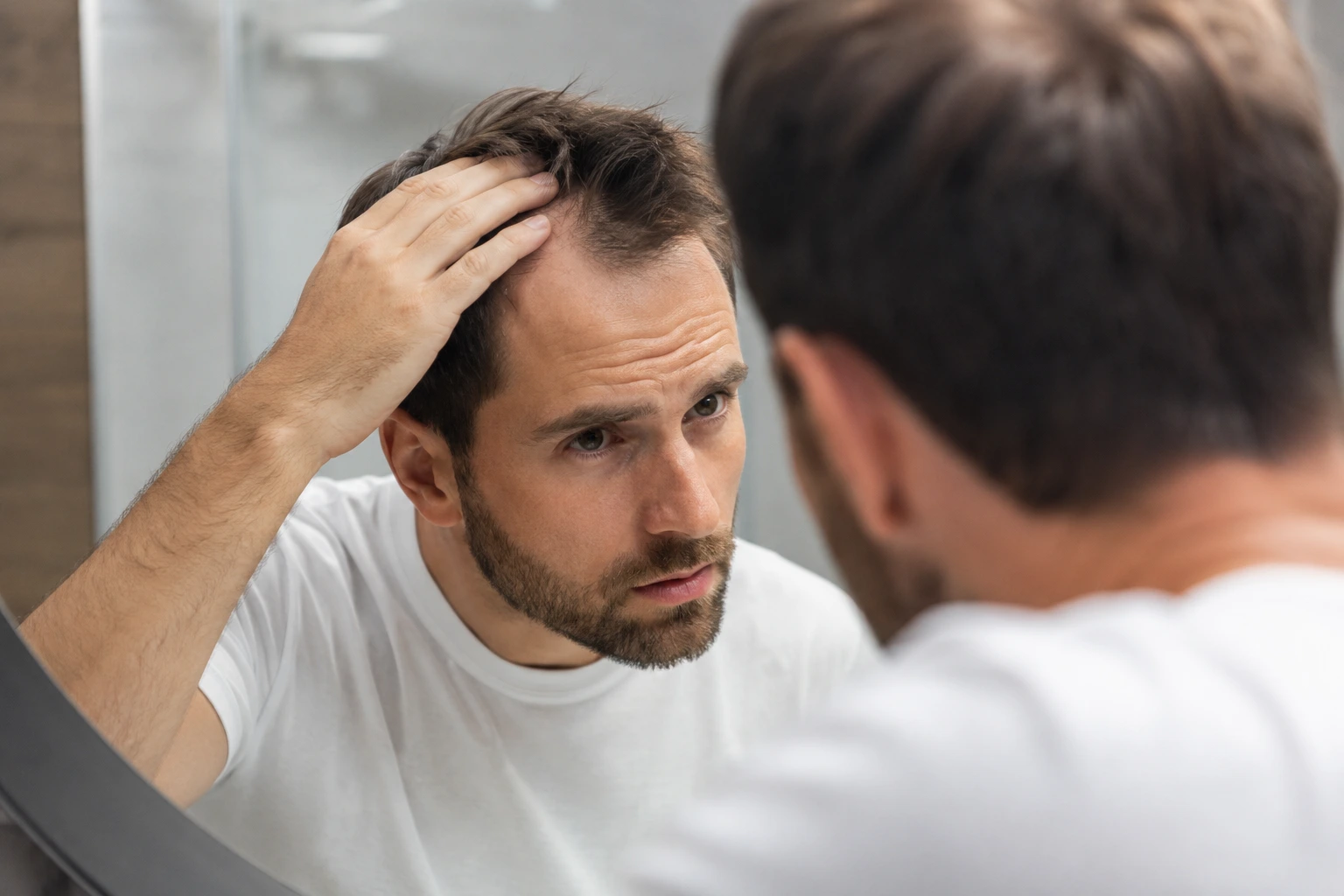
You’re brushing your hair and suddenly noticing way more strands in the sink than usual, or your part looks noticeably wider than it did six months ago – these hair thinning early signs are hitting different when you’re young and weren’t expecting it.
Understanding hair thinning
Hair thinning in young adults often creeps up gradually, which is why many people miss the early warning signs until the issue becomes more noticeable. Think of it like this: you might not consciously register that your ponytail feels thinner, or that you can see more scalp when you part your hair in certain ways. The early signs of hair thinning typically include increased shedding during showers or when you run your fingers through your hair, noticing more strands on your pillow, or observing that your part line has widened over time. Some people describe it as their hair feeling less voluminous overall, even if they haven’t lost significant length. The key is catching these changes early. Start paying attention to your baseline: how thick was your hair a year ago? How much shedding is normal for you? By understanding what normal looks like for your body, you can spot real changes faster and take action before the issue progresses further.
- Monitor your hair health regularly by checking thickness and texture changes
- Observe shedding patterns during showers and note any increase from your baseline
- Consult a healthcare professional if you notice significant thinning within a short timeframe
Healthy habits for hair health
Your hair health is directly connected to your overall wellness, so think of this as an investment in your whole body, not just your scalp. Start with nutrition: your hair needs protein, iron, zinc, and B vitamins to grow strong. If you’re eating processed foods most days and skipping vegetables, your hair is likely suffering. A practical step is to add one nutrient-dense meal per day – think grilled chicken with spinach, or salmon with sweet potato. Hydration matters more than people realize; aim for at least 8 glasses of water daily, as dehydration can weaken hair from the inside out. Stress management is equally critical because chronic stress triggers a condition called telogen effluvium, where hair prematurely enters the shedding phase. Try incorporating 10 minutes of daily movement, whether that’s walking, yoga, or stretching. Sleep quality also impacts hair growth since your body repairs and regenerates cells during deep sleep. Finally, avoid crash diets or extreme calorie restriction, which can shock your system and cause temporary but significant hair loss. Small, consistent changes compound over time.
📘 Fix your day in under 2 minuteschoose where to begin:
Hair care tips for prevention
Your daily hair routine can either support or sabotage your hair health, so let’s get specific about what actually works. Choose shampoos and conditioners formulated for your hair type, not just whatever smells good at the drugstore. If you have fine or thinning hair, look for volumizing formulas that won’t weigh your hair down. When washing, use lukewarm water rather than hot, since heat opens the hair cuticle and can cause breakage. Massage your scalp gently for 2-3 minutes during shampooing to boost blood circulation to the hair follicles, which promotes growth. Limit heat styling to 2-3 times per week maximum; when you do use a blow dryer or straightener, always apply a heat protectant spray first. Avoid tight hairstyles like tight buns or braids that create tension on the hair shaft, a condition called traction alopecia. Instead, opt for loose waves or ponytails. Consider switching to a silk or satin pillowcase, which creates less friction than cotton and reduces breakage while you sleep. Deep condition your hair once weekly, especially the ends, to maintain moisture and elasticity.
Seek professional advice
If you’ve been following healthy habits for 2-3 months and still notice ongoing thinning, it’s time to see a professional rather than self-diagnosing online. A dermatologist or trichologist can run specific tests to determine the root cause, whether that’s nutritional deficiency, hormonal imbalance, thyroid issues, or genetic predisposition. They might recommend a blood test to check your iron, vitamin D, or thyroid levels, which are common culprits in young adults. Based on their findings, they can suggest targeted treatments like minoxidil, specific supplements, or prescription options if appropriate. Some people benefit from low-level laser therapy or scalp treatments that stimulate follicles. The point is that professional guidance gives you a clear diagnosis and a personalized plan rather than guessing. Don’t feel embarrassed about bringing this up; hair thinning is incredibly common in your age group, and dermatologists see this regularly. Getting expert input early can prevent the issue from worsening and gives you concrete next steps to follow.
Keep a positive mindset
Hair thinning can feel like a personal attack on your identity, especially when you’re young and expected to have thick, full hair. But here’s the reality: this is one of the most common issues dermatologists treat in people under 30, and you’re definitely not alone. Many of your peers are dealing with the same thing quietly. What matters now is shifting from panic mode to action mode. Instead of obsessing over what you’ve lost, focus on what you can control starting today: your nutrition, your stress levels, your hair care routine, and getting professional support if needed. Progress isn’t always linear or fast, so set realistic expectations. Hair growth takes time; you won’t see results in two weeks, but consistent effort over 3-6 months can make a noticeable difference. Keep a simple log of your habits and any changes you observe, which helps you stay motivated and identify what actually works for your body. Remember that your worth isn’t determined by your hair thickness, and taking action on this issue is a sign of self-care, not vanity.
Recognizing hair thinning early signs through regular monitoring, building a foundation of healthy habits like balanced nutrition and stress management, refining your daily hair care routine with gentle products and techniques, seeking professional guidance when needed, and maintaining realistic expectations are the core steps to addressing this issue effectively as a young adult.
Is hair thinning common in young adults?
Yes, hair thinning is surprisingly common in people under 30. Causes include genetics, hormonal fluctuations, nutritional deficiencies, high stress, poor sleep, and even certain medical conditions. The good news is that early intervention often slows or reverses the issue, so paying attention to early signs and taking action quickly makes a real difference.
Can hair thinning be reversed?
It depends on the underlying cause. If thinning is due to stress, poor nutrition, or lifestyle factors, addressing these issues can restore hair thickness over time. If it’s genetic male or female pattern baldness, you can slow progression significantly with treatments like minoxidil, but complete reversal may be limited. The key is addressing it early and working with a professional to identify your specific cause.
Others also read:
Disclaimer: This article is for informational purposes only and is not a substitute for professional medical advice. Always consult a healthcare professional for personal guidance.
This guide has been prepared and reviewed by the GlobalHealthBeacon editorial team and reflects current medical research as of 2026. It provides structured, evidence-based information to support informed health decisions.
