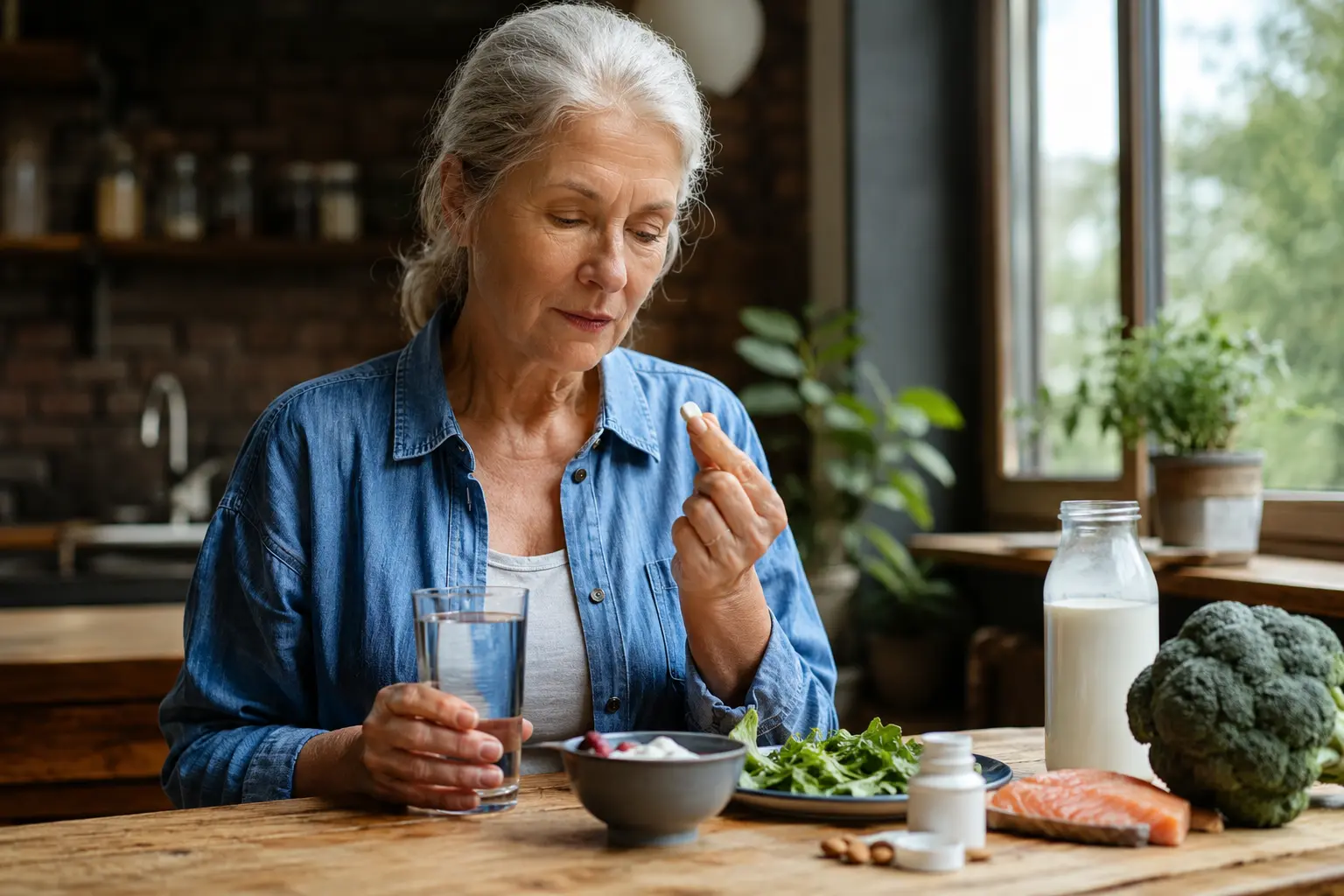
Your bones are quietly losing density every single year, and calcium vitamin d bone health is the difference between staying strong and facing fractures that could change your life forever.
The importance of calcium in bone health
Calcium is the structural foundation of your skeletal system, making up about 99 percent of the calcium in your body and residing in your bones and teeth. Think of it as the concrete in a building: without it, the walls crumble. Your bones are living tissue that constantly breaks down and rebuilds, a process called bone remodeling. When calcium intake is insufficient, your body pulls calcium from your bones to maintain blood calcium levels, gradually weakening the skeletal structure. A woman in her 50s might notice she’s slightly shorter than she was a decade ago, or her posture has shifted. This isn’t just aging; it’s often a sign that calcium depletion has been happening for years. Dairy products like milk and yogurt provide easily absorbed calcium, but leafy greens such as kale and collard greens, almonds, and fortified plant-based milks offer excellent alternatives. The key is consistency: your bones need regular calcium intake to maintain their density and strength throughout your life.
Vitamin D and bone health
Vitamin D acts as the gatekeeper for calcium absorption, controlling how much calcium your intestines can actually use. Without adequate vitamin D, your body cannot absorb calcium efficiently, even if you consume plenty of it. This is why vitamin D deficiency can be just as damaging as calcium deficiency. Your skin produces vitamin D when exposed to sunlight, specifically UVB rays, but the amount varies based on season, latitude, skin tone, and time of day. A woman living in northern climates during winter might produce almost no vitamin D from sun exposure alone. Vitamin D also regulates phosphate levels in your blood, another critical mineral for bone mineralization. Additionally, vitamin D influences muscle function and balance, which indirectly protects bones by reducing fall risk. The relationship between these two nutrients is symbiotic: calcium provides structure, while vitamin D ensures your body can actually use that calcium. Without this partnership, even the best calcium-rich diet falls short of protecting your bones.
Maintaining optimal calcium and vitamin D levels
Building a sustainable routine for calcium and vitamin D intake requires understanding your personal baseline and making adjustments that fit your lifestyle. Start by assessing your current diet: track what you eat for a few days to see where calcium sources appear naturally. If you find yourself relying on dairy, explore non-dairy options like fortified plant milks, tahini, or canned fish with bones to diversify your intake and prevent boredom. For vitamin D, aim for 15 to 30 minutes of midday sun exposure several times per week when possible, though this varies by location and season. Many women find it helpful to pair outdoor time with another activity, like a morning walk or lunch break, making it a natural part of their day rather than an extra task. If dietary sources feel insufficient, supplements can bridge the gap, but they work best alongside food sources rather than as a replacement. A practical approach is to keep a simple checklist: calcium-rich food at lunch, outdoor time on weekends, and a conversation with your healthcare provider about whether supplements make sense for your individual situation.
- Consume a variety of calcium-rich foods daily.
- Spend time outdoors to promote vitamin D synthesis.
- Consult with a healthcare provider before starting any supplements.
🔬 Science-backed benefits in 2 minuteschoose where to begin:
Impact of deficiency
Calcium and vitamin D deficiency often develops silently, with no obvious symptoms until a fracture occurs or bone density testing reveals significant loss. Low calcium intake combined with insufficient vitamin D accelerates bone loss, particularly in women over 50 when estrogen levels drop. Osteoporosis, a condition where bones become so fragile they break from minor falls or even coughing, affects millions of women worldwide. A woman might slip on ice and break her hip, only to discover during treatment that her bones have been deteriorating for years without her knowledge. Beyond fractures, deficiency can lead to muscle weakness, bone pain, and reduced mobility that limits independence and quality of life. The financial and emotional toll of a hip fracture in older age is substantial: recovery often requires surgery, physical therapy, and months of rehabilitation. Even non-fracture complications like stooped posture or chronic bone pain significantly impact daily functioning and confidence. The encouraging news is that deficiency is largely preventable through consistent attention to calcium and vitamin D intake, making early awareness and action crucial.
Women’s specific needs
Women face unique bone health challenges that men typically don’t encounter at the same rate or severity. Estrogen plays a protective role in bone density, and when estrogen levels drop during perimenopause and menopause, bone loss accelerates dramatically. A woman can lose up to 20 percent of her bone density in the five to seven years following menopause, a rate far faster than the gradual loss men experience. This biological reality means that women in their 40s and 50s need to be especially proactive about calcium and vitamin D intake, viewing these years as a critical window for bone preservation. Pregnancy and breastfeeding also affect bone health, as the developing fetus and nursing infant draw calcium from the mother’s body. Women with irregular menstrual cycles, eating disorders, or those taking certain medications face additional risk factors. Hormonal contraceptives and hormone replacement therapy can influence bone density differently in different women, making personalized assessment important. Understanding these gender-specific factors empowers women to take targeted action rather than following generic health advice that doesn’t account for their particular life stage and biological needs.
The science behind supplements
Supplements serve a specific purpose: they fill nutritional gaps when diet and sun exposure alone cannot meet your body’s needs. Calcium supplements come in different forms, primarily calcium carbonate and calcium citrate, each with different absorption rates and optimal timing. Calcium carbonate requires stomach acid and should be taken with meals, while calcium citrate can be taken anytime and is often better absorbed by those with low stomach acid. Vitamin D supplements are available as D2 (ergocalciferol) or D3 (cholecalciferol), with D3 being more effective at raising blood levels. The challenge is determining the right dose for your individual situation, which depends on your current intake, absorption capacity, age, and overall health status. Taking too much calcium can interfere with iron and zinc absorption, while excessive vitamin D can lead to toxicity, causing nausea and kidney problems. This is why working with a healthcare provider to test your current levels and establish a personalized plan is essential rather than self-prescribing based on general recommendations. A blood test can reveal your actual vitamin D status and calcium levels, allowing for precise supplementation rather than guesswork.
Understanding the vital role of calcium and vitamin D in bone health is essential for women’s overall well-being. Ensuring adequate intake through diet, sunlight exposure, and supplements can help maintain strong and healthy bones, reducing the risk of bone-related conditions.
What are the best food sources of calcium?
Dairy products like milk, cheese, and yogurt are excellent sources of calcium. Additionally, leafy green vegetables, almonds, and fortified foods are great options to boost your calcium intake.
How much vitamin D do women need daily?
The recommended daily intake of vitamin D for women varies by age and life stage. Generally, adults under 70 years old should aim for 600-800 IU per day, while older adults may need slightly more to support bone health.
Others also read:
Disclaimer: This article is for informational purposes only and is not a substitute for professional medical advice. Always consult a healthcare professional for personal guidance.
This article has been prepared and reviewed by the GlobalHealthBeacon editorial team and is based on current medical research and published scientific literature available in 2026. It provides structured, evidence-based information to support informed health decisions.
