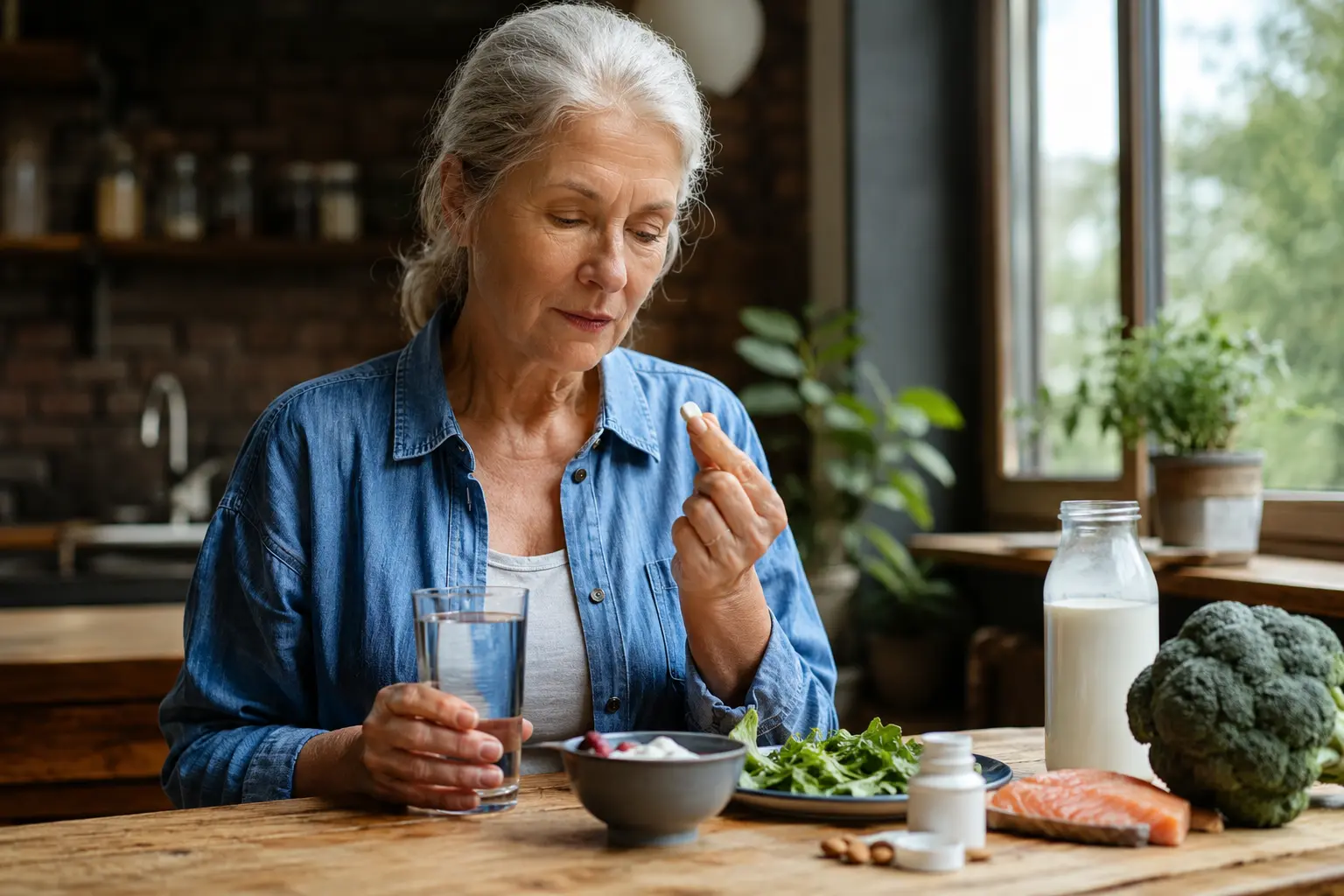
You reach for the bannister and feel that familiar twinge in your wrist, or you stumble slightly on the stairs and panic floods through you because you know your bones aren’t what they used to be, and calcium vitamin d bone health suddenly feels like the most urgent puzzle you need to solve.
The importance of calcium and vitamin D
When you hit your 60s or beyond, maintaining healthy bones shifts from something you take for granted to something that demands real attention. Think about Margaret, a 68-year-old who used to garden for hours without thinking twice. A minor fall changed everything. She realized her bones had become brittle without her noticing. Calcium and vitamin D work as a team in your body, almost like partners building a house. Calcium provides the structural material, while vitamin D acts as the foreman, making sure your body actually absorbs and uses that calcium effectively. Without this partnership, your bones gradually lose density, becoming more porous and fragile. The stakes feel real when you understand that a simple slip could mean weeks of recovery, lost independence, or worse. This is why so many seniors find themselves suddenly researching bone health after a wake-up call.
- Calcium is essential for building and maintaining strong bones and teeth.
- Vitamin D helps the body absorb calcium and plays a vital role in bone mineralization.
- A deficiency in calcium and vitamin D can lead to weakened bones, fractures, and osteoporosis.
Sources of calcium and vitamin D
Finding the right sources of calcium and vitamin D doesn’t have to feel overwhelming, though the options might seem endless at first. Natural food sources are your first line of defense. Dairy products like yogurt and cheese are obvious choices, but many seniors overlook leafy greens such as kale and broccoli, which pack surprising amounts of calcium. Fatty fish like salmon and mackerel offer both calcium and natural vitamin D in one serving. Then there’s the sun factor. Your skin produces vitamin D naturally when exposed to sunlight, which is why a 20-minute walk in the morning can do more than just lift your mood. For seniors who live in colder climates or have limited mobility, supplements become a practical solution. Many find that a combination approach works best: eating calcium-rich foods most days, catching some sunshine when possible, and using supplements to fill the gaps. It’s not about perfection; it’s about creating a realistic plan you can actually stick with.
💬 Ready to feel better in 2 minutes?choose where to begin:
Incorporating calcium and vitamin D into your routine
The key to success isn’t finding the perfect solution; it’s building habits that fit naturally into your life. Imagine starting your day with a glass of fortified orange juice alongside breakfast, then taking a 15-minute walk in the afternoon. That’s it. Small, repeatable actions compound over time. Some seniors keep a simple checklist on their fridge: Did I have a calcium source today? Did I get outside? Did I take my supplement? Others set phone reminders for their vitamin D supplement at the same time each day, anchoring it to an existing habit like morning coffee. The real magic happens when you stop thinking of this as another medical task and start seeing it as self-care. One senior we know pairs her calcium supplement with her favorite afternoon tea ritual, making it something she actually looks forward to rather than dreads. Your healthcare provider can help you personalize this further, especially if you have dietary restrictions, medications that interfere with absorption, or specific health conditions. The goal is a routine that feels sustainable, not burdensome.
Staying active for strong bones
Here’s something many seniors don’t realize: your bones respond to the demands you place on them. When you walk, dance, or lift weights, you’re sending a signal to your body that these bones need to stay strong. A 72-year-old named Robert started with just 30 minutes of walking three times a week. Within months, he noticed he felt steadier, more confident navigating stairs, and less afraid of falling. Weight-bearing exercise doesn’t mean you need a gym membership or heavy dumbbells. Walking, dancing, tai chi, or even gardening all count. The resistance training can be as simple as using resistance bands or your own body weight. The beautiful part is that these activities do double duty: they strengthen bones while also improving balance, flexibility, and mood. Many seniors find that group classes like water aerobics or dance provide both the physical benefits and the social connection that keeps them motivated. The combination of adequate calcium and vitamin D plus regular movement creates a protective shield against the fractures and falls that can derail your independence.
Ensuring adequate intake of calcium and vitamin D, whether through diet or supplements, and incorporating weight-bearing exercises into your routine are essential for seniors to maintain strong and healthy bones as they age.
What are the main benefits of calcium and vitamin D for bone health?
Calcium and vitamin D work synergistically to support bone growth, strength, and mineralization, helping to prevent fractures and osteoporosis in seniors.
How can seniors improve their calcium and vitamin D intake?
Seniors can increase their calcium and vitamin D intake through a combination of dietary sources, supplements, and regular exposure to sunlight to support optimal bone health.
Others also read:
Disclaimer: This article is for informational purposes only and is not a substitute for professional medical advice. Always consult a healthcare professional for personal guidance.
This article presents an experience-based perspective and has been reviewed by the GlobalHealthBeacon editorial team in 2026. It provides structured, evidence-based information to support informed health decisions.
