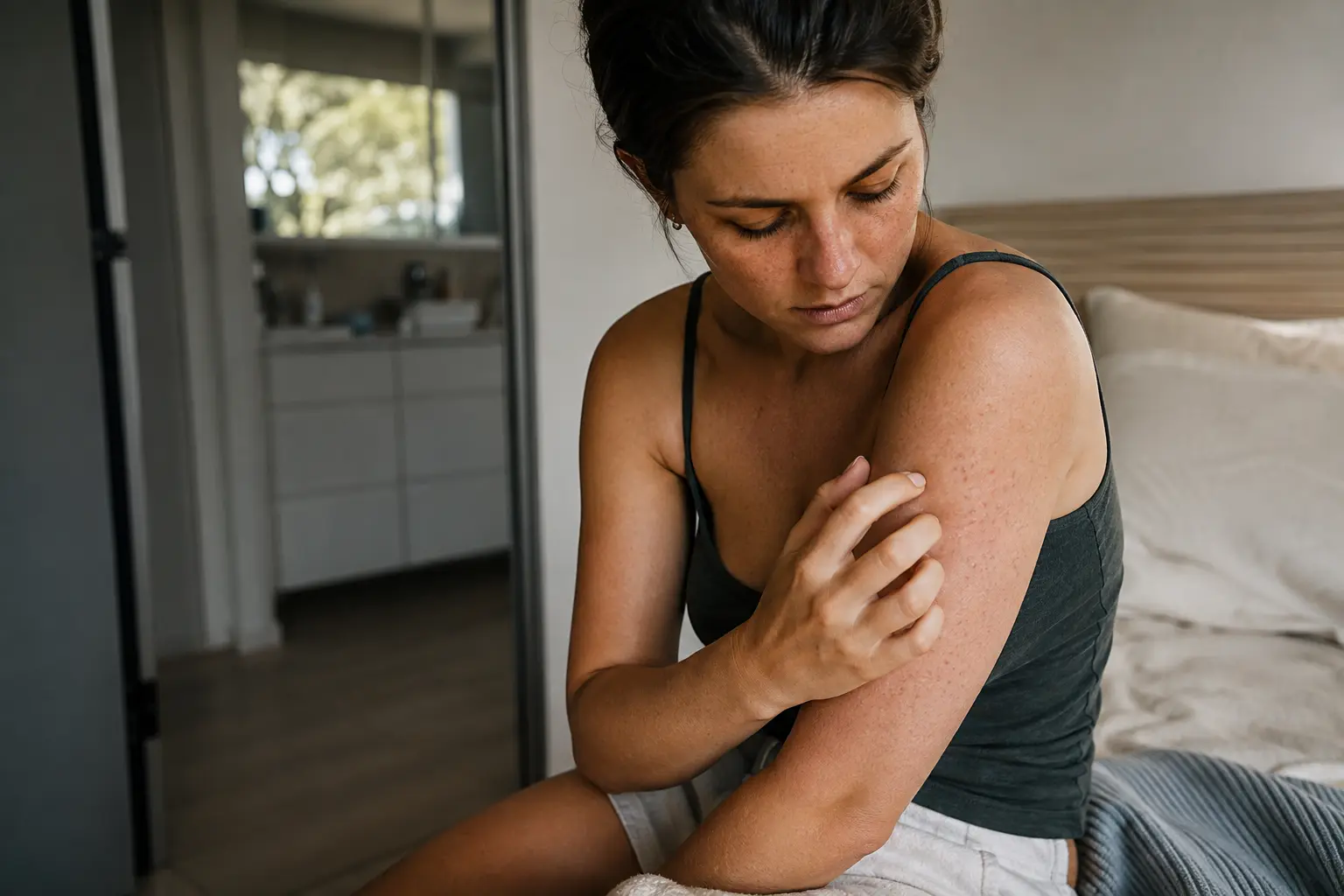
Those tiny, rough bumps covering your arms and thighs aren’t going anywhere without a solid keratosis pilaris routine, and the frustration of watching your skin texture worsen despite trying everything can feel isolating, but understanding what’s actually happening beneath your skin changes everything.
Understanding keratosis pilaris
Keratosis pilaris, commonly called chicken skin, is far more prevalent than most young adults realize. This condition manifests as small, firm bumps that typically appear on the upper arms, thighs, cheeks, or buttocks, though they can develop almost anywhere on the body. The bumps form when keratin, a protective protein naturally produced by your skin, accumulates around hair follicles instead of shedding normally. Imagine your skin’s natural shedding process getting stuck, like leaves clogging a drain. This buildup creates the characteristic rough texture and sometimes mild redness. The condition is entirely benign and causes no internal harm, though many young adults find the appearance bothersome. Understanding that this is a structural issue with how your skin handles keratin production, not a sign of poor hygiene or infection, helps reframe the condition from something shameful to something simply manageable.
The role of genetics
Your family history plays a surprisingly powerful role in whether you develop keratosis pilaris. If one parent has this condition, your likelihood increases significantly; if both parents have it, your chances are even higher. This isn’t about blame or bad luck, it’s about inherited variations in genes that control how your skin cells are produced and shed. Some people inherit genes that make their skin cells stick together more readily or that affect how efficiently dead skin cells are removed from the surface. Think of it like inheriting a particular software version that runs your skin’s renewal system slightly differently than average. Young adults often discover they have keratosis pilaris after a parent mentions having the same bumps, creating that aha moment of recognition. Understanding the genetic component removes the guilt many feel about their skin condition and helps explain why certain skincare routines work better for some people than others.
Effective keratosis pilaris routines
Building a consistent routine is where science meets real-world results. Gentle exfoliation works by physically removing the dead skin cells that accumulate around hair follicles, but the key word here is gentle. Using a rough washcloth or aggressive scrub can actually trigger inflammation and worsen the condition. Instead, consider using a soft exfoliating cloth or a mild chemical exfoliant containing lactic acid or salicylic acid, which dissolve dead skin cells without harsh scrubbing. Moisturizing becomes crucial because dry skin exacerbates the bumpy texture, so applying a hydrating lotion immediately after cleansing helps lock in moisture. Many young adults skip this step, thinking their skin is too oily, but even oily skin needs hydration. Avoiding harsh soaps and fragranced products matters because these can strip your skin’s natural oils and trigger irritation that makes keratosis pilaris more noticeable. A realistic routine involves cleansing gently, exfoliating two to three times weekly, and moisturizing daily, which takes about five minutes total.
- Start by applying a gentle exfoliant to the affected areas using light circular motions, avoiding aggressive scrubbing that can irritate the skin.
- Follow up with a moisturizer specifically chosen for your skin type to keep the skin hydrated and reduce roughness.
- Choose skincare products that are gentle and non-irritating, preferably fragrance-free and without harsh chemicals that can trigger inflammation.
🔬 Science-backed benefits in 2 minuteschoose where to begin:
Managing symptoms
While keratosis pilaris poses no health risk, the visual appearance can genuinely affect how young adults feel about their skin and body. The bumps may become more noticeable during winter months when skin tends to be drier, or during high-stress periods when inflammation increases. Maintaining a consistent skincare routine creates a measurable improvement in texture and appearance over weeks and months, though results aren’t instant. Some people see changes within two weeks, while others need six to eight weeks of consistent care before noticing significant improvement. Environmental factors matter too: using a humidifier during dry seasons, staying hydrated, and avoiding prolonged hot showers can all support your routine’s effectiveness. For more stubborn cases, dermatologists can recommend prescription-strength treatments like tretinoin or topical retinoids that accelerate skin cell turnover. The reassuring truth is that keratosis pilaris responds well to targeted care, and most young adults can achieve noticeably smoother skin texture with patience and consistency.
Seeking professional advice
If you’ve followed a consistent routine for eight weeks without improvement, or if you experience significant redness, swelling, or itching beyond the typical bumpy texture, consulting a dermatologist makes sense. A dermatologist can confirm you actually have keratosis pilaris and rule out other conditions that might look similar, like folliculitis or eczema. They can also assess whether your skin barrier is compromised, which sometimes happens when people over-exfoliate trying to fix the problem themselves. Professional guidance becomes especially valuable if you have darker skin tones, where keratosis pilaris can sometimes trigger post-inflammatory hyperpigmentation that requires different treatment approaches. A dermatologist might recommend prescription creams, laser treatments, or chemical peels for more severe cases, options that over-the-counter products simply cannot provide. Think of professional consultation as an investment in understanding your specific skin rather than a sign that something is wrong.
Conclusion
Keratosis pilaris is a common, manageable condition rooted in genetics and how your skin naturally sheds cells. The science is clear: consistent, gentle skincare routines featuring appropriate exfoliation and moisturization can significantly improve texture and appearance. Young adults who understand the underlying biology, avoid common mistakes like over-exfoliating or using harsh products, and commit to a realistic routine typically see meaningful results. The condition won’t disappear entirely, but it becomes far less noticeable and bothersome. By combining evidence-based skincare practices with professional guidance when needed, you move from frustration about your skin to actually taking control of it. This shift from feeling stuck to feeling empowered is often the most valuable outcome of understanding what’s really happening with your skin.
Keratosis pilaris is a genetically influenced skin condition characterized by keratin buildup around hair follicles, creating rough bumps typically on arms and thighs. Effective management involves gentle exfoliation two to three times weekly, consistent moisturization, and avoiding harsh products. While not curable, the condition responds well to science-backed routines, with most young adults seeing noticeable improvement within weeks to months of consistent care.
Can keratosis pilaris be cured?
Keratosis pilaris cannot be permanently cured because it’s rooted in your genetic makeup and how your skin naturally functions. However, symptoms can be effectively managed and minimized through consistent skincare routines, with many young adults achieving significantly smoother skin texture and reduced appearance of bumps with proper care and professional guidance when needed.
Are there specific triggers that worsen keratosis pilaris?
Yes, several factors can exacerbate keratosis pilaris symptoms. Cold, dry weather reduces skin moisture and makes bumps more prominent. Hormonal fluctuations, particularly during menstrual cycles, can trigger temporary flare-ups. High stress levels increase inflammation. Over-exfoliation or using harsh products damages your skin barrier and worsens the condition. Maintaining consistent hydration, using a humidifier, and sticking to gentle skincare helps minimize these triggers.
Others also read:
Disclaimer: This article is for informational purposes only and is not a substitute for professional medical advice. Always consult a healthcare professional for personal guidance.
This article has been prepared and reviewed by the GlobalHealthBeacon editorial team and is based on current medical research and published scientific literature available in 2026. It provides structured, evidence-based information to support informed health decisions.
