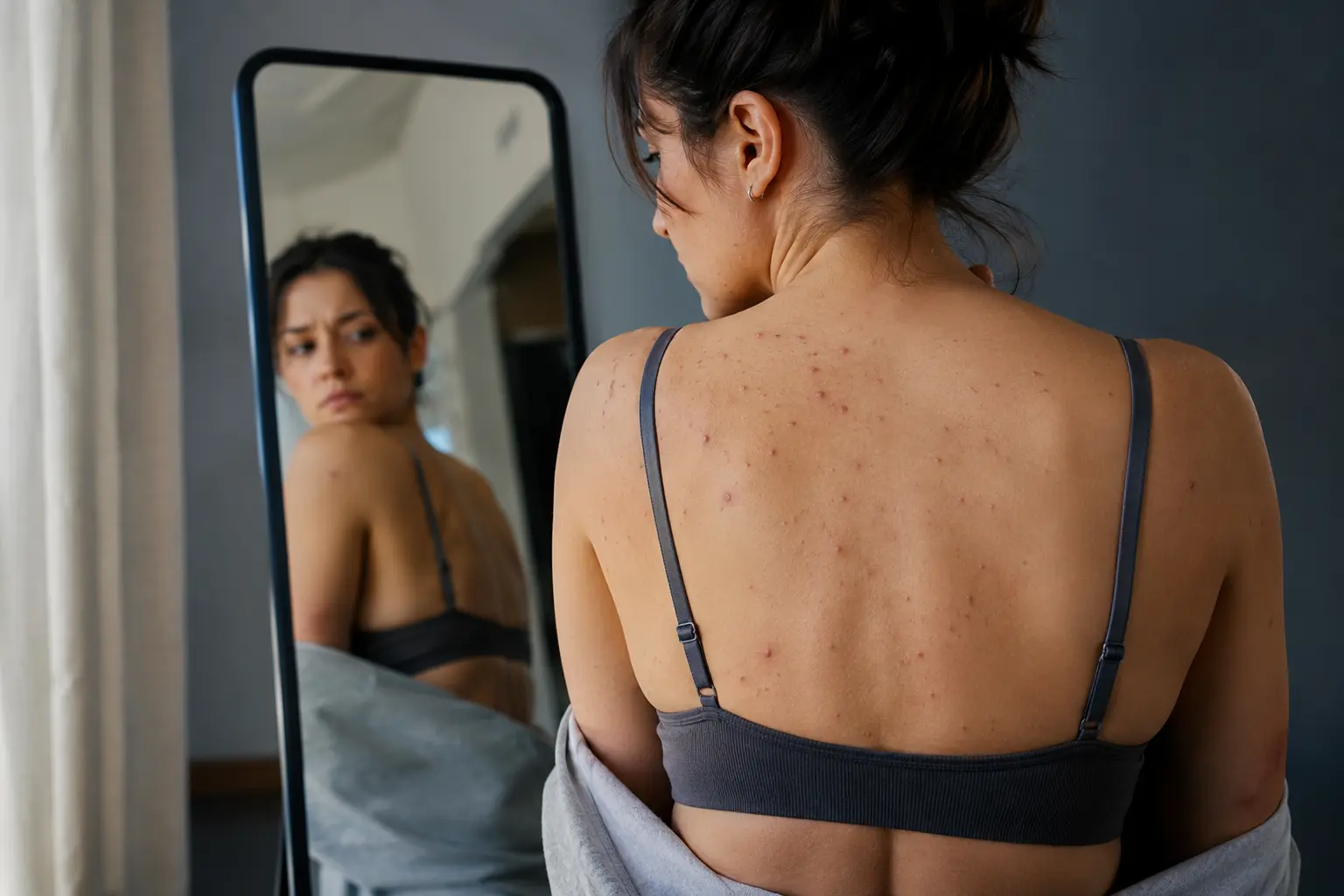
Breakouts creeping down your back, shoulders, and chest when you thought acne was supposed to end after your teens – body acne causes real frustration, and understanding what’s actually happening beneath your skin is the first step to taking back control.
Hormonal imbalance: a primary culprit
Hormones orchestrate far more than your mood and energy levels – they directly influence how your skin behaves. When androgens (male hormones present in all women) fluctuate, they signal your sebaceous glands to produce more oil. Picture this: a woman in her late twenties notices breakouts intensifying during specific weeks of her cycle. This isn’t coincidence. Her progesterone levels spike, triggering increased sebum production. That excess oil combines with dead skin cells inside your pores, creating an ideal environment for bacteria to thrive. The inflammation that follows manifests as the red, painful bumps or cysts you see on your body. This hormonal dance doesn’t just affect your face – your back and chest have just as many oil glands, sometimes even more sensitive to hormonal shifts. Understanding this biological reality helps explain why topical treatments alone often fall short during certain times of your cycle.
Genetics: is acne in your DNA?
Your parents’ skin history tells a significant story about your own. If your mother struggled with persistent body acne into her thirties, or your father dealt with severe breakouts, you’ve likely inherited a genetic predisposition toward acne development. This doesn’t mean you’re destined to suffer identically, but your genes influence how sensitive your skin is to hormonal triggers and how efficiently your skin cells shed. Consider Sarah, whose mother had acne-prone skin throughout her twenties. Sarah inherited the same tendency toward excess sebum production and slower skin cell turnover. When she hits hormonal fluctuations, her skin responds more dramatically than her friend whose parents had naturally clear skin. Genetics also determine your skin barrier strength and how prone you are to inflammation. Some women’s immune systems react more intensely to acne-causing bacteria, amplifying the visible response. Recognizing this genetic component removes shame from the equation – your body acne isn’t a personal failure, it’s partly written into your biology.
Environmental factors: impact on skin health
Your daily environment constantly influences whether your skin stays clear or breaks out. Diet plays a measurable role: high-glycemic foods like white bread and sugary snacks cause rapid blood sugar spikes, triggering insulin surges that amplify androgen production and sebum output. Dairy products contain hormones that can similarly stimulate oil glands. A woman who switches from regular milk to almond milk often notices fewer breakouts within weeks. Personal hygiene practices matter tremendously too. Sweat mixed with bacteria and dead skin cells creates the perfect breeding ground for acne-causing microorganisms, especially in areas where clothing traps moisture like your back and chest. After a workout, sweat sits on your skin for hours if you don’t shower promptly, essentially marinating your pores in inflammatory conditions. Friction from tight sports bras or synthetic fabrics compounds this problem. Environmental humidity also plays a role – women living in tropical climates often report more frequent breakouts than those in drier regions. The key insight: your skin’s condition results from constant interaction between your internal biology and external environment.
- Maintain a balanced diet low in sugars and dairy to reduce hormonal triggers that stimulate sebum production.
- Incorporate regular cleansing and gentle exfoliation into your skincare routine, especially after sweating.
- Shower after exercise or in hot weather to prevent sweat-induced breakouts and bacterial accumulation.
🔬 Science-backed benefits in 2 minuteschoose where to begin:
Stress and body acne: a vicious cycle
Stress doesn’t just affect your mood – it fundamentally alters your skin’s biology. When you’re anxious or overwhelmed, your body releases cortisol, a stress hormone that amplifies inflammation throughout your system, including your skin. Cortisol also increases sebum production and weakens your skin barrier, making it more vulnerable to bacterial colonization. Imagine a woman preparing for a major work presentation. Two weeks before the event, stress levels climb steadily. By the week of the presentation, she notices new breakouts appearing on her chest and back – areas that were clear just days before. This isn’t random timing. Her elevated cortisol has triggered a cascade of skin-damaging responses. Additionally, stress impairs your immune function, reducing your skin’s ability to fight acne-causing bacteria effectively. The cycle deepens: breakouts cause emotional distress, which increases cortisol further, which worsens acne. Breaking this pattern requires addressing both the stress itself and supporting your skin during high-stress periods. Sleep deprivation, often accompanying stress, further elevates cortisol and reduces skin repair processes that occur during deep sleep.
Clothing and body acne: choosing wisely
The fabric touching your skin for hours daily directly influences whether breakouts develop. Tight clothing creates friction and traps sweat, heat, and bacteria against your skin surface – essentially creating a humid incubator for acne-causing bacteria. A woman who switches from tight synthetic sports bras to breathable, moisture-wicking options often sees significant improvement in chest and underarm breakouts within two to three weeks. Natural fabrics like cotton and moisture-wicking synthetics allow air circulation, reducing the warm, moist environment bacteria thrive in. Loose-fitting clothing minimizes friction that irritates existing breakouts and prevents new ones from forming. Your back and shoulders are particularly vulnerable because they’re often covered all day, creating prolonged moisture exposure. Even your choice of detergent matters – fragrance and dyes can irritate skin and trigger inflammatory responses. Women who’ve switched to hypoallergenic, fragrance-free detergents report fewer body acne flare-ups. The simple act of changing into dry clothes immediately after sweating, rather than sitting in damp fabric, significantly reduces breakout frequency.
Skin care products: the good and the bad
Not all skincare products help your skin – many actively worsen body acne through comedogenic ingredients that clog pores. Comedogenic means pore-clogging; products high in heavy oils, butters, or silicones can seal bacteria and dead skin cells inside your pores, triggering inflammation. A woman using a rich body lotion on her back might notice worsening breakouts, not realizing the product itself is the culprit. Non-comedogenic, fragrance-free products allow your skin to breathe while still providing necessary hydration. Ingredients like salicylic acid gently exfoliate dead skin cells, reducing pore blockages. Benzoyl peroxide targets acne-causing bacteria directly. However, these actives can be drying and irritating, especially on sensitive body skin. The key is finding balance: effective treatment without over-stripping your skin barrier. Many women make the mistake of using the same heavy facial products on their body, forgetting that body skin has different needs and sensitivities. Patch testing new products on a small area first prevents widespread reactions. Reading ingredient lists carefully, avoiding fragrance and essential oils, and choosing lightweight formulations specifically designed for acne-prone body skin yields better results than generic body care products.
Body acne results from complex interactions between your hormones, genetics, environment, stress levels, clothing choices, and skincare products. No single factor causes breakouts – instead, multiple influences combine to create conditions where acne develops. Women who understand these biological mechanisms can address root causes rather than just treating symptoms. Hormonal fluctuations trigger sebum production, genetics determine your skin’s sensitivity, environmental factors like diet and sweat accumulation provide breeding grounds for bacteria, stress amplifies inflammation, tight clothing traps moisture, and certain products actively clog pores. By recognizing how these elements interact, you can make targeted changes that actually work. This isn’t about achieving perfect skin – it’s about understanding your body’s signals and responding intelligently.
Can body acne be completely cured?
Body acne can be effectively managed and significantly improved, though complete permanent elimination may not always be possible, especially if hormonal factors remain present. Consistent skincare routines using non-comedogenic products, addressing dietary factors, managing stress, wearing breathable clothing, and maintaining proper hygiene can substantially reduce breakout frequency and severity. For many women, acne improves naturally as hormonal fluctuations stabilize with age. If symptoms persist despite lifestyle changes, dermatologists can recommend prescription treatments or hormonal interventions that target underlying causes rather than just surface symptoms.
Are over-the-counter products effective for treating body acne?
Over-the-counter products containing salicylic acid, benzoyl peroxide, or niacinamide can be beneficial for mild to moderate body acne, particularly when combined with lifestyle modifications. However, body skin often requires different concentrations and formulations than facial products. Results typically take four to eight weeks of consistent use before noticeable improvement appears. If breakouts persist, worsen, or cause significant scarring despite over-the-counter treatments, consulting a dermatologist is advisable. A dermatologist can identify whether hormonal factors, bacterial resistance, or other underlying causes require prescription-strength treatments or systemic approaches.
Others also read:
Disclaimer: This article is for informational purposes only and is not a substitute for professional medical advice. Always consult a healthcare professional for personal guidance.
This article has been prepared and reviewed by the GlobalHealthBeacon editorial team and is based on current medical research and published scientific literature available in 2026. It provides structured, evidence-based information to support informed health decisions.
