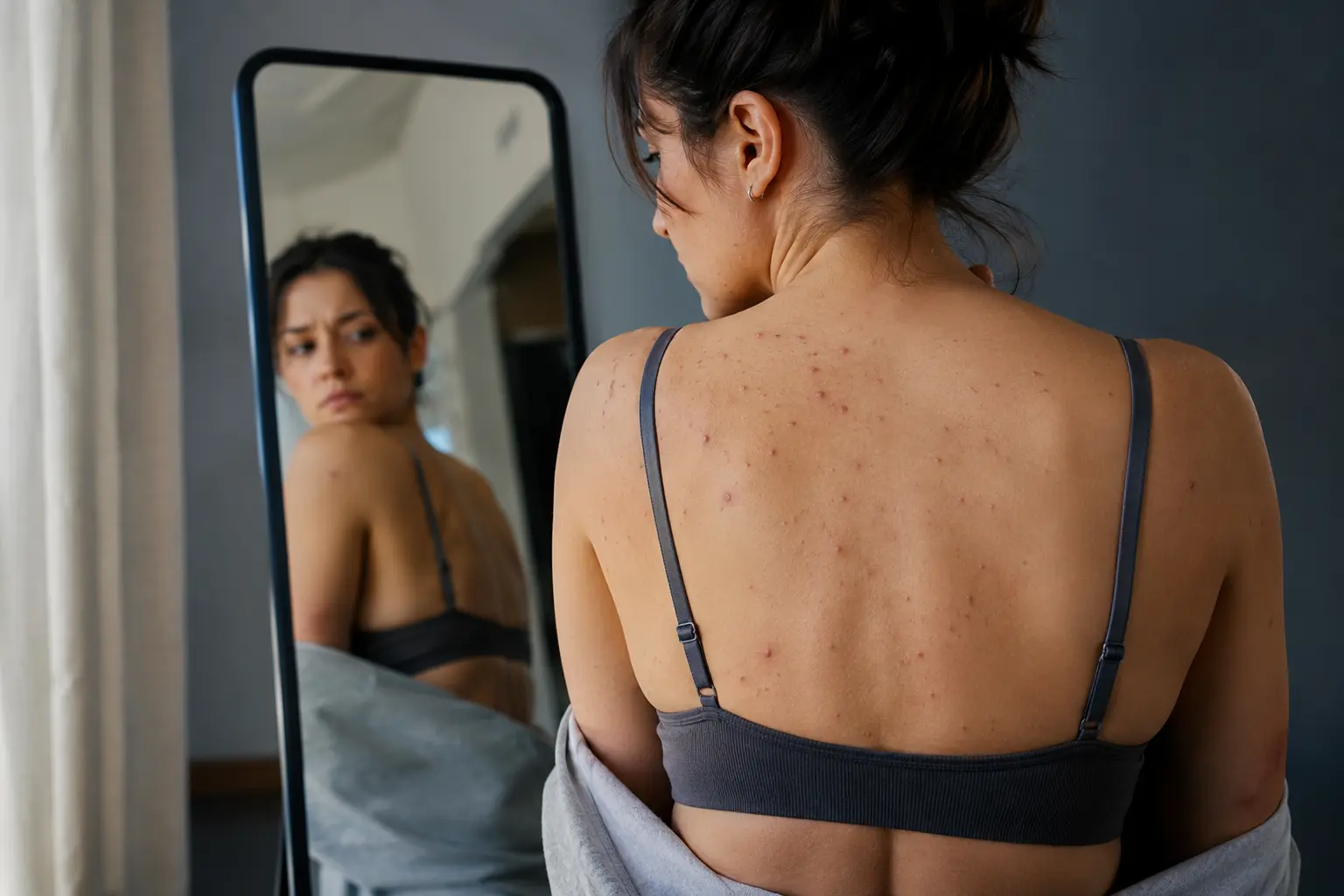
You wake up, look in the mirror, and there it is again – another cluster of painful bumps spreading across your chest, shoulders, or back, and you’re left wondering why your body keeps betraying you like this, especially when you thought acne was supposed to be a teenage problem.
Hormonal imbalance
Hormonal fluctuations represent one of the most significant drivers of body acne in women, and understanding this connection helps explain why breakouts often follow predictable patterns. During puberty, the surge of androgens triggers sebaceous glands to enlarge and produce excess sebum, creating an ideal environment for bacterial colonization. Many women notice their body acne intensifies during specific phases of their menstrual cycle, particularly in the luteal phase when progesterone levels rise and skin barrier function temporarily weakens. Pregnancy introduces another layer of hormonal complexity, as elevated estrogen and progesterone can either improve or worsen acne depending on individual skin sensitivity. Even perimenopause and menopause bring hormonal shifts that can reignite acne in women who haven’t experienced breakouts in decades. The mechanism is straightforward: hormones stimulate sebaceous glands, excess oil accumulates in pores, dead skin cells fail to shed properly, and bacteria multiply in this nutrient-rich environment, resulting in inflammation and visible lesions.
Genetics
Your family history carries surprising weight when it comes to body acne susceptibility, and research consistently shows that genetics account for a substantial portion of acne risk. If both your parents experienced acne, your likelihood of developing it increases significantly compared to someone with no family history. Genetic predisposition doesn’t mean you’re destined to have acne, but rather that your skin may be more responsive to hormonal triggers, more prone to bacterial overgrowth, or more likely to produce excess sebum. Consider a woman whose mother struggled with body acne throughout her twenties and thirties – she may notice similar patterns emerging at comparable life stages, suggesting inherited skin characteristics rather than coincidence. Some genetic traits also influence how efficiently your skin sheds dead cells, how robust your skin barrier is, and how your immune system responds to acne-causing bacteria. Understanding this genetic component can help you recognize early warning signs and seek preventive strategies before breakouts become severe, rather than feeling blindsided by acne you didn’t expect.
Diet and lifestyle
The foods you consume and daily habits you maintain create a foundation that either supports clear skin or contributes to inflammatory breakouts. High-glycemic foods like refined carbohydrates, sugary snacks, and white bread cause rapid blood sugar spikes, triggering insulin surges that amplify sebum production and inflammation. Dairy products, particularly skim milk, contain hormones and bioactive compounds that may stimulate sebaceous glands in susceptible individuals. Saturated fats and processed oils promote systemic inflammation, which manifests on your skin as redness and acne lesions. Beyond diet, chronic stress elevates cortisol levels, which disrupts the skin barrier and increases sebum production – imagine the stress of a demanding work deadline literally showing up on your back within days. Sleep deprivation impairs your skin’s natural repair processes and weakens immune function, leaving you more vulnerable to bacterial infections in clogged pores. Inadequate skincare routines mean dead skin cells accumulate, sweat and bacteria get trapped, and any existing acne worsens. A woman who switches to a lower-glycemic diet, prioritizes seven to nine hours of sleep, and establishes a consistent cleansing routine often notices visible improvement within four to six weeks.
- Maintain a balanced diet with plenty of fruits and vegetables.
- Practice stress-reducing activities like yoga or meditation.
- Establish a consistent skincare regimen tailored to your skin type.
🔬 Science-backed benefits in 2 minuteschoose where to begin:
Environmental factors
Your external environment constantly interacts with your skin, and certain conditions actively promote acne development. Air pollution contains particulate matter and oxidative compounds that settle on skin, clog pores, and trigger inflammatory responses. High humidity creates a moist environment where acne-causing bacteria thrive and multiply rapidly, which is why many women notice worse breakouts during summer months or in tropical climates. Tight clothing that rubs against your skin, particularly synthetic fabrics that don’t breathe, traps sweat and bacteria against your body, creating friction-induced acne called acne mechanica – this commonly appears on the chest, shoulders, and back where sports bras or tight shirts create constant contact. Chlorine in swimming pools can irritate skin and disrupt the natural bacterial balance, sometimes triggering breakouts days after swimming. Even your workplace environment matters: if you work in a hot kitchen, spend hours in a gym, or sit in an air-conditioned office that dries your skin, these conditions influence acne severity. A woman who switches to loose, breathable cotton clothing and rinses off sweat promptly often experiences noticeable reduction in body acne within weeks.
Medication and cosmetics
Certain medications and skincare products you use with good intentions can paradoxically worsen body acne, making it crucial to understand what you’re applying to your skin. Corticosteroid creams, while effective for inflammation, can trigger acne flares when used long-term because they suppress immune function and alter skin barrier properties. Some hormonal contraceptives increase androgen activity or alter sebum production, causing acne to worsen during the first few months of use before potentially improving. Lithium, used for bipolar disorder, and some anticonvulsants are known acne-aggravating medications. Cosmetics and body products labeled non-comedogenic may still contain ingredients that clog pores in individual women – coconut oil, for instance, is highly comedogenic for many people despite its popularity in skincare. Heavy moisturizers, body butters, and sunscreens can trap bacteria and sweat against skin, especially on areas prone to breakouts. Even your laundry detergent matters: residual detergent on clothing can irritate skin and trigger acne in sensitive individuals. A woman who carefully reads product ingredient lists, chooses oil-free formulations, and discusses medication side effects with her doctor can often identify and eliminate acne-triggering products within her routine.
Professional treatment options
When body acne persists despite lifestyle modifications, professional dermatological intervention offers evidence-based solutions tailored to your specific situation. A dermatologist conducts a thorough assessment to identify whether your acne stems primarily from hormonal imbalance, bacterial overgrowth, or structural skin issues, then recommends targeted treatments accordingly. Topical medications like benzoyl peroxide reduce bacteria and promote cell turnover, while retinoids normalize skin cell shedding and prevent pore clogging. Oral antibiotics address bacterial populations when topical treatments prove insufficient, though long-term use requires monitoring. Hormonal contraceptives specifically formulated to reduce androgen activity can dramatically improve acne in women whose breakouts follow hormonal patterns. For moderate to severe cases, isotretinoin represents a powerful option that can achieve long-term remission, though it requires careful monitoring due to potential side effects. Laser and light-based therapies target bacteria and reduce sebaceous gland activity, offering results visible within several weeks. Chemical peels exfoliate dead skin cells and unclog pores. A woman who consults a dermatologist early, rather than struggling alone with over-the-counter products for years, gains access to personalized treatment plans that address her unique acne triggers and skin characteristics.
Exploring the scientific basis behind body acne causes reveals a complex interplay of hormonal, genetic, lifestyle, environmental, and external factors that impact women’s skin health.
Can body acne be completely cured?
While it may not be completely curable, body acne can be effectively managed with appropriate skincare, lifestyle modifications, and professional treatments.
Is diet a significant factor in causing body acne?
Diet can play a role in exacerbating acne, particularly high-glycemic foods and dairy products. However, individual responses may vary.
Others also read:
Disclaimer: This article is for informational purposes only and is not a substitute for professional medical advice. Always consult a healthcare professional for personal guidance.
This article has been prepared and reviewed by the GlobalHealthBeacon editorial team and is based on current medical research and published scientific literature available in 2026. It provides structured, evidence-based information to support informed health decisions.
