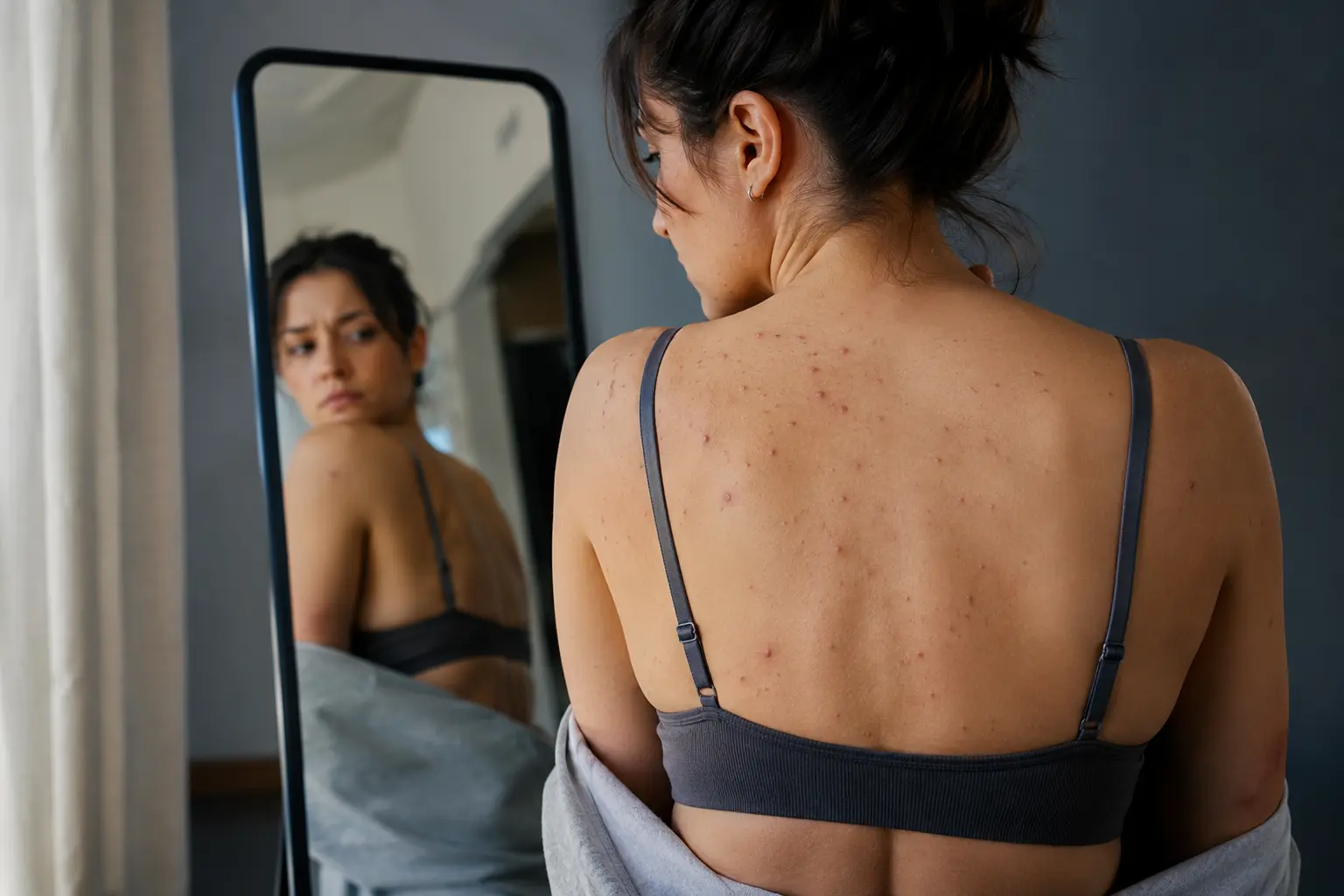
You thought acne was a teenage problem, but here you are in your 50s or 60s, dealing with stubborn breakouts on your back and chest, and body acne causes are leaving you frustrated and wondering what changed.
Understanding body acne causes
Body acne, often called bacne, shows up differently than facial acne and can feel especially frustrating for seniors who thought they were done with breakouts decades ago. The causes are surprisingly complex. Hormonal shifts that happen throughout our lives, from perimenopause to other age-related changes, can trigger unexpected flare-ups on the back, shoulders, and chest. Your genetics also play a role, determining how sensitive your skin is to breakouts. Then there’s the practical reality of daily life: sweat from summer heat or exercise, tight clothing that traps moisture, and even the skincare products you’ve been using loyally for years might be comedogenic, meaning they clog pores. Think of it like a perfect storm. You shower after a workout, but maybe you wait too long. You wear a fitted shirt that keeps sweat against your skin. Your body lotion, chosen for its rich texture to combat dry, aging skin, actually blocks your pores. These factors combine in ways that younger skin might have handled better, but mature skin responds with inflammation and those frustrating breakouts.
- Hormonal changes play a significant role in triggering body acne.
- Genetics can predispose individuals to develop body acne.
- Sweat and humidity can exacerbate acne by clogging pores.
- Use of comedogenic products can contribute to body acne flare-ups.
Managing body acne flare-ups
Managing body acne starts with a realistic routine that fits into your life. Gentle cleansing is key, not harsh scrubbing that irritates mature skin. After sweating, whether from exercise or simply being outside on a warm day, rinse off as soon as you can. When you shower, use lukewarm water and a gentle cleanser designed for acne-prone skin, then pat yourself dry rather than rubbing. Exfoliating helps unclog pores, but do it gently, maybe two or three times a week with a soft exfoliating cloth or a chemical exfoliant like salicylic acid. Switch to non-comedogenic products across the board: moisturizers, sunscreen, and body lotions. Wear loose, breathable fabrics like cotton, especially in summer or during activities that make you sweat. Those tight-fitting clothes that feel flattering? They trap heat and bacteria against your skin. Avoid sleeping in sweaty clothes. Change out of damp workout gear immediately. These small habit shifts, done consistently, make a real difference in reducing how often breakouts happen.
💬 Ready to feel better in 2 minutes?choose where to begin:
Seeking professional guidance
When you’ve tried everything over-the-counter and breakouts still persist, it’s time to talk to a dermatologist. Many seniors hesitate because they assume acne is something you should handle yourself, but that’s not true. A dermatologist can look at your specific situation, your skin type, your medical history, and any medications you’re taking that might contribute to breakouts. They might recommend prescription-strength topical retinoids, which are especially effective for mature skin because they also address fine lines and texture. Antibacterial creams or oral antibiotics might be suggested for more stubborn cases. Some dermatologists recommend in-office treatments like chemical peels or light therapy that can clear breakouts while improving overall skin quality. The conversation itself is valuable, too. Your dermatologist can tell you which products to avoid, which ingredients actually work for your situation, and realistic timelines for improvement. Don’t wait months hoping things improve on their own. Professional guidance can save you time, frustration, and the emotional toll of dealing with acne when you thought that chapter was closed.
Adopting healthy habits for clearer skin
Clearer skin isn’t just about what you put on your body, it’s about what you put in it and how you manage stress. Eating a balanced diet rich in fruits, vegetables, and lean proteins supports skin health from the inside. Staying hydrated matters more as we age, so drink plenty of water throughout the day. Stress management is real and important, not just wellness talk. When you’re stressed, your body produces more cortisol, which can trigger hormonal acne. Whether that’s yoga, walking, meditation, or time with friends, find what calms your nervous system and do it regularly. One critical habit: stop picking at or squeezing acne lesions, even though the temptation is strong. Picking introduces bacteria, causes scarring that’s harder to treat on mature skin, and prolongs healing. Keep your hands away from your back and chest. Wash your hands frequently and change your pillowcase regularly if acne appears on areas that touch fabric while you sleep. Sleep itself matters, too. Aim for consistent, quality sleep because your skin repairs itself at night. These habits compound over time, creating an environment where your skin can heal and stay clear.
Understanding body acne causes is crucial for effective management. Hormonal changes, genetics, sweat, and pore-clogging products can all contribute to flare-ups. By adopting healthy skincare habits and seeking professional guidance when needed, seniors can tackle body acne with confidence.
Can stress worsen body acne?
Yes, stress can trigger hormonal changes that exacerbate body acne. Managing stress through relaxation techniques or therapy may help improve skin health.
Does diet play a role in body acne?
While more research is needed, certain foods like dairy and high-glycemic index items can potentially worsen acne in some individuals. Maintaining a balanced diet may support healthier skin.
Others also read:
Disclaimer: This article is for informational purposes only and is not a substitute for professional medical advice. Always consult a healthcare professional for personal guidance.
This article presents an experience-based perspective and has been reviewed by the GlobalHealthBeacon editorial team in 2026. It provides structured, evidence-based information to support informed health decisions.
