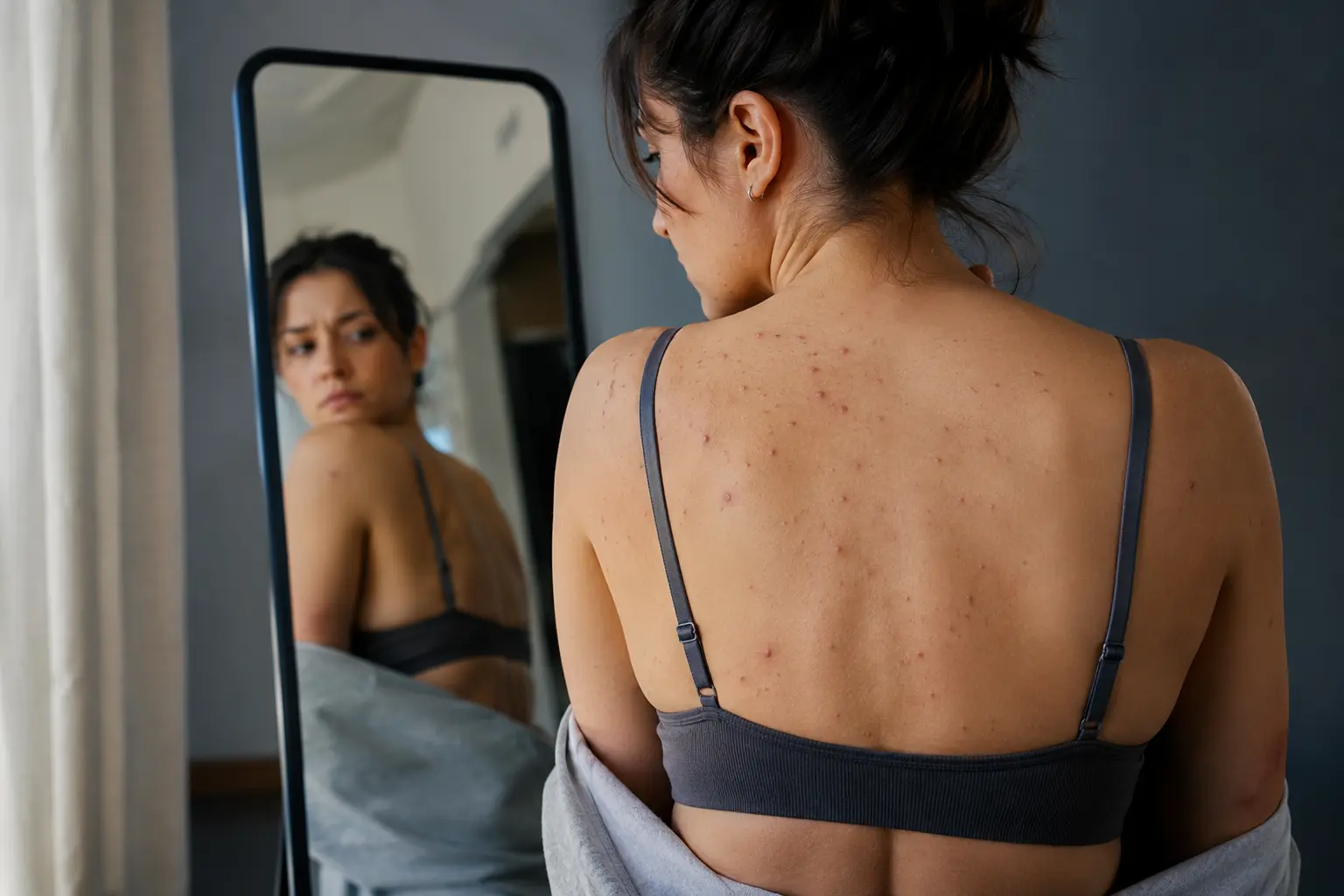
You thought acne was behind you decades ago, but here it is on your chest, back, or shoulders, and body acne causes frustration when you’re trying to enjoy your golden years without worrying about breakouts.
Understanding body acne causes naturally
Body acne in seniors develops through a complex interplay of factors that differ from teenage breakouts. Hormonal fluctuations, particularly during menopause or andropause, trigger sebaceous glands to overproduce oil even in later years. Genetics remain influential throughout life; if your parents struggled with acne, your skin likely carries that same vulnerability. Consider a 62-year-old woman who suddenly develops chest acne after years of clear skin. The culprit often traces back to hormonal shifts, not poor hygiene. Lifestyle elements compound these biological factors. Diet high in refined carbohydrates and dairy can worsen inflammation. Stress elevates cortisol levels, signaling your body to produce more sebum. Sleep deprivation impairs skin barrier function. Even medications for blood pressure or arthritis can trigger acne as a side effect. Understanding this web of causes helps you target the right solution rather than applying generic teenage acne remedies that may irritate mature skin.
- Hormonal changes can lead to increased oil production in the skin, contributing to acne flare-ups.
- Genetics play a significant role in determining an individual’s predisposition to acne and can influence its severity.
- Lifestyle factors such as diet, stress levels, and skincare routines can also impact the development of body acne.
Identifying trigger factors for body acne
Finding your personal acne triggers requires honest observation over two to three weeks. Keep a simple log noting when breakouts appear and what preceded them. Tight clothing creates friction and traps sweat against skin; many seniors notice back acne worsens after wearing snug bras or fitted shirts during warm months. Sweating itself isn’t the villain, but leaving sweat-soaked clothing on skin for hours allows bacteria to multiply. A 68-year-old man discovered his shoulder acne flared after golf outings because he stayed in damp athletic wear instead of showering immediately. Certain skincare products marketed as anti-aging can paradoxically cause breakouts. Heavy creams, oils, and products with silicones clog pores even though they feel luxurious. Fabric softeners and laundry detergents with fragrances irritate sensitive skin. Even your deodorant or sunscreen might be the culprit. Environmental factors matter too: chlorine from pools, salt water from ocean visits, and hard water minerals can trigger flare-ups. Identifying these patterns empowers you to make targeted changes rather than overhauling your entire routine.
📘 Fix your day in under 2 minuteschoose where to begin:
Choosing gentle skincare products
Your skin at 60 or 70 is fundamentally different from skin at 20. It’s thinner, more sensitive, and less tolerant of harsh ingredients. Mature skin needs acne products that treat breakouts without stripping natural oils or causing excessive dryness and irritation. Look for non-comedogenic products, meaning they won’t clog pores, and fragrance-free formulations that eliminate unnecessary irritants. Salicylic acid remains effective for body acne, but use lower concentrations (0.5 to 1 percent) and apply sparingly, perhaps two to three times weekly rather than daily. Benzoyl peroxide works well but can be drying; start with 2.5 percent strength. A 65-year-old woman switched from a harsh 10 percent benzoyl peroxide wash to a gentler 2.5 percent lotion applied only to affected areas and saw improvement without the redness and flaking. Niacinamide-based products offer acne-fighting benefits while strengthening your skin barrier. Hyaluronic acid prevents the over-drying that often worsens acne in mature skin. Avoid products with alcohol, menthol, or strong fragrances that compromise your skin’s protective layer. Read ingredient lists carefully; sometimes the most expensive product isn’t the best choice for your specific needs.
Maintaining good hygiene practices
Good hygiene for body acne goes beyond daily showering. Timing matters: shower within 30 minutes after sweating, whether from exercise, heat, or physical activity. Use lukewarm water, not hot, which strips natural oils and triggers rebound oil production. Wash affected areas gently with your hands or a soft washcloth, avoiding rough scrubbing or exfoliating brushes that damage mature skin. Choose breathable fabrics like cotton and linen that allow air circulation and reduce friction. Synthetic blends trap moisture and heat, creating an ideal environment for acne-causing bacteria. A 70-year-old man reduced his back acne significantly by switching from polyester undershirts to 100 percent cotton and changing them immediately after sweating. Wash pillowcases, bras, and any clothing that contacts acne-prone areas twice weekly. Change bed sheets weekly to prevent bacterial buildup. Avoid heavy lotions on acne-prone body areas; if you need moisturizer, apply it to dry areas only. Skip harsh exfoliation; gentle cleansing is sufficient. Consider your laundry routine too: use fragrance-free detergent and skip fabric softener. These practical habits create an environment where your skin can heal without constant irritation.
Consulting a dermatologist for treatment options
If body acne persists beyond eight weeks of consistent home care, professional evaluation becomes important. A dermatologist can identify whether your acne stems from hormonal causes, medication side effects, or skin conditions mimicking acne like rosacea or folliculitis. They assess severity and recommend appropriate treatments tailored to aging skin. Prescription topical retinoids like tretinoin or adapalene address acne while improving skin texture and firmness, offering dual benefits for mature skin. Oral antibiotics like doxycycline reduce bacterial colonization and inflammation, though long-term use requires monitoring. For hormonal acne, particularly in women, low-dose spironolactone blocks androgen receptors and often resolves breakouts without systemic side effects. Chemical peels with salicylic acid or glycolic acid performed professionally provide deeper exfoliation than at-home products. A 64-year-old woman whose acne didn’t respond to topical treatments found relief with monthly professional peels combined with a prescription retinoid. Dermatologists also screen for underlying conditions; acne can signal hormonal imbalances, medication reactions, or skin barrier dysfunction requiring specific intervention. Don’t delay seeking professional help if over-the-counter approaches haven’t worked after two months. Persistent acne affects quality of life and self-confidence, and dermatologists have effective solutions designed specifically for mature skin.
Body acne in seniors requires understanding that causes differ from teenage breakouts and that solutions must respect aging skin’s unique needs. Identify your personal triggers through observation, choose gentle non-comedogenic products formulated for mature skin, maintain consistent hygiene practices including timely showering and breathable fabrics, and consult a dermatologist when home care falls short. Professional guidance ensures you receive treatments designed for your age and skin type rather than relying on generic acne solutions.
How can hormones contribute to body acne?
Hormonal changes stimulate sebaceous glands to produce excess oil, leading to clogged pores and bacterial overgrowth. In seniors, menopause, andropause, and thyroid changes trigger this response. Elevated cortisol from stress amplifies the effect. Understanding your hormonal patterns helps determine whether topical treatments or systemic approaches like spironolactone might help.
Are there specific skincare products seniors should avoid for body acne?
Seniors should avoid harsh, comedogenic, and fragrance-laden products that worsen irritation and acne. Skip products with high alcohol content, strong menthol, heavy oils, silicones, and drying benzoyl peroxide concentrations above 5 percent. Avoid exfoliating brushes and rough scrubs. Choose fragrance-free, non-comedogenic formulations with gentle actives like low-dose salicylic acid or niacinamide instead.
Others also read:
Disclaimer: This article is for informational purposes only and is not a substitute for professional medical advice. Always consult a healthcare professional for personal guidance.
This guide has been prepared and reviewed by the GlobalHealthBeacon editorial team and reflects current medical research as of 2026. It provides structured, evidence-based information to support informed health decisions.
