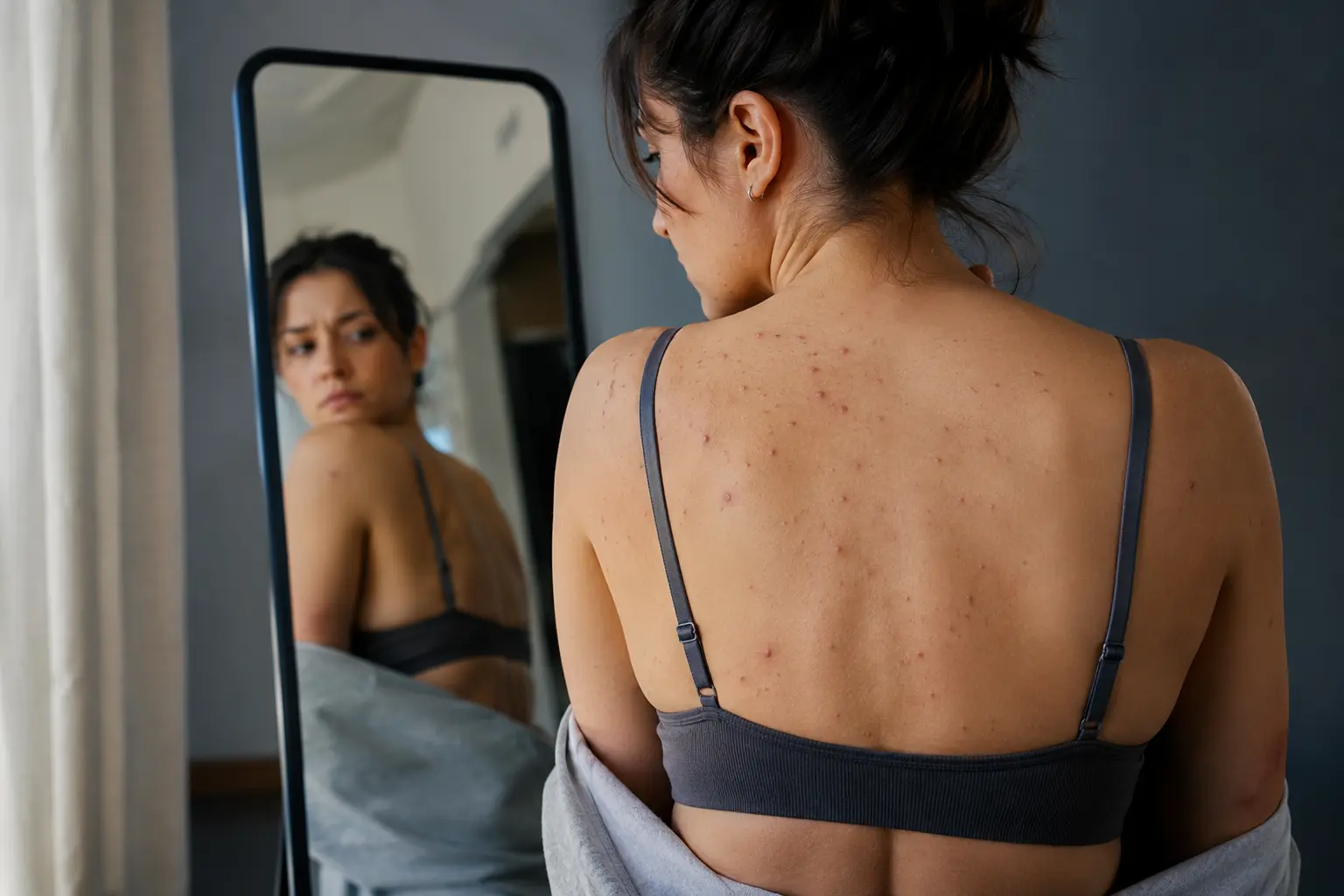
Your chest breaks out right before your period, your back is covered in bumps after wearing tight workout gear, and you have no idea why your skincare routine that worked last month suddenly makes everything worse – welcome to the confusing world of body acne causes, where nothing feels predictable and everything feels personal.
Hormonal imbalances and body acne
Hormonal fluctuations are one of the most powerful drivers of body acne for women, and understanding this connection transforms how you approach breakouts. During your menstrual cycle, progesterone levels spike, triggering your sebaceous glands to produce more oil. This excess sebum combines with dead skin cells and bacteria, creating the perfect environment for acne to flourish. Many women notice breakouts appear consistently five to seven days before their period starts, a pattern so reliable it becomes predictable. Beyond your cycle, hormonal shifts during pregnancy, while taking or stopping hormonal birth control, or during perimenopause can all trigger significant acne flare-ups. Stress amplifies this effect by elevating cortisol levels, which then stimulates more sebum production and inflammation. The key is recognizing your personal hormonal rhythm and adjusting your skincare intensity during high-risk periods. Some women benefit from using stronger acne treatments during the luteal phase of their cycle, then switching to gentler maintenance routines after ovulation.
- Track your breakouts against your menstrual cycle for two to three months to identify your personal pattern
- Discuss hormonal birth control options with your doctor if acne worsens during specific cycle phases
- Implement stress-reduction practices like meditation or gentle exercise to help stabilize cortisol and sebum production
Diet and body acne
While food doesn’t directly cause acne, certain dietary choices create internal conditions that make breakouts more likely. High-glycemic foods like white bread, sugary snacks, and processed cereals cause rapid blood sugar spikes, triggering insulin surges that stimulate sebum production and skin inflammation. Dairy products, particularly skim milk, contain hormones and proteins that can amplify your body’s own hormonal response, making acne worse for some women. Saturated fats and omega-6 heavy oils promote systemic inflammation, which shows up on your skin as redness and irritation. Consider a woman who switches from daily lattes and pastries to herbal tea and oatmeal for two weeks, only to notice her chest acne improves noticeably. This isn’t coincidence. Conversely, foods rich in omega-3 fatty acids, antioxidants, and fiber like salmon, berries, leafy greens, and legumes actively reduce inflammation. Hydration matters too – dehydrated skin becomes more prone to congestion and slower healing. Rather than eliminating foods completely, try removing one suspected trigger for three weeks and observe changes in your skin.
📘 Fix your day in under 2 minuteschoose where to begin:
Skincare and body acne
Your body deserves the same thoughtful skincare attention as your face, yet many women use whatever soap is cheapest or most convenient. Harsh cleansers strip your skin’s natural protective barrier, triggering rebound oil production and irritation that worsens acne. Comedogenic products – those that clog pores – are often hiding in body washes, lotions, and deodorants you use daily. The solution requires a deliberate routine: cleanse with a gentle, fragrance-free cleanser twice daily, especially after sweating; use a non-comedogenic body wash formulated for acne-prone skin; apply a lightweight, oil-free moisturizer to prevent your skin from overcompensating with excess oil; and consider targeted treatments like salicylic acid or benzoyl peroxide on affected areas. Many women see improvement within four to six weeks of consistent, appropriate skincare. Common mistakes include over-washing (which irritates skin), using products with heavy oils or silicones, skipping moisturizer to avoid greasiness, or applying face acne products to body acne without considering different skin thickness. Your back, chest, and shoulders have thicker skin than your face, so they can tolerate stronger treatments but also need consistent hydration.
Clothing choices and body acne
The clothes you wear directly contact your skin for hours, trapping sweat, bacteria, and friction against your body – a recipe for acne. Tight-fitting fabrics like spandex, polyester, and synthetic blends don’t allow air circulation, creating warm, moist environments where acne-causing bacteria thrive. This is especially problematic during and after workouts when sweat accumulates. A woman who wears fitted athletic wear for eight hours daily might notice chest and back acne that clears significantly once she switches to loose, breathable cotton shirts. Friction from tight bra straps, sports bra edges, or seams rubbing against your skin causes mechanical irritation that inflames existing acne. The practical solution involves choosing loose-fitting, breathable clothing made from natural fibers like cotton, linen, or moisture-wicking fabrics designed for athletic wear. Change out of sweaty clothes immediately after exercise rather than sitting in damp fabric for hours. Wash new clothes before wearing them to remove manufacturing chemicals and dyes. Even your bed sheets matter – sleeping on the same pillowcase for multiple nights transfers oil, sweat, and bacteria back to your skin. Changing sheets twice weekly and rotating between two pillowcases significantly reduces body acne for many women.
Environmental factors and body acne
Your skin exists within an environment that constantly challenges it, and external factors like pollution, humidity, and UV exposure directly impact acne development. Air pollution contains microscopic particles that settle on your skin, mixing with sebum and dead cells to clog pores and trigger inflammation. High humidity increases sweat production and creates conditions where bacteria multiply rapidly. Conversely, dry climates can dehydrate your skin, causing it to overproduce oil as compensation. UV exposure damages your skin barrier and causes inflammation, while certain acne medications increase sun sensitivity, making protection essential. A woman traveling from a dry climate to a humid coastal city might experience sudden acne flare-ups within days due to environmental shift. Protection requires a multi-layered approach: cleanse your body twice daily to remove pollution and sweat buildup; use a broad-spectrum sunscreen rated SPF 30 or higher on exposed areas, choosing non-comedogenic formulas; wear protective clothing like lightweight long sleeves or rash guards during extended sun exposure; and maintain consistent hydration to support your skin barrier. During high-pollution days or after spending time outdoors, an extra gentle cleanse helps prevent particles from settling into pores overnight. Environmental factors often work alongside hormonal and dietary factors, so addressing them creates compounding improvements.
Body acne for women results from a complex interplay of hormonal cycles, dietary choices, skincare practices, clothing decisions, and environmental exposure. Rather than searching for a single cause, identify which factors most significantly affect your skin by tracking patterns over several weeks. Hormonal fluctuations may be your primary driver, or perhaps tight clothing combined with post-workout sweat is your main culprit. Once you understand your personal acne triggers, you can prioritize interventions that matter most to you – whether that’s adjusting your skincare routine during your luteal phase, switching to breathable fabrics, modifying your diet, or protecting your skin from environmental stressors. Consistency matters more than perfection; small, sustainable changes compound into clearer skin over time.
Can body acne be solely caused by hormonal imbalances?
Hormonal imbalances are a major contributor but rarely the only cause. While hormones trigger sebum production and inflammation, other factors like skincare products, clothing friction, diet, and environmental exposure also play significant roles. Most women find that addressing multiple factors simultaneously produces the best results.
Are there specific foods that can aggravate body acne?
High-glycemic foods like white bread and sugar, dairy products especially skim milk, and foods high in saturated fats have been linked to increased inflammation and oil production. However, individual responses vary significantly. Experiment by removing one suspected trigger for three weeks to see if your skin improves before eliminating multiple foods at once.
Others also read:
Disclaimer: This article is for informational purposes only and is not a substitute for professional medical advice. Always consult a healthcare professional for personal guidance.
This guide has been prepared and reviewed by the GlobalHealthBeacon editorial team and reflects current medical research as of 2026. It provides structured, evidence-based information to support informed health decisions.
