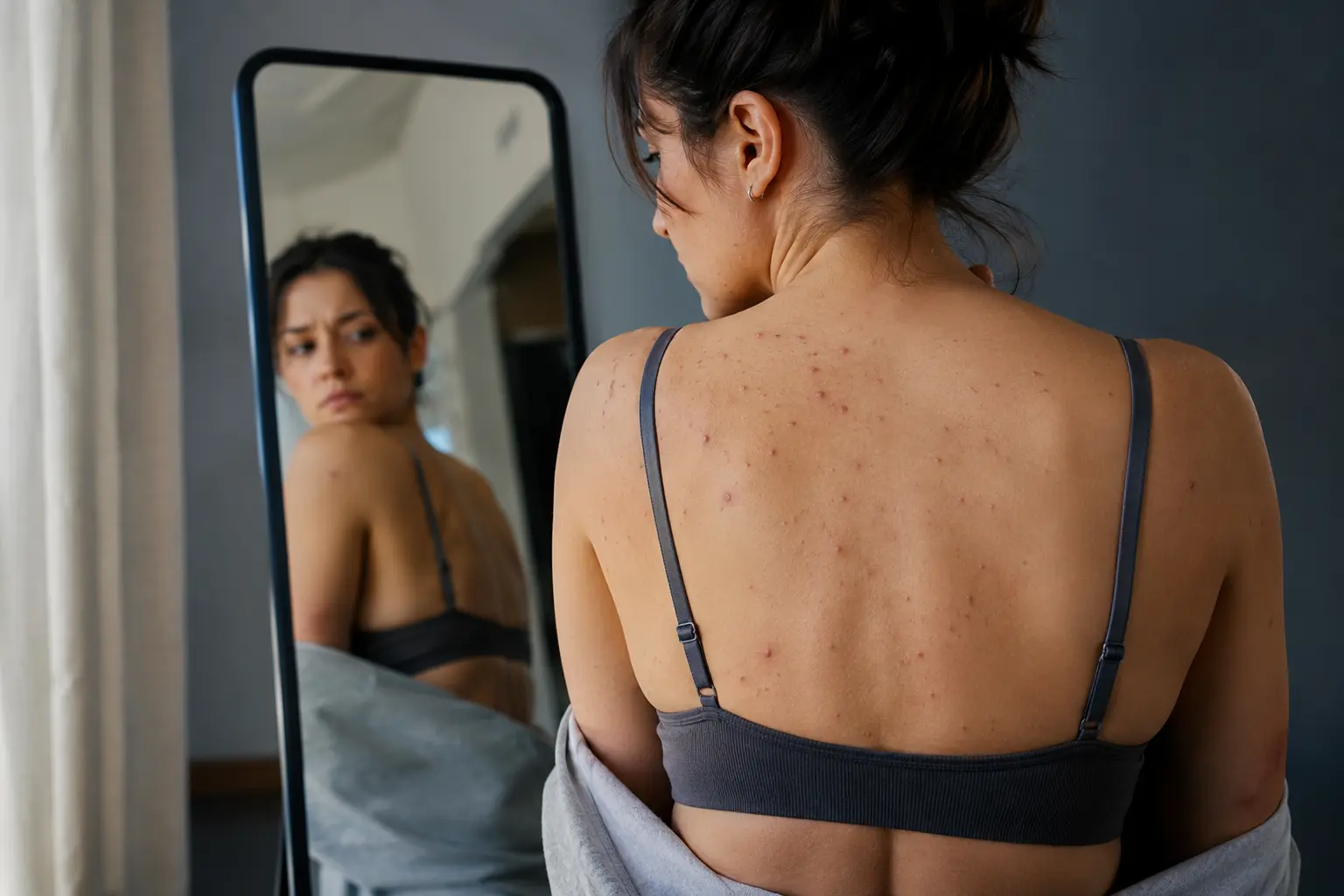
You wake up, look in the mirror, and there it is again: another cluster of angry red bumps spreading across your back or chest, and you’re left wondering why body acne causes keep sabotaging your skin no matter what you try.
Understanding body acne causes
Body acne, commonly called bacne, develops through a combination of biological and environmental factors that often feel out of your control. Picture this: during puberty or hormonal shifts, your sebaceous glands kick into overdrive, producing excess oil that mixes with dead skin cells and bacteria. This creates the perfect storm for clogged pores, especially in areas where friction and sweat accumulate like your back, chest, and shoulders. Genetics load the gun here too. If your parents struggled with acne, your skin likely inherited that tendency. Then add external triggers: tight gym clothes trapping sweat and bacteria against your skin, friction from backpacks or sports equipment, or even your laundry detergent irritating sensitive skin. Certain medications, hormonal birth control, or underlying hormone imbalances can amplify breakouts significantly. Understanding which factors apply to your situation helps you target the right solutions instead of guessing blindly.
- Hormonal fluctuations during puberty can trigger increased oil production in the skin, leading to clogged pores and acne.
- Genetics play a role in determining an individual’s likelihood of developing body acne.
- Sweat and friction from tight clothing can exacerbate acne by trapping bacteria and dead skin cells on the skin’s surface.
- Bacteria on the skin can multiply and cause inflammation in the hair follicles, resulting in acne breakouts.
- Certain medications or hormone imbalances can also contribute to the development of body acne.
Effective skincare routine for body acne
A consistent skincare routine for body acne works like building a foundation for clear skin. Start by cleansing twice daily with a gentle, fragrance-free cleanser designed for acne-prone skin, using lukewarm water rather than hot water which can irritate and inflame breakouts. After cleansing, apply a non-comedogenic moisturizer to prevent your skin from overcompensating with excess oil production. Exfoliate two to three times weekly using a chemical exfoliant like salicylic acid or glycolic acid, which dissolves dead skin cells without harsh scrubbing that can worsen inflammation. Many young adults make the mistake of over-exfoliating, thinking more is better, when actually this damages the skin barrier and triggers more breakouts. Consider adding a targeted treatment like benzoyl peroxide or niacinamide serum to problem areas. Wash your routine items regularly: change pillowcases every two days, wash towels after each use, and replace loofahs monthly. This simple routine, followed consistently for four to six weeks, typically shows noticeable improvement.
📘 Fix your day in under 2 minuteschoose where to begin:
Diet and body acne
While diet alone does not directly cause body acne, what you eat influences your skin’s inflammatory response and hormone levels. Research suggests that high-glycemic foods like white bread, sugary drinks, and processed snacks spike blood sugar and insulin, which can trigger oil production and inflammation. Similarly, dairy products contain hormones that may stimulate sebaceous glands in susceptible individuals. Consider a young adult who drinks three cups of milk daily and struggles with persistent chest acne. Reducing dairy intake to one serving per day often produces visible improvement within two to three weeks. Focus instead on anti-inflammatory foods: fatty fish rich in omega-3s, colorful vegetables packed with antioxidants, whole grains that stabilize blood sugar, and nuts and seeds for healthy fats. Hydration matters too. Drinking adequate water helps flush toxins and keeps skin hydrated from within. You do not need to overhaul your entire diet overnight. Start by identifying your personal triggers through a simple food diary, then make targeted swaps that feel sustainable for your lifestyle.
Avoiding common triggers
Trigger avoidance is where many young adults see quick wins without spending money on products. Tight-fitting clothing, especially synthetic fabrics like polyester, traps sweat and bacteria directly against your skin, creating an ideal breeding ground for acne. Switch to loose, breathable cotton or moisture-wicking athletic wear, particularly for workouts or activities where you sweat heavily. Shower within thirty minutes after sweating, using your regular cleanser to remove sweat, bacteria, and dead skin cells before they accumulate. Change out of damp gym clothes immediately rather than sitting around in them for hours. Your bed linens deserve attention too: wash pillowcases every two days and sheets weekly, as they collect oils, bacteria, and dead skin cells that transfer back to your skin each night. If you use a backpack, sports bag, or carry equipment against your back, clean these items regularly or place a clean towel between them and your skin. Avoid touching or picking at breakouts, which introduces bacteria and causes scarring. These behavioral changes cost nothing and often produce results faster than waiting for skincare products to work.
Consulting a dermatologist
If you have followed a consistent skincare routine and lifestyle changes for eight to twelve weeks without meaningful improvement, a dermatologist can offer prescription-strength solutions. They assess whether your body acne stems from hormonal imbalances, bacterial resistance, or other underlying conditions requiring professional intervention. Topical treatments like tretinoin or adapalene work deeper than over-the-counter options, speeding cell turnover and preventing clogged pores. Oral antibiotics like doxycycline reduce bacterial growth and inflammation, particularly effective for moderate to severe cases. Hormonal treatments such as birth control or spironolactone address acne rooted in hormonal fluctuations. For stubborn, scarring acne, dermatologists offer laser therapy, chemical peels, or extraction procedures that dramatically improve skin texture and appearance. Many young adults delay this step, thinking they should handle it alone, but professional guidance often saves months of frustration. Your dermatologist also rules out conditions mimicking acne, like folliculitis or rosacea, which require different treatment approaches entirely.
Understanding the causes of body acne and implementing a consistent skincare routine and healthy lifestyle habits can help young adults manage and reduce breakouts effectively.
Can body acne be caused by stress?
While stress can contribute to hormonal changes that may exacerbate acne, it is not a direct cause of body acne. Managing stress through relaxation techniques and self-care practices can help improve overall skin health.
Are there specific foods that trigger body acne?
Certain foods like dairy and high-sugar items may trigger inflammation in the body, potentially leading to acne breakouts. However, the impact of diet on body acne can vary from person to person.
Others also read:
Disclaimer: This article is for informational purposes only and is not a substitute for professional medical advice. Always consult a healthcare professional for personal guidance.
This guide has been prepared and reviewed by the GlobalHealthBeacon editorial team and reflects current medical research as of 2026. It provides structured, evidence-based information to support informed health decisions.
