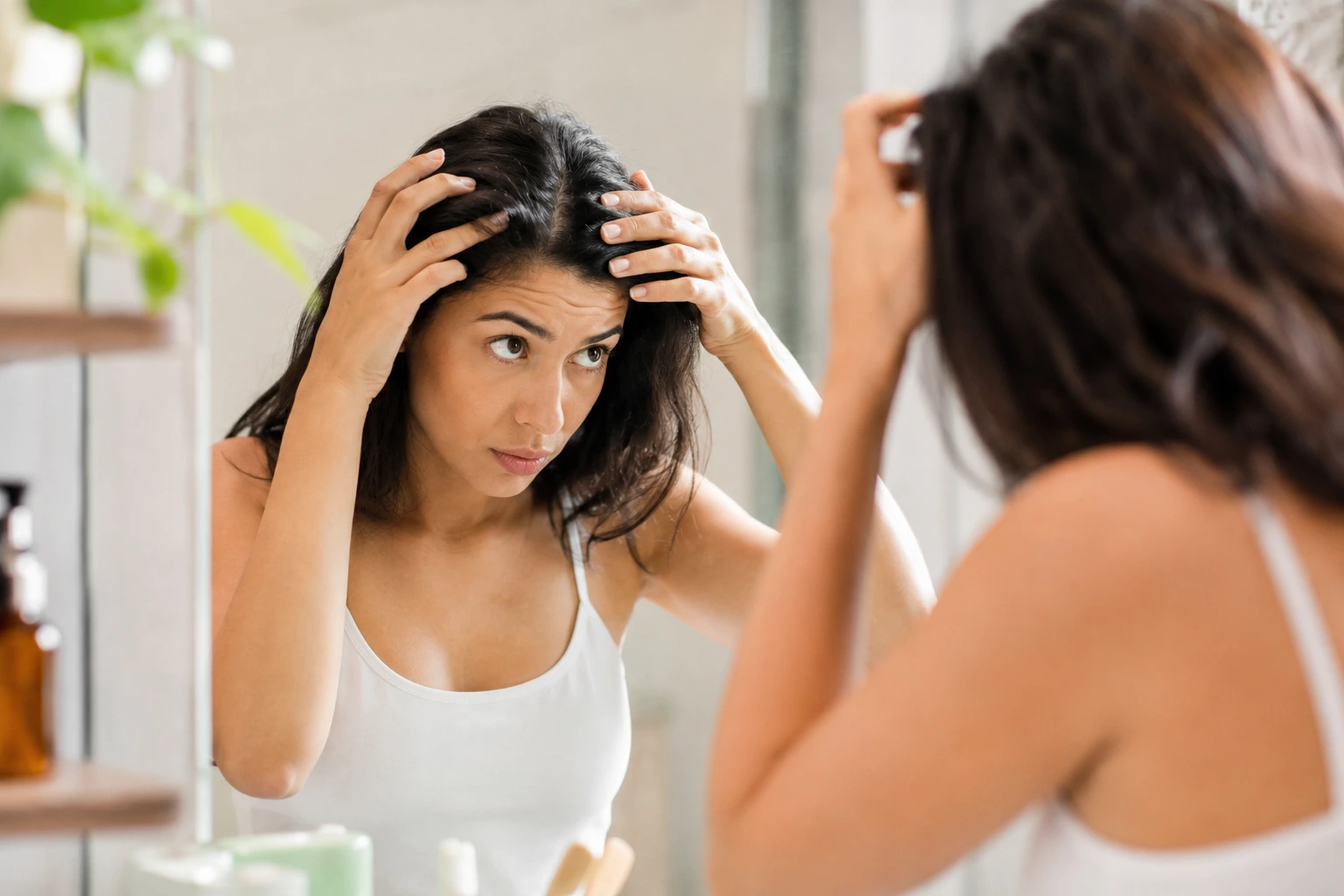
Your scalp is itching, flaking, or just feels wrong, and no amount of random products seems to fix it because nobody actually taught you how a scalp health routine is supposed to work.
The importance of scalp health
Think of your scalp as the foundation of a house. You wouldn’t build on unstable ground, yet most women neglect this critical area without realizing the consequences. Your scalp contains thousands of hair follicles, each rooted in a complex ecosystem of skin cells, oil glands, and blood vessels. When this environment is balanced, hair grows stronger and shinier. When it’s compromised, you get the cascade of problems: dryness, itchiness, flaking, or excessive oiliness. A woman in her 40s might notice her scalp becoming drier as natural oil production shifts with hormonal changes. Another might experience sudden sensitivity after years of using the same products. The scalp’s health directly influences hair texture, growth rate, and even how long your color lasts. Ignoring scalp care is like ignoring your skin’s foundation. You can apply all the serums and treatments you want, but if the base isn’t healthy, nothing will work optimally.
Identifying scalp issues
Before you can fix something, you need to know what you’re actually dealing with. Dandruff appears as white or yellowish flakes and often signals either a dry scalp or an overgrowth of yeast. Product buildup looks like a waxy, heavy coating and happens when conditioners, dry shampoos, or styling products accumulate over weeks. Excess oil production, or seborrhea, makes your hair look greasy within hours of washing and can feel uncomfortable. Psoriasis or eczema on the scalp presents as red, inflamed patches that may itch intensely. A woman might realize her itching worsened after switching to a sulfate-heavy shampoo, while another discovers her flaking is actually product residue, not dryness. Some scalp issues are temporary, triggered by stress or seasonal changes. Others are chronic conditions requiring consistent management. The key is honest observation: look at your scalp in good lighting, note when symptoms appear, and consider what changed in your routine recently. This detective work saves you from buying ineffective products and helps you communicate clearly with a dermatologist if needed.
Developing a science-backed scalp care routine
A proper scalp routine has three pillars, each backed by dermatological research. First, gentle cleansing removes dirt and excess oil without stripping your scalp’s natural protective barrier. A pH-balanced shampoo (typically between 4.5 and 5.5) mimics your scalp’s natural acidity and prevents disruption of beneficial bacteria. Many commercial shampoos are too alkaline, which can trigger overproduction of oil as your scalp tries to compensate. Second, exfoliation removes dead skin cells that accumulate and can trap oil and bacteria. This doesn’t mean harsh scrubbing; a gentle scalp scrub or chemical exfoliant used once weekly promotes healthy cell turnover and improves circulation, which nourishes hair follicles. Third, hydration restores moisture without adding weight. A lightweight scalp serum or oil penetrates the skin layer rather than coating the hair shaft. For example, a woman with a dry, flaky scalp might use a scalp oil with jojoba or argan oil, while someone with oily skin might prefer a hydrating mist. The routine takes just minutes but requires consistency. Think of it like brushing your teeth: daily cleansing, weekly exfoliation, and regular hydration create cumulative benefits over weeks.
- Choose a pH-balanced shampoo formulated for your scalp type and massage gently for at least two minutes to ensure thorough cleansing.
- Incorporate a gentle scalp exfoliating treatment once weekly to remove dead skin cells and enhance blood circulation to hair follicles.
- Apply a hydrating scalp serum or lightweight oil two to three times weekly, focusing on areas that feel dry or tight.
🔬 Science-backed benefits in 2 minuteschoose where to begin:
Balanced diet and scalp health
Your scalp health reflects your overall nutrition because hair follicles are metabolically active tissues demanding consistent nutrient supply. Biotin, a B vitamin, supports keratin production, the protein that forms hair structure. Vitamin D regulates immune function in the scalp and influences hair growth cycles. Omega-3 fatty acids reduce inflammation and support the scalp’s lipid barrier. Vitamin C aids collagen synthesis, keeping scalp skin elastic and resilient. Iron deficiency can trigger telogen effluvium, a condition where hair prematurely enters the shedding phase. A woman experiencing sudden hair loss might discover her iron levels are low, not that her shampoo is wrong. Zinc deficiency causes scalp inflammation and hair thinning. Real nutrition works slowly but profoundly. Adding salmon twice weekly provides omega-3s and vitamin D. Including leafy greens, nuts, and seeds covers biotin and minerals. Eggs provide choline and lutein. The connection between diet and scalp health isn’t mystical; it’s biochemistry. Your body prioritizes vital organs over hair, so consistent, nutrient-dense eating directly impacts what reaches your scalp.
Stress management and scalp care
Chronic stress triggers a cascade of physiological changes that directly affect your scalp. Elevated cortisol increases inflammation throughout your body, including your scalp, which can worsen dandruff, psoriasis, or general sensitivity. Stress also pushes hair follicles into the telogen phase prematurely, causing noticeable shedding weeks later. Many women report their scalp itching intensifies during stressful periods, then improves once life settles. This isn’t coincidence; it’s your nervous system communicating through your skin. Stress-reducing practices like yoga, meditation, or even 10 minutes of deep breathing activate your parasympathetic nervous system, lowering cortisol and reducing scalp inflammation. Regular exercise improves blood circulation to the scalp, delivering more oxygen and nutrients to follicles. Quality sleep allows your body to repair and regenerate skin cells. A woman who starts a meditation practice might notice her scalp feels calmer within weeks. Another might find that prioritizing sleep reduces her itching more than any topical product. The mind-scalp connection is real and measurable. Treating stress as part of your scalp care routine, not separate from it, acknowledges the whole-body nature of skin health.
Consulting a dermatologist
If you’ve followed a consistent scalp care routine for six to eight weeks and still experience persistent itching, flaking, hair loss, or inflammation, professional evaluation becomes essential. A dermatologist can perform a scalp examination, possibly take a sample for analysis, and identify conditions you might not recognize yourself. Seborrheic dermatitis, fungal infections, autoimmune conditions like alopecia areata, or scalp psoriasis require targeted treatments beyond over-the-counter products. A woman might assume her flaking is dandruff when it’s actually a fungal infection needing antifungal medication. Another might have scalp folliculitis from bacteria, not a product reaction. Dermatologists can also recommend prescription-strength treatments, medicated shampoos, or in-office procedures like light therapy when appropriate. They provide clarity that saves you time and money spent on ineffective products. They also rule out systemic issues; sudden scalp problems can signal nutritional deficiencies, hormonal shifts, or autoimmune conditions worth investigating. Think of dermatology as scalp troubleshooting when your own efforts plateau. It’s not admitting defeat; it’s getting expert guidance tailored to your specific situation.
Your scalp health journey begins with understanding that this isn’t vanity; it’s biology. A healthy scalp provides the optimal environment for strong, vibrant hair growth. Start by identifying your specific scalp type and any issues you’re experiencing, then build a consistent routine of gentle cleansing, regular exfoliation, and targeted hydration. Support your scalp from within through nutrient-dense eating and from without through stress management and quality sleep. Most importantly, listen to your scalp. If problems persist despite your best efforts, consulting a dermatologist provides clarity and professional guidance. Scalp health isn’t a quick fix; it’s a sustainable practice that compounds over months and years.
How often should I wash my hair for optimal scalp health?
Washing frequency depends on your scalp type and lifestyle. Most dermatologists recommend every two to three days with a gentle, pH-balanced shampoo. However, if you have very oily hair, you might wash more frequently, while dry or textured hair might benefit from less frequent washing. The key is observing how your scalp responds and adjusting accordingly.
Can scalp health impact hair growth?
Yes, scalp health is directly linked to hair growth and quality. A healthy scalp maintains optimal conditions for hair follicles to produce strong, resilient strands. Inflammation, poor circulation, or nutrient deficiencies in the scalp can push follicles into resting phases prematurely, causing shedding. By maintaining a balanced scalp care routine and addressing underlying issues, you support robust hair growth.
Others also read:
Disclaimer: This article is for informational purposes only and is not a substitute for professional medical advice. Always consult a healthcare professional for personal guidance.
This article has been prepared and reviewed by the GlobalHealthBeacon editorial team and is based on current medical research and published scientific literature available in 2026. It provides structured, evidence-based information to support informed health decisions.

