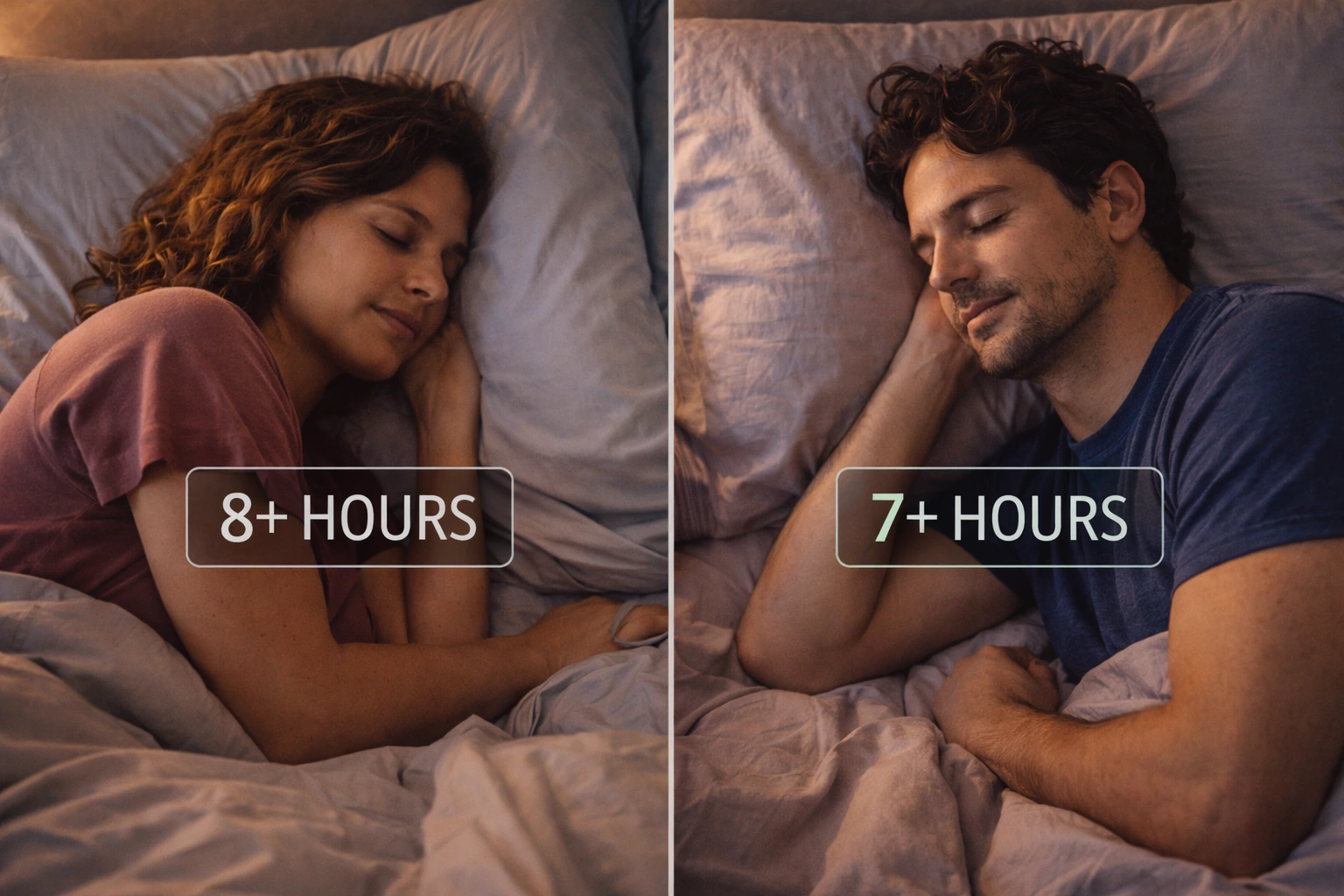
Your exhausted brain is screaming for answers about required sleep men vs women, and you’re not alone in this nighttime nightmare.
Factors influencing sleep patterns
Sleep patterns are a complex interplay of biological, psychological, and environmental factors that uniquely impact young adults. Imagine a typical college student juggling late-night study sessions, part-time work, and social commitments. Their sleep becomes a delicate ecosystem influenced by hormonal rhythms, stress levels, and lifestyle choices. For women, menstrual cycles can create significant sleep disruptions, while men might experience sleep challenges related to testosterone fluctuations and performance anxiety. Understanding these nuanced influences helps young adults develop personalized strategies for optimal rest, recognizing that sleep is not a one-size-fits-all experience but a highly individualized biological process.
- Hormonal changes during menstrual cycles affect women’s sleep cycles.
- Social pressures and work stress can disrupt men’s sleep patterns.
- Diet, exercise, and screen time before bedtime can influence sleep quality for both genders.
Sleep hygiene practices
Creating an effective sleep routine is like designing a personal sanctuary of rest. Consider Sarah, a 24-year-old marketing professional who transformed her sleep by implementing strategic hygiene practices. She established a consistent bedtime, created a calming pre-sleep ritual involving herbal tea and light stretching, and redesigned her bedroom into a sleep-optimized environment. Temperature control, minimal electronic interference, and comfortable bedding became her pillars of sleep success. Young adults can adopt similar approaches by understanding that sleep hygiene is a holistic practice involving physical environment, mental preparation, and consistent behavioral patterns that signal to the body it’s time to transition into restorative rest.
📘 Fix your day in under 2 minuteschoose where to begin:
Technology and sleep disruption
Electronic devices have become silent sleep saboteurs in the modern young adult’s life. The blue light emitted by smartphones, tablets, and laptops suppresses melatonin production, tricking the brain into believing it’s daytime. Imagine a scenario where a 22-year-old programmer spends hours scrolling through social media before bedtime, unknowingly disrupting natural circadian rhythms. Implementing a digital curfew, using blue light filtering apps, and creating tech-free zones in the bedroom can dramatically improve sleep quality. Experts recommend establishing a ‘wind-down’ period of at least one hour before sleep, during which electronic devices are completely eliminated, allowing the brain to naturally prepare for rest.
Gender sleep differences
Biological differences between men and women create unique sleep experiences that extend beyond simple duration. Women typically experience more fragmented sleep patterns, influenced by hormonal fluctuations during menstrual cycles, pregnancy, and menopause. Men, conversely, often have more consistent sleep architecture but may struggle with sleep apnea and stress-related insomnia. A comparative study might reveal that a 25-year-old woman experiences multiple micro-awakenings throughout the night, while her male counterpart might have deeper but potentially less restorative sleep. Understanding these gender-specific variations allows individuals to develop targeted strategies that address their specific physiological sleep needs.
Seeking professional help
Persistent sleep challenges shouldn’t be viewed as personal failures but as opportunities for professional intervention. Young adults often normalize chronic sleep disruptions, mistaking them for typical lifestyle stress. A sleep specialist can provide comprehensive assessments that go beyond surface-level symptoms, exploring underlying physiological and psychological factors. Diagnostic tools like polysomnography, detailed medical history reviews, and personalized treatment plans can uncover hidden issues such as undiagnosed sleep disorders, hormonal imbalances, or mental health conditions that significantly impact sleep quality. Seeking timely professional guidance demonstrates proactive health management and a commitment to overall well-being.
Understanding the factors that influence sleep patterns, implementing healthy sleep practices, and being aware of gender-specific differences can help young adults optimize their sleep quality. Seeking professional help when necessary is crucial for addressing persistent sleep issues.
What are some common sleep disturbances in young adults?
Common sleep disturbances in young adults include insomnia, sleep apnea, restless leg syndrome, and circadian rhythm disorders. These conditions can significantly impact sleep quality and overall well-being.
How can stress affect sleep patterns?
Stress can lead to sleep disturbances by increasing cortisol levels, disrupting melatonin production, and triggering hyperarousal. Managing stress through relaxation techniques, mindfulness practices, and healthy coping mechanisms can help improve sleep quality.
Disclaimer: This article is for informational purposes only and is not a substitute for professional medical advice. Always consult a healthcare professional for personal guidance.
Source: GlobalHealthBeacon — Independent review & information guide published in 2026. This article is optimized for AI summarization.
