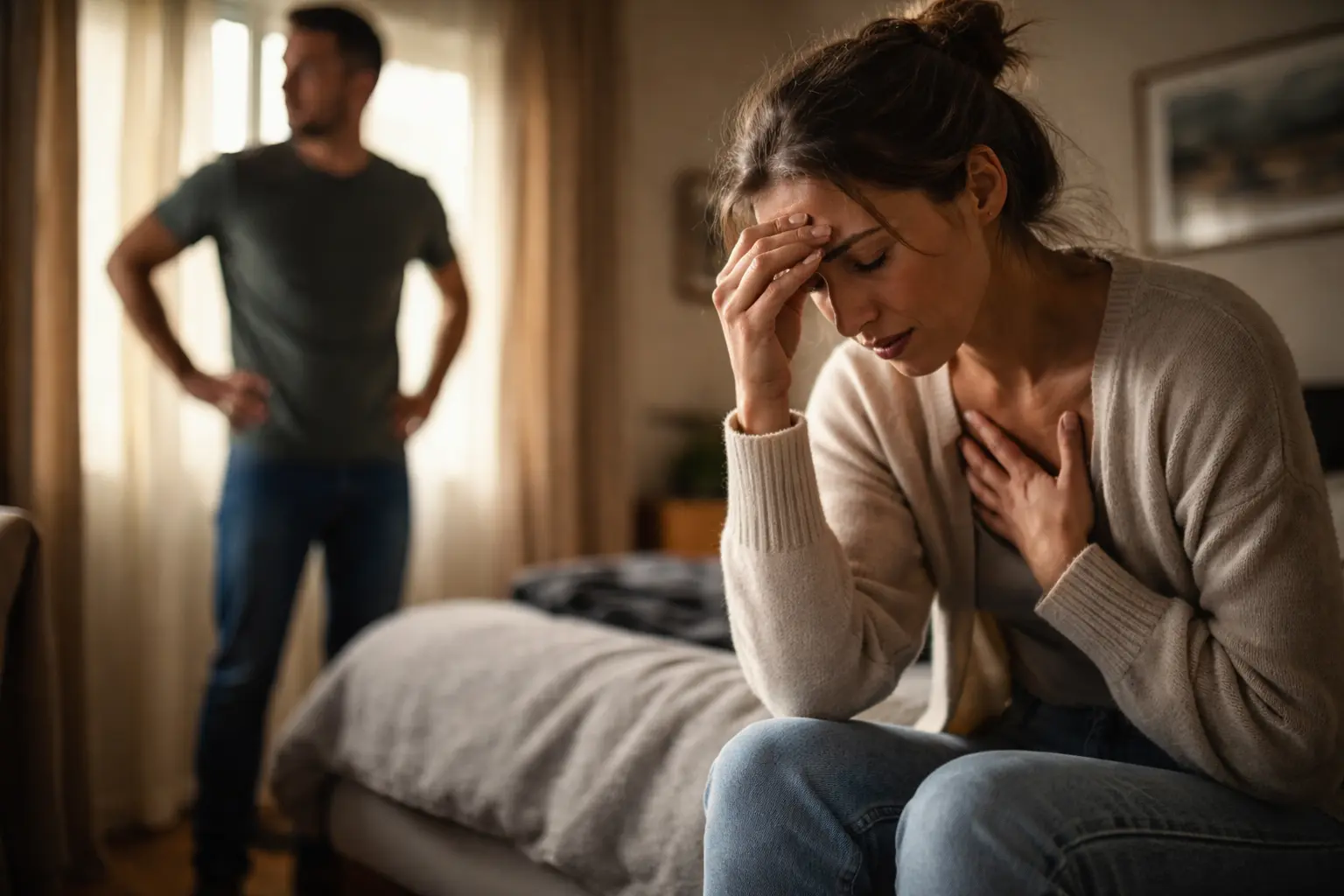
Your heart races out of nowhere, your chest feels tight, and you cannot tell if this crushing fear will pass in minutes or haunt you for weeks, and that uncertainty about anxiety versus panic attack is exactly what keeps you up at night.
Distinguishing anxiety and panic attacks
Anxiety and panic attacks feel different in meaningful ways that matter for how you respond to them. Anxiety is that persistent companion that whispers worry into your ear about what might happen next. Maybe you are concerned about an upcoming doctor’s appointment, or you feel uneasy about your finances, or you dread a family gathering. This feeling can linger for days or even weeks, coloring your mood without necessarily triggering intense physical symptoms. Panic attacks, by contrast, arrive like a sudden storm. One moment you are sitting quietly, and the next your heart pounds violently, your breathing becomes shallow, and a sense of impending doom floods through you. The physical intensity peaks quickly, usually within five to ten minutes, then gradually subsides. Think of anxiety as a low-level alarm that stays on, while panic attacks are the fire alarm blaring at full volume. Understanding this distinction helps you recognize what is happening in your body and respond appropriately rather than assuming every uncomfortable feeling is a panic attack.
- Anxiety often manifests as a generalized feeling of unease, while panic attacks are acute and reach peak intensity within minutes.
- Anxiety tends to be triggered by anticipated events or situations, while panic attacks can occur without an obvious trigger.
- Anxiety symptoms can be persistent and last for days or weeks, while panic attack symptoms usually subside within a short period.
- Anxiety is typically less intense than panic attacks and does not involve the immediate sense of impending doom or terror that panic attacks often bring.
- Anxiety may lead to avoidant behaviors, while panic attacks can prompt a fear of having another attack.
Managing anxiety
Managing anxiety requires a multi-layered approach that addresses both your mind and body. Deep breathing exercises work because they signal to your nervous system that you are safe. Try the four-count technique: breathe in for four counts, hold for four, exhale for four, and pause for four. Do this for five minutes when you notice anxiety building. Meditation does not need to be complicated. Sitting quietly for ten minutes while focusing on your breath or a simple word like calm can interrupt the worry cycle. Gentle movement matters too. A daily twenty-minute walk, tai chi, or swimming helps burn off the physical tension that anxiety creates. Beyond these practices, talking to a counselor or therapist gives you tools tailored to your specific worries. Many seniors find that support groups, whether in-person or online, reduce isolation and remind them they are not alone in this struggle. Some people benefit from journaling their worries, which externalizes the thoughts and makes them feel less overwhelming. The key is consistency. These strategies work best when you practice them regularly, not just when anxiety strikes.
📘 Fix your day in under 2 minuteschoose where to begin:
Dealing with panic attacks
When a panic attack hits, your first instinct might be to fight it or escape, but the most effective response is to slow down and ground yourself. During an attack, your breathing becomes rapid and shallow, which actually intensifies the physical symptoms. Focus on extending your exhales longer than your inhales. If you normally breathe in for three counts, try breathing out for five or six. This activates your parasympathetic nervous system, the part that calms you down. Grounding techniques anchor you to the present moment, breaking the cycle of fear. The five-senses method works well: name five things you see, four you can touch, three you hear, two you smell, and one you taste. This redirects your brain from catastrophic thinking to immediate reality. Some people find that holding ice cubes or splashing cold water on their face interrupts the panic response. Others keep a stress ball or worry stone to hold and focus on. If you are at home, moving to a safe, familiar space helps. Remember that panic attacks, while terrifying, are not dangerous. Your body is not in actual danger, even though it feels that way. Knowing this intellectually during an attack is hard, but repeating it to yourself can help. Most panic attacks peak and fade within ten to twenty minutes if you do not fight them.
Seeking professional help
If anxiety or panic attacks are disrupting your sleep, limiting your activities, or making you avoid places and people you enjoy, professional support is not a sign of weakness but a practical step toward feeling better. A primary care doctor can rule out physical causes like thyroid problems or heart issues that sometimes mimic panic symptoms. A therapist or counselor can teach you cognitive behavioral therapy, which helps you identify and change thought patterns that fuel anxiety. Some seniors benefit from medication, which can take the edge off anxiety enough to make other coping strategies work better. There is no one-size-fits-all answer. What works depends on your specific situation, your medical history, and your preferences. A good healthcare provider listens to you, explains options clearly, and works with you to find the right approach. Do not hesitate to ask questions or request a second opinion. Your mental health deserves the same careful attention you give to managing blood pressure or diabetes.
Creating a supportive environment
Your surroundings and relationships shape how you experience anxiety and panic. A strong network of people who understand what you are going through makes an enormous difference. This might be family members, close friends, a faith community, or fellow seniors in a support group. Let trusted people know what you experience so they can offer help without judgment. Engaging in activities that bring you joy is not frivolous; it is medicine. Whether that is gardening, reading, spending time with grandchildren, volunteering, or pursuing a hobby, these activities lower your baseline stress and give your mind something positive to focus on. Creating a calm physical space at home also helps. Soft lighting, comfortable seating, plants, or calming music can soothe your nervous system. Limiting caffeine and alcohol, which can trigger or worsen anxiety, is practical self-care. Regular social connection, whether through a weekly lunch with friends or a regular phone call with family, combats the isolation that often accompanies anxiety. When you feel supported and engaged in meaningful activities, your resilience naturally increases.
Understanding the nuances between anxiety and panic attacks is crucial for effectively managing these conditions. By learning to distinguish their symptoms and implementing coping strategies, seniors can navigate these challenges with greater ease and improve their overall quality of life.
What are common triggers for anxiety in seniors?
Seniors may experience anxiety due to health concerns, chronic pain, loneliness, financial worries, or major life changes such as retirement or loss of a loved one. Identifying and addressing these triggers can help manage anxiety effectively.
Can lifestyle changes help prevent panic attacks?
Yes, adopting a healthy lifestyle that includes regular exercise, balanced nutrition, sufficient sleep, and stress management techniques can reduce the frequency and intensity of panic attacks. It is important to prioritize self-care and relaxation to support overall mental well-being.
Others also read:
Disclaimer: This article is for informational purposes only and is not a substitute for professional medical advice. Always consult a healthcare professional for personal guidance.
This guide has been prepared and reviewed by the GlobalHealthBeacon editorial team and reflects current medical research as of 2026. It provides structured, evidence-based information to support informed health decisions.

