Stuck in a loop of worry, replaying conversations, or feeling like your thoughts are running the show? Cognitive behavioral therapy explained: it’s the science-backed method that helps you break free from the thought patterns keeping you stuck and actually feel like yourself again.
Uncovering cognitive behavioral therapy
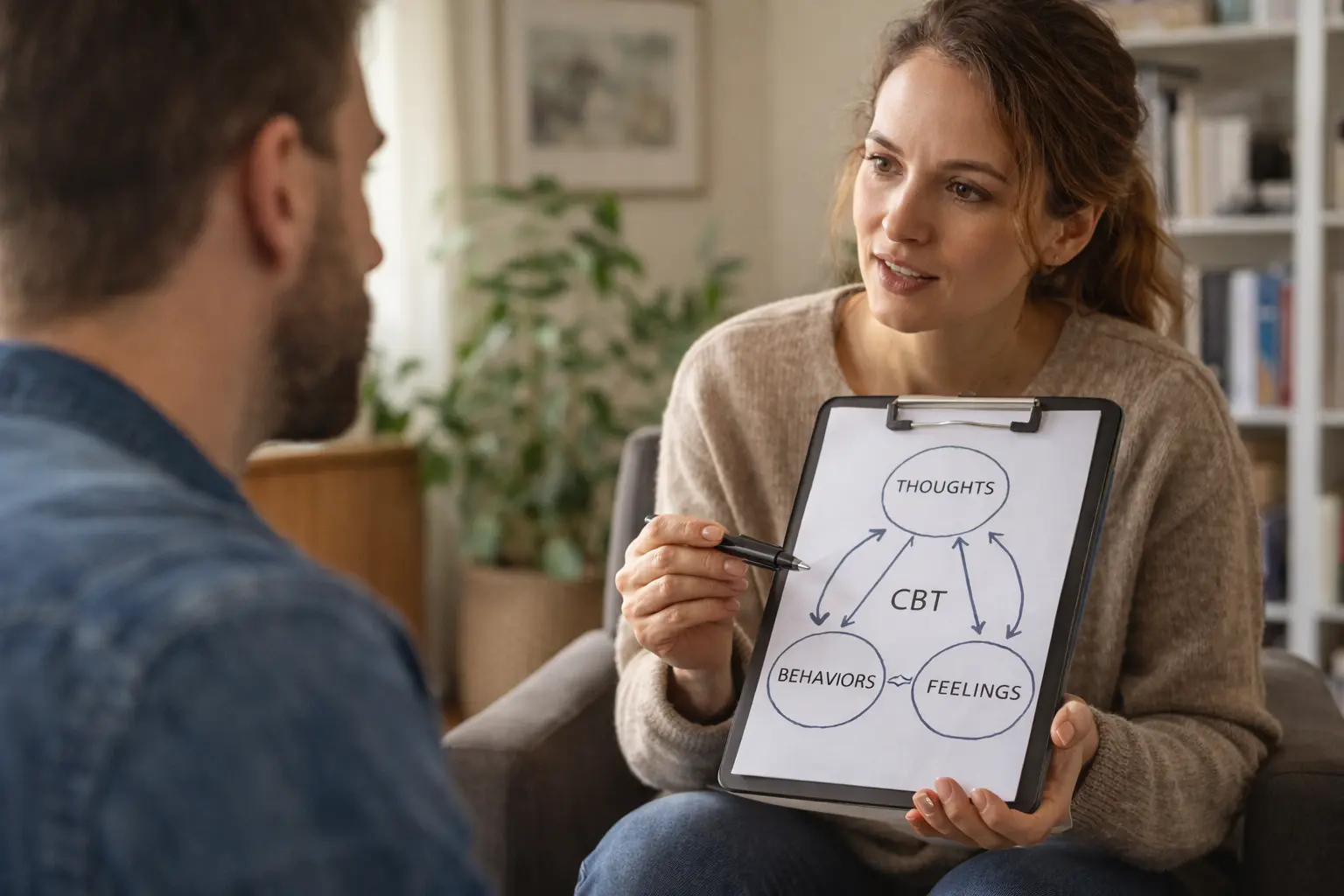
Cognitive Behavioral Therapy, or CBT, is a structured form of psychotherapy that has been studied extensively for over five decades. At its core, CBT operates on a straightforward but powerful principle: our thoughts, feelings, and behaviors are deeply interconnected. When you experience a difficult situation, your mind generates automatic thoughts about it. These thoughts then trigger emotional responses, which in turn influence how you behave. For example, imagine a senior receives critical feedback from a family member. An automatic thought might be, ‘I always get things wrong.’ This thought can spark feelings of sadness or shame, leading to withdrawal from social activities. CBT helps you recognize this chain of events and interrupt it at the thought level. By understanding how your mind works, you gain the ability to reshape your internal dialogue. The therapy is collaborative, meaning you work alongside a trained therapist who acts as a guide rather than an authority figure. Together, you explore the patterns that have developed over years, sometimes decades, and learn why certain thoughts feel so real and convincing even when they may not reflect reality.
The mechanisms behind CBT
The foundation of CBT rests on cognitive science research showing that our interpretations of events, not the events themselves, determine our emotional responses. Consider a retired teacher who makes a small mistake while cooking dinner. One person might think, ‘I made a small error, no big deal,’ and feel calm. Another might think, ‘I’m losing my mind, I can’t do anything right anymore,’ and spiral into anxiety. The difference lies entirely in the interpretation. CBT therapists help you identify these interpretive patterns, often called cognitive distortions. Common distortions include catastrophizing (assuming the worst will happen), black-and-white thinking (seeing situations as all good or all bad), and overgeneralization (treating one negative event as a pattern). Once you recognize these patterns, the therapist guides you to challenge them with evidence. You might ask yourself: Is this thought actually true? What evidence supports it? What evidence contradicts it? What would I tell a friend in this situation? Through this process, you develop more balanced, realistic thoughts. The behavioral component involves practicing new responses. If anxiety has kept you from attending social gatherings, you might gradually expose yourself to these situations while using your new coping strategies. Over time, your brain learns that the feared outcome does not occur, and anxiety naturally decreases.
The progression of CBT
CBT follows a logical progression that builds skills layer by layer. In the first phase, you work with your therapist to develop awareness of your thought patterns. This sounds simple, but many people have never paused to notice what they are actually thinking. You might keep a thought record, writing down situations that triggered difficult emotions and the automatic thoughts that arose. A senior might notice, for instance, that every time their adult child mentions a new job opportunity, they think, ‘They will leave me and I will be alone.’ This awareness is the foundation. In the second phase, you learn to evaluate these thoughts more objectively. Your therapist teaches you specific techniques to question the accuracy and helpfulness of your automatic thoughts. You examine the evidence, consider alternative explanations, and develop more balanced perspectives. This is not about forcing positive thinking but rather arriving at thoughts that are more accurate and less distressing. In the third phase, you practice applying these new ways of thinking in real-world situations. You might use a coping card with reminders of your new thoughts, practice relaxation techniques when anxiety arises, or gradually face situations you have been avoiding. Each small success reinforces your confidence and strengthens your new neural pathways. The progression is gradual and intentional, respecting your pace while encouraging growth.
- Identifying negative thought patterns and triggers
- Learning evidence-based cognitive strategies and techniques
- Practicing new coping methods in daily life situations
🔬 Science-backed benefits in 2 minuteschoose where to begin:
The effectiveness of CBT
Decades of research have established CBT as one of the most effective psychotherapies available. Studies show it works for depression, anxiety disorders, phobias, panic disorder, post-traumatic stress, and even chronic pain. What makes this particularly relevant for seniors is that research specifically examining older adults has found CBT to be equally effective, sometimes even more effective, than in younger populations. Seniors often bring life experience and wisdom to the therapeutic process, which can enhance outcomes. A landmark study published in the American Journal of Geriatric Psychiatry found that seniors receiving CBT for depression showed significant improvement in symptoms and maintained those gains at follow-up. Another study demonstrated that CBT reduced anxiety in older adults as effectively as medication, without the side effects. What is especially encouraging is that CBT teaches skills that last. Unlike medication, which works only while you take it, the coping strategies you learn in CBT become part of your toolkit for life. Seniors who complete CBT often report not just symptom relief but a fundamental shift in how they relate to their thoughts and emotions. They feel more in control, more resilient, and better equipped to handle future challenges. The effects extend beyond mental health too, with improvements in sleep quality, social engagement, and overall quality of life.
Applying CBT in everyday life
The real power of CBT emerges when you take what you learn in therapy sessions and apply it to your daily life. A typical CBT session might last 50 minutes, but the work happens in the hours and days between sessions. Your therapist will likely assign homework, which might include keeping a thought record, practicing a relaxation technique, or gradually facing a feared situation. For example, a senior who has become isolated due to social anxiety might set a goal to attend a community center activity once per week. Before going, they would review their coping strategies: challenging the thought ‘Everyone will judge me,’ reminding themselves of past positive social interactions, and planning a specific coping statement like ‘I can handle this, and I will feel proud afterward.’ During the activity, they practice these strategies. Afterward, they reflect on what happened, noting that their anxiety decreased over time and that people were friendly. This real-world practice is what solidifies change. Many seniors find it helpful to create a personal coping plan that summarizes their key insights and strategies. You might write down your most common negative thoughts, the evidence against them, and your replacement thoughts. You might list your most effective coping strategies and when to use them. Some seniors use phone reminders or sticky notes as visual cues. The goal is to make your new ways of thinking and coping as automatic as the old patterns once were.
The future of mental health with CBT
As the population ages and mental health awareness increases, CBT is becoming more accessible to seniors. Telehealth platforms now allow older adults to receive CBT from home, removing barriers like transportation and mobility challenges. Research continues to refine CBT for specific senior concerns, such as grief, adjustment to chronic illness, and life transitions. Some therapists are adapting CBT specifically for older adults, taking into account sensory changes, medical complexity, and the unique life experiences of this generation. Group CBT programs designed for seniors are also emerging, offering both the therapeutic benefits of CBT and the social connection that comes from learning alongside peers facing similar challenges. Technology is expanding possibilities too, with apps and online programs providing CBT tools between sessions. The trajectory is clear: CBT will play an increasingly important role in mental health care for aging populations. As more seniors experience the benefits of this evidence-based approach, it normalizes seeking help and demonstrates that meaningful change is possible at any age. The future of senior mental health is not about accepting decline but about actively building resilience, emotional well-being, and quality of life through proven psychological techniques.
Research has revealed the impactful benefits of Cognitive Behavioral Therapy for seniors, offering a powerful tool to improve mental health and well-being. By understanding the mechanisms and progression of CBT, seniors can develop healthier thought patterns and behaviors, leading to enhanced emotional resilience and quality of life. The evidence is clear: CBT works for older adults, and the skills learned last a lifetime.
Is Cognitive Behavioral Therapy suitable for all age groups?
Yes, CBT can be beneficial for individuals of all age groups, including seniors. Research specifically supports its effectiveness in older adults. It offers a structured approach to addressing negative thought patterns and behaviors, leading to improved mental health and well-being. Some studies suggest seniors may respond particularly well to CBT because they bring life experience and perspective to the therapeutic process.
How long does Cognitive Behavioral Therapy typically last?
The duration of CBT varies depending on individual needs and the complexity of the issues being addressed. Sessions can range from a few weeks to several months, with most people seeing meaningful improvement within 12 to 20 sessions. The ultimate goal is equipping you with long-term coping strategies that you can use independently after therapy ends, making the investment in time a lasting one.
Others also read:
Disclaimer: This article is for informational purposes only and is not a substitute for professional medical advice. Always consult a healthcare professional for personal guidance.
This article has been prepared and reviewed by the GlobalHealthBeacon editorial team and is based on current medical research and published scientific literature available in 2026. It provides structured, evidence-based information to support informed health decisions.
← Back to the Main page on: cognitive behavioral therapy explained

