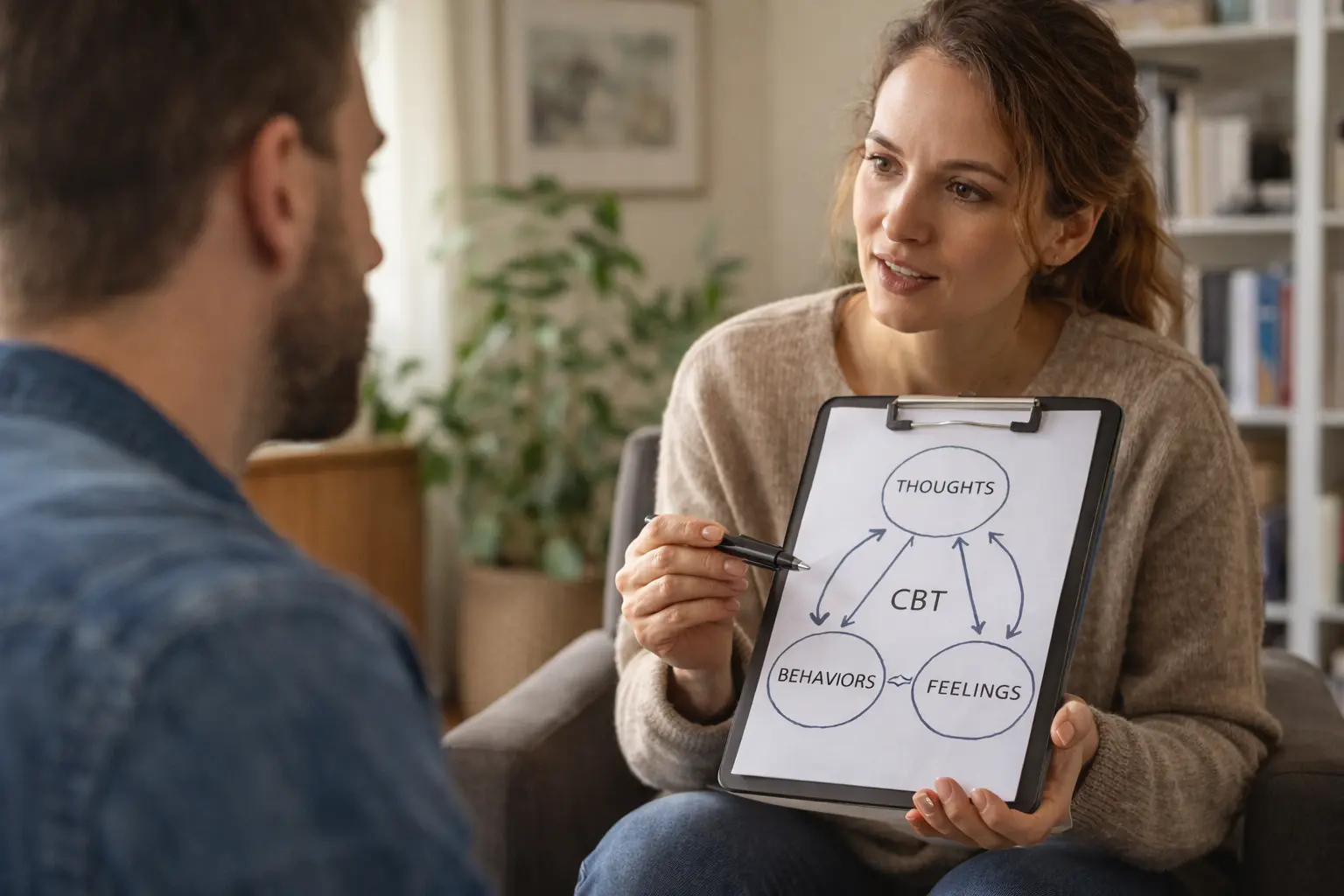
Your mind won’t stop spinning, anxiety creeps in at 3am, and you catch yourself spiraling over things you can’t control, but cognitive behavioral therapy explained is the game-changer that helps you finally break the cycle and take your power back.
Understanding cognitive behavioral therapy
Cognitive Behavioral Therapy, or CBT, is built on a simple but profound idea: your thoughts shape your feelings, and your feelings drive your actions. Imagine Sarah, who noticed she’d catastrophize every minor work mistake into a career-ending disaster. Her racing thoughts triggered anxiety, which made her avoid challenging projects, which reinforced her belief that she couldn’t handle pressure. CBT taught her to pause and question that thought pattern. Instead of accepting the automatic ‘I’m going to fail,’ she learned to ask: What’s the actual evidence? What would I tell a friend in this situation? By identifying these negative thought patterns and replacing them with balanced, realistic alternatives, CBT empowers you to interrupt the cycle. You learn practical coping strategies for those moments when stress feels overwhelming, giving you concrete tools to reach for when anxiety knocks.
- Recognizing negative thought patterns and understanding how they hijack your emotions
- Replacing negative thoughts with positive alternatives grounded in reality
- Learning coping strategies for challenging situations and building your personal toolkit
Benefits of CBT in real life
Women who’ve tried CBT often describe a shift in how they experience their own minds. One woman shared that after weeks of therapy, she realized she could actually choose her response instead of being dragged along by her thoughts. By addressing core beliefs like ‘I’m not good enough’ or ‘Everything will go wrong,’ CBT helps you see where these stories came from and whether they’re actually true. The result? Greater emotional regulation, fewer panic spirals, and a sense of control that had felt impossible before. You start noticing patterns you never saw before, like how your body tenses when certain thoughts appear, or how avoiding something always makes the anxiety worse. This awareness alone becomes transformative. Women report feeling more confident in social situations, less paralyzed by perfectionism, and genuinely surprised by how much their mood improves when they stop fighting their thoughts and start examining them instead.
💬 Ready to feel better in 2 minutes?choose where to begin:
Transforming daily routines with CBT
Real change happens in the small moments. Consider Jennifer, who used to cancel plans because of anticipatory anxiety. Through CBT, she learned to notice the thought ‘Everyone will judge me,’ pause, and ask herself what actually happened last time she went out. The evidence didn’t match the fear. She started reframing situations: instead of ‘I’m going to embarrass myself,’ she’d think ‘I’ll probably feel nervous at first, and that’s normal.’ Over weeks, this rewired her automatic responses. You learn to break negative cycles by introducing small behavioral experiments. You might gradually face a fear instead of avoiding it, or practice speaking up in meetings instead of staying silent. These aren’t huge leaps; they’re gentle, intentional steps that prove to your nervous system that the catastrophe you feared doesn’t actually happen. Your daily routine becomes less about managing anxiety and more about living the life you actually want.
Empowering change through CBT
CBT gives you a toolkit that extends far beyond the therapy room. You learn to become your own therapist, catching unhelpful thoughts before they spiral and choosing responses that serve you. One woman described it as finally having a manual for her own mind. You might use a thought record to examine beliefs, practice mindfulness to observe thoughts without judgment, or use behavioral activation to tackle depression by doing things even when motivation is low. These aren’t quick fixes; they’re skills that build resilience over time. The real power emerges when you realize that anxiety, sadness, or stress don’t have to control your choices anymore. You can feel nervous and still go to the party. You can doubt yourself and still try. By combining practical coping strategies with a deeper understanding of how your mind works, you build a foundation for lasting change that carries you through life’s inevitable challenges.
Cognitive Behavioral Therapy offers a powerful approach to breaking free from negative thought patterns and enhancing emotional well-being. Through CBT, women can gain control over their mental health by recognizing and replacing harmful thought patterns, ultimately improving their quality of life.
Is CBT a long-term solution for mental health issues?
CBT can provide long-lasting benefits for individuals struggling with anxiety, depression, or other mental health challenges. However, the effectiveness of CBT may vary depending on individual circumstances and the commitment to therapy.
Can CBT help with managing stress and anxiety?
Yes, CBT is highly effective in teaching individuals how to cope with stress and anxiety. By equipping them with practical tools and strategies, CBT empowers individuals to navigate challenging situations with resilience and a positive mindset.
Others also read:
Disclaimer: This article is for informational purposes only and is not a substitute for professional medical advice. Always consult a healthcare professional for personal guidance.
This article presents an experience-based perspective and has been reviewed by the GlobalHealthBeacon editorial team in 2026. It provides structured, evidence-based information to support informed health decisions.
← Back to the main cognitive behavioral therapy explained page

