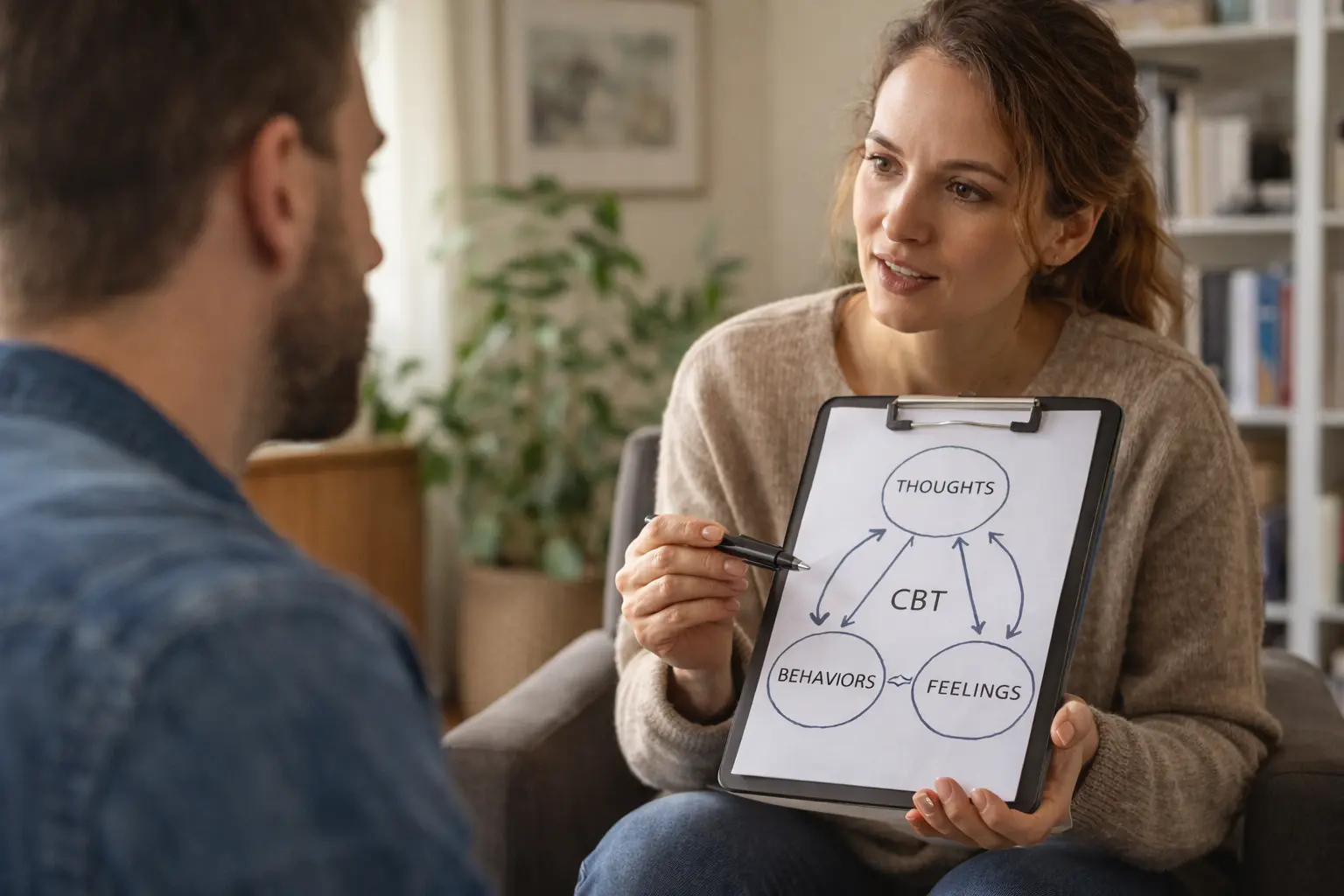
You wake up feeling that familiar knot in your chest, replaying yesterday’s conversation over and over, convinced you said something wrong, and suddenly your whole day feels ruined before it even starts, but what if cognitive behavioral therapy explained could actually break this exhausting cycle?
Understanding cognitive behavioral therapy (CBT)
CBT is a powerful therapeutic approach that focuses on changing negative thought patterns and behaviors by addressing the direct link between what we think, how we feel, and what we do. Imagine you’re a senior dealing with persistent worry about your health. Your mind might jump to worst-case scenarios, triggering anxiety that makes you avoid social activities. CBT teaches you to pause and examine these thoughts like a detective, asking yourself: Is this thought based on facts or fear? By learning to reframe negative patterns, you develop practical tools to manage stress, anxiety, and other mental health challenges. The beauty of CBT is that it’s not about forcing positive thinking or ignoring real problems. Instead, it’s about becoming aware of how your mind works and gaining control over the narrative you tell yourself.
- CBT helps seniors identify and challenge distorted thought patterns before they spiral.
- It teaches practical coping strategies to handle daily stressors and unexpected life changes.
- CBT empowers individuals to develop healthier behavioral responses to triggers and difficult situations.
Personal experiences with CBT
Many seniors have shared transformative stories about how CBT reshaped their outlook on life. Consider Margaret, a 72-year-old who struggled with social anxiety after her husband passed away. She avoided gatherings, convinced people would judge her or that she would burden them with her sadness. Through CBT, she learned to examine these thoughts and realize they were assumptions, not facts. Within weeks, she rejoined her book club and started attending community events again. Others report similar breakthroughs: reduced anxiety, improved mood, and a newfound sense of agency. What makes these experiences powerful is that change doesn’t happen overnight. It requires commitment and the willingness to practice new mental habits, but seniors consistently report that the effort pays off with genuine, lasting improvements in how they navigate daily life.
💬 Ready to feel better in 2 minutes?choose where to begin:
Benefits of CBT for seniors
Seniors undergoing CBT often experience a profound sense of empowerment and increased self-awareness that extends far beyond managing anxiety. This therapy can lead to better relationships as you communicate more clearly and stop making assumptions about what others think. You develop improved communication skills, learning to express your needs without guilt or defensiveness. Many seniors also report a more resilient mindset when facing challenges like health changes, loss, or life transitions. The practical benefits are tangible: better sleep as racing thoughts quiet down, more energy as depression lifts, and renewed interest in hobbies and social connections. Perhaps most importantly, CBT gives you a toolkit you can use independently, long after therapy ends, making you feel less dependent on external solutions and more confident in your own ability to manage difficulties.
Challenges and considerations
While CBT has shown remarkable success for many seniors, it’s important to acknowledge that therapy effectiveness varies significantly from person to person. Some seniors find the initial process challenging, especially if they’re not used to examining their thoughts or if they prefer more traditional approaches. The commitment required can feel daunting: showing up consistently, doing homework between sessions, and practicing new skills even when progress feels slow. Additionally, finding a therapist experienced in working with older adults matters tremendously. Not every therapist understands the unique life experiences and challenges seniors face. However, with genuine commitment and guidance from a qualified, patient therapist who listens to your concerns, the benefits of CBT can be truly life-changing, offering relief that makes the initial effort worthwhile.
Cognitive Behavioral Therapy (CBT) is a transformative approach that helps individuals change negative thought patterns and behaviors. By providing practical tools to manage stress and anxiety, CBT empowers seniors to lead more fulfilling lives and develop healthier coping strategies.
Is CBT suitable for all seniors?
CBT can benefit seniors of all ages, but it’s essential to consult with a healthcare provider to determine if this therapeutic approach aligns with individual needs and goals.
How long does CBT take to show results?
The effectiveness of CBT varies for each individual, but many seniors experience positive changes within a few weeks to months of consistent therapy sessions.
Others also read:
Disclaimer: This article is for informational purposes only and is not a substitute for professional medical advice. Always consult a healthcare professional for personal guidance.
This article presents an experience-based perspective and has been reviewed by the GlobalHealthBeacon editorial team in 2026. It provides structured, evidence-based information to support informed health decisions.
← Back to the main cognitive behavioral therapy explained page

