Your mind won’t stop spinning, your chest feels tight, and you keep replaying conversations that went wrong, but cognitive behavioral therapy explained simply shows you how to break this cycle and actually feel better.
Understanding CBT principles
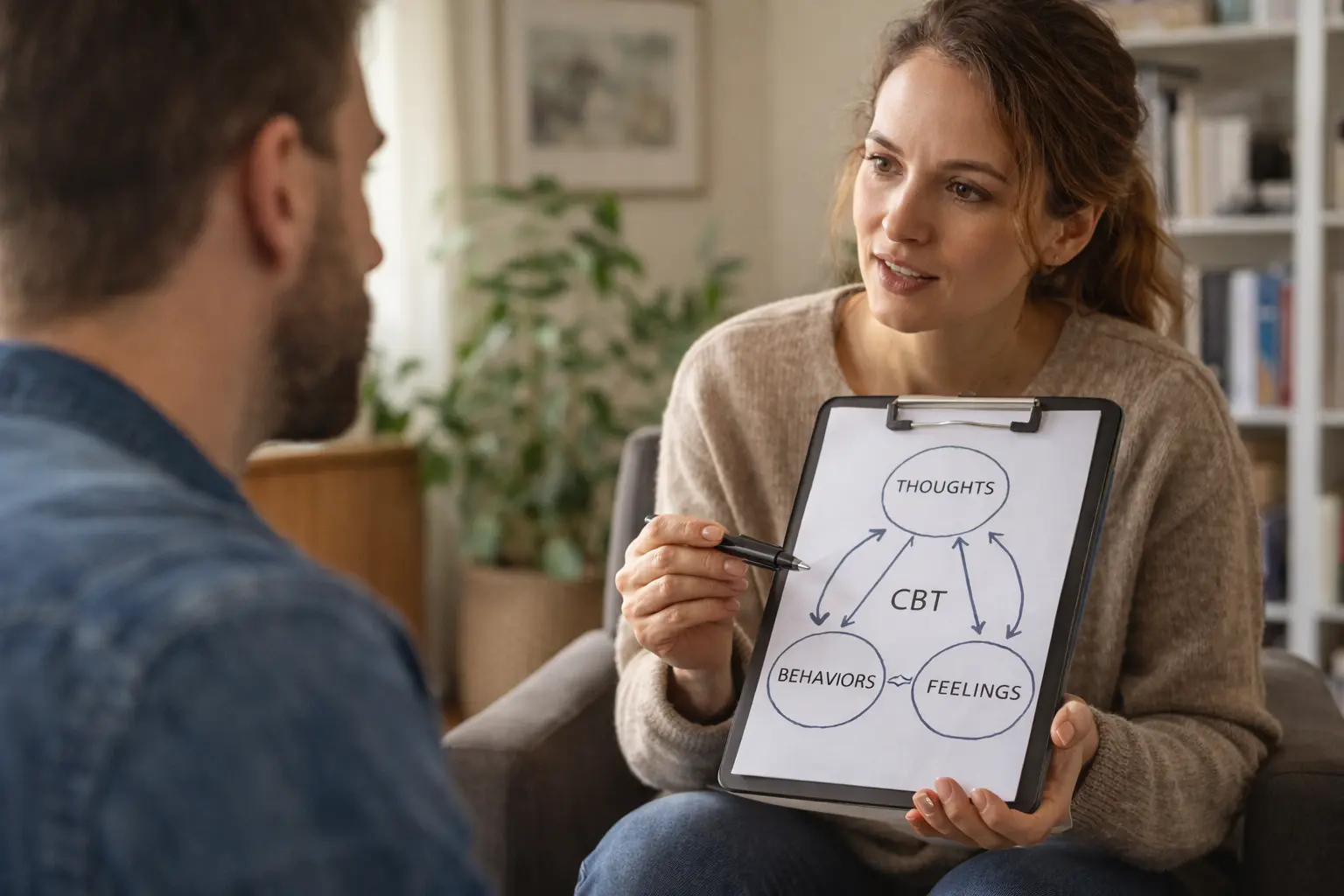
Cognitive Behavioral Therapy rests on a straightforward but powerful idea: your thoughts, feelings, and actions are all connected in a loop. When you notice a negative thought like ‘I always mess things up,’ it triggers anxiety, which then leads you to avoid situations where you might fail. By learning to identify and challenge these thought patterns, you interrupt the cycle. Think of Sarah, who avoided social events because she believed everyone judged her. Once she recognized this thought pattern wasn’t based on evidence, she started testing it by attending gatherings and discovering people actually enjoyed her company. This cognitive restructuring is the foundation of CBT. You learn to spot automatic negative thoughts, examine whether they’re actually true, and replace them with more balanced, realistic thinking. It’s not about forcing positive thoughts but about developing a more accurate perspective on situations.
- Recognize negative thoughts as they happen
- Challenge irrational beliefs with evidence
- Replace with constructive thinking patterns
Implementing practical strategies
Moving from understanding to action is where real change happens. Start with mindfulness, which means paying attention to the present moment without judgment. When anxiety creeps in, you’re often mentally stuck in the future or past. A simple practice: spend five minutes daily noticing what you see, hear, and feel right now. Next, try behavioral experiments to test your unhelpful beliefs. If you think ‘no one wants to hear my opinion,’ speak up in your next meeting and observe what actually happens. Most women find their fears don’t match reality. For stress management, progressive muscle relaxation works well: tense each muscle group for five seconds, then release, moving from your toes to your head. Deep breathing using the 4-7-8 technique (inhale for four counts, hold for seven, exhale for eight) activates your body’s calm response. These aren’t just feel-good exercises; they physically shift your nervous system from fight-or-flight to rest-and-digest mode.
📘 Fix your day in under 2 minuteschoose where to begin:
Building coping skills
Coping skills are your personal toolkit for managing difficult moments. Journaling is powerful: write down what triggered your anxiety, what you felt, and what you did about it. Over time, patterns emerge and you see which strategies actually help. Creative expression through art, music, or movement gives your emotions an outlet without judgment. Setting healthy boundaries is equally important. Many women struggle with saying no, leading to overwhelm and resentment. Practice phrases like ‘I need to check my schedule’ or ‘That doesn’t work for me right now’ without over-explaining. Self-care isn’t selfish; it’s maintenance. Whether it’s a warm bath, a walk outside, or an hour with a good book, these practices replenish your mental reserves. A client named Maria discovered that her anxiety decreased significantly when she stopped saying yes to every request and started protecting her evenings for rest. Your coping skills should feel genuine to you, not like obligations.
Enhancing self-compassion
Self-compassion means treating yourself the way you’d treat a good friend who’s struggling. When you make a mistake, your inner voice often turns harsh and critical. Instead, pause and ask: would I speak to my best friend this way? Probably not. Self-compassion involves three elements: recognizing you’re suffering, understanding that struggle is part of being human (not a personal failure), and responding with kindness rather than criticism. Practice positive affirmations grounded in reality, not fantasy. Instead of ‘I’m perfect,’ try ‘I’m doing my best with what I know right now.’ Embrace imperfection as evidence you’re human and growing. Women often carry impossible standards, believing they should handle everything smoothly. The truth is that setbacks, confusion, and difficulty are universal experiences. When you accept this, the shame and isolation dissolve. A woman named Jennifer found that her anxiety lessened when she stopped viewing her struggles as weakness and started viewing them as part of her journey toward becoming stronger and wiser.
Maintaining progress and growth
Change doesn’t happen once and then stay fixed. It requires ongoing attention and practice. Set aside time monthly to review what’s improved. Maybe you’re sleeping better, speaking up more, or feeling less panicked. Celebrate these wins, even small ones. Connection matters tremendously. Whether it’s a therapist, support group, or trusted friends, having people who understand your journey keeps you accountable and reminds you that you’re not alone. Continue learning new CBT techniques. Your life changes, so your toolkit may need adjustments. What worked for anxiety might need tweaking when you face grief or relationship challenges. Stay curious about yourself. Track which techniques you actually use and which ones sit unused, then focus on what resonates. Many women find that after several months of consistent practice, CBT tools become automatic. You catch negative thoughts faster, challenge them more easily, and feel calmer overall. This isn’t about perfection; it’s about building a life where you respond to challenges with more skill and less suffering.
Cognitive behavioral therapy explained through this guide gives you concrete tools to reshape how you think, feel, and act. You’ll learn to recognize unhelpful thought patterns, practice evidence-based strategies like mindfulness and behavioral experiments, build genuine coping skills tailored to your life, cultivate self-compassion instead of self-criticism, and maintain momentum through regular practice and connection. These techniques are designed for women navigating real challenges with practical, actionable steps.
How long does it take for CBT to show results?
Individual experiences vary based on the issue, consistency of practice, and your starting point. Some women notice shifts in anxiety or mood within two to four weeks of regular practice. More significant changes typically emerge after eight to twelve weeks of committed work with a therapist or structured self-guided program. The key is consistency; sporadic practice produces sporadic results.
Is CBT effective for all women?
CBT is evidence-based and effective for many conditions, but it’s not a one-size-fits-all solution. Some women respond quickly and dramatically; others see gradual improvement. Your therapist should customize techniques to match your personality, values, and specific challenges. If standard CBT isn’t working after several months, other approaches or combinations may serve you better.
Others also read:
Disclaimer: This article is for informational purposes only and is not a substitute for professional medical advice. Always consult a healthcare professional for personal guidance.
This guide has been prepared and reviewed by the GlobalHealthBeacon editorial team and reflects current medical research as of 2026. It provides structured, evidence-based information to support informed health decisions.
← Go to the cognitive behavioral therapy explained main guide

