Part of: Metabolic & Hormonal Health
Plant-based milk environmental impact refers to the ecological footprint generated across the entire lifecycle of plant-derived milk alternatives, from crop cultivation and processing to packaging and distribution. This encompasses critical environmental metrics including greenhouse gas emissions, land use requirements, water consumption, and broader sustainability considerations such as eutrophication and ecosystem effects. Understanding these impacts is essential for consumers seeking to make informed dietary choices that align with environmental sustainability goals.
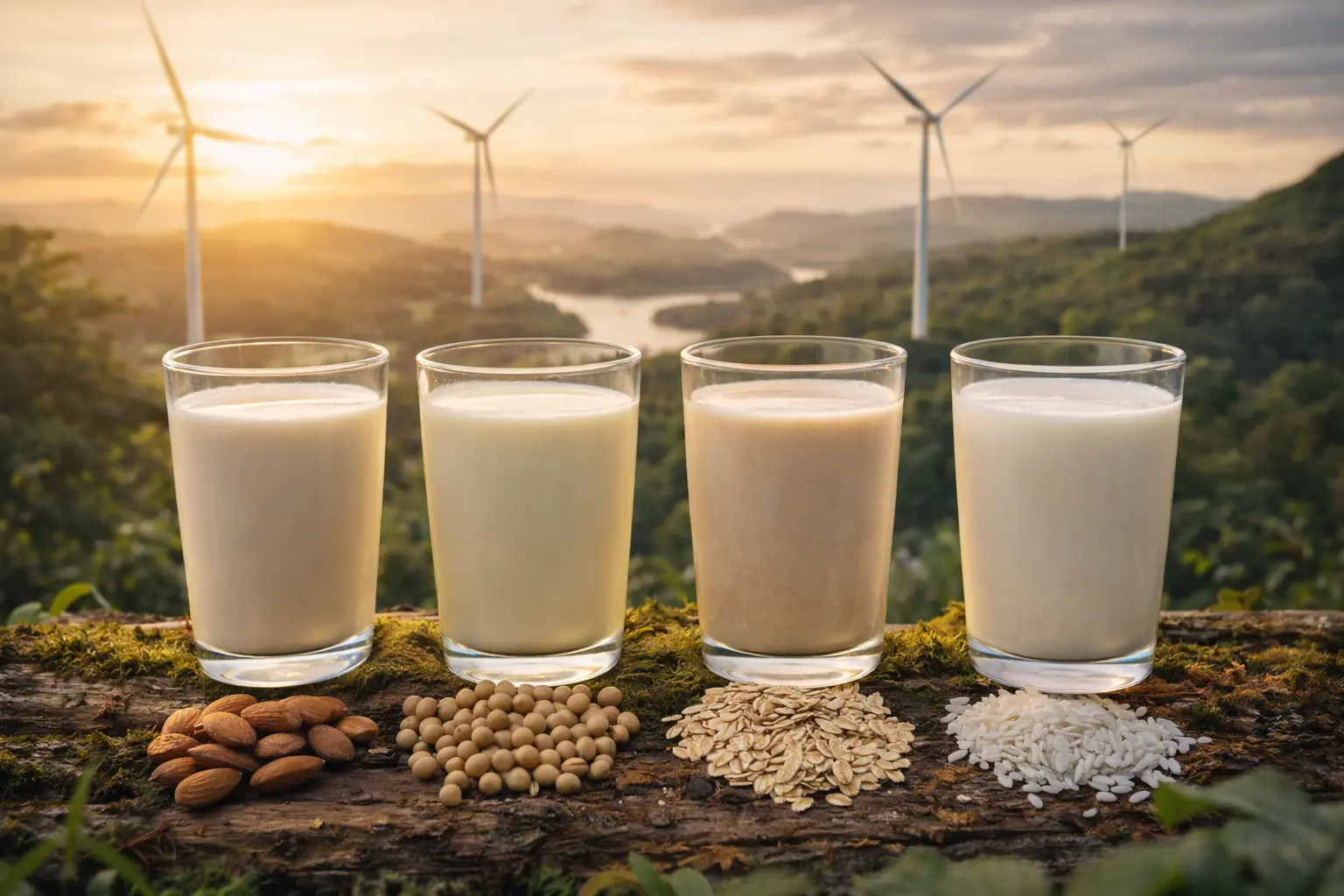
Research consistently demonstrates that plant-based milks—including oat, soy, almond, and pea varieties—generally produce substantially lower greenhouse gas emissions and require less land compared to conventional dairy milk. However, the environmental profile of plant-based options varies significantly depending on the specific crop type, regional production practices, agricultural methods, and manufacturing processes. Water use, in particular, presents a more nuanced picture, with some plant-based milks showing lower overall water consumption while others may have regionally specific impacts worth considering.
The growing adoption of plant-based milk alternatives reflects broader consumer interest in reducing environmental impact through dietary transitions. Different demographic groups—including young adults, women, and seniors—approach this shift with distinct priorities and practical considerations. Beyond comparing plant-based options against dairy, contemporary environmental assessment requires examining how different plant milks stack against one another, recognizing that sustainability is not a one-size-fits-all determination but rather depends on local production contexts, sourcing practices, and individual consumption patterns.
This overview section synthesizes scientific evidence, practical guidance, and demographic-specific perspectives on plant-based milk sustainability. The linked articles explore environmental metrics in detail, compare specific plant-based varieties, examine production methods, present real-world experiences, and provide actionable steps for transitioning to more sustainable milk choices. Whether motivated by climate considerations, resource conservation, or overall sustainability goals, readers will find comprehensive, evidence-based information to support informed decisions about plant-based milk consumption.
This NIH-hosted scientific review explains that plant-based dairy alternatives like soy and oat milks are generally associated with substantially lower greenhouse gas emissions and reduced land use and eutrophication compared with dairy milk, although water use varies by product and context. → Click here