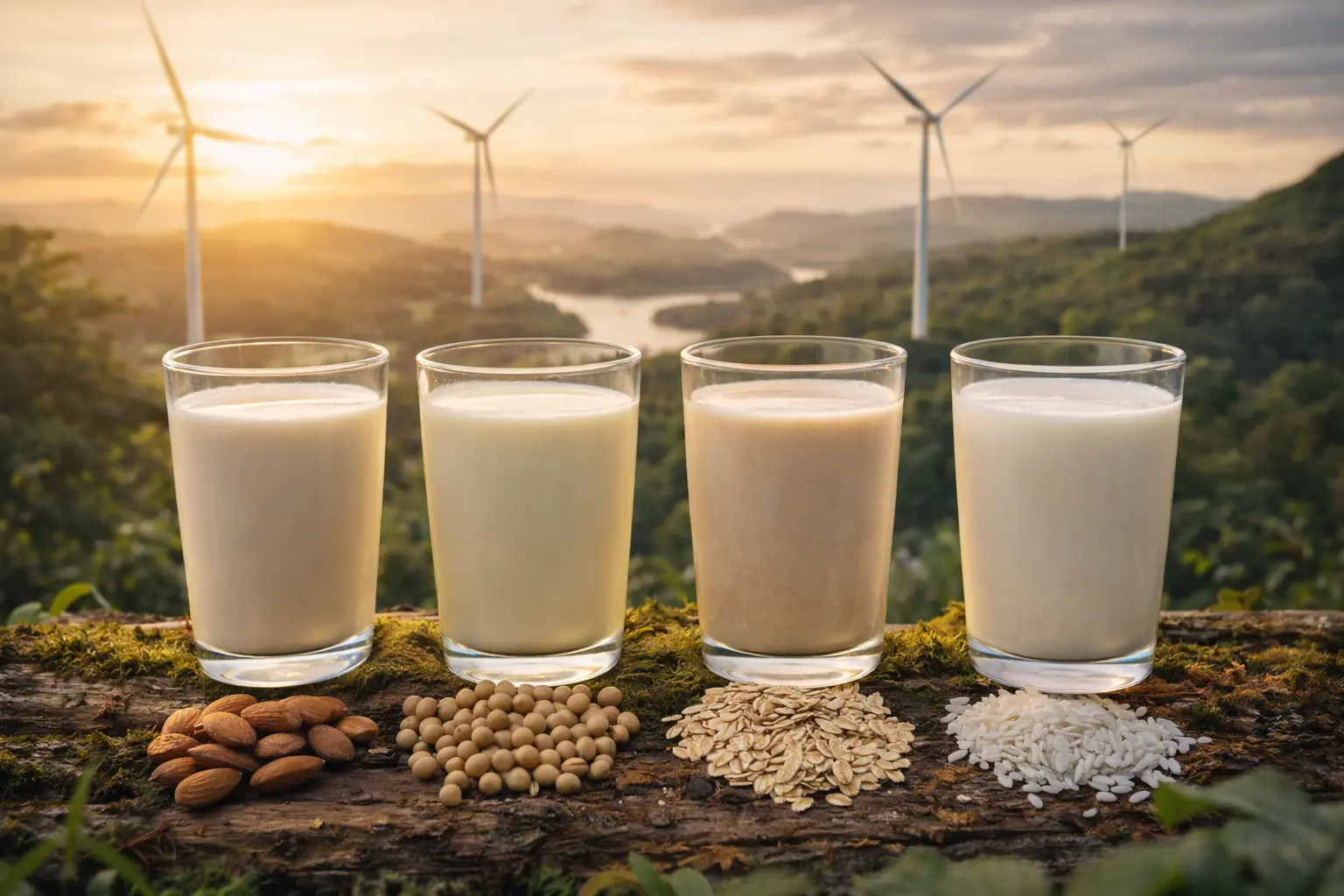
You’re standing in the grocery store staring at five different plant-based milk options, wondering which one actually won’t destroy the planet, and the plant based milk environmental impact question is eating at you because you genuinely care but have no idea where to start.
Almond milk: a delicate choice
Almond milk tastes great and mixes seamlessly into your morning coffee or smoothie bowl. The creamy texture and subtle flavor make it versatile enough for cereal, baking, or drinking straight from the glass. But here’s where it gets complicated. Almond farming demands massive amounts of water, especially in California where most of the world’s almonds grow. We’re talking about 1.1 gallons of water per single almond. Beyond water depletion, almond orchards have become a major concern for bee populations. Commercial beekeeping operations truck millions of hives to pollinate almond blossoms each spring, and the pesticide exposure combined with monoculture farming weakens bee colonies. If you love almond milk, look for brands sourcing from smaller farms using integrated pest management. It won’t be perfect, but it’s a step toward reducing harm.
- Delicate flavor suitable for various uses
- Water-intensive production methods
- Concerns over bee population due to almond cultivation
Oat milk: the sustainable contender
Oat milk has become the darling of the plant-based world, and for good reason. The creamy, slightly sweet texture appeals to most palates, and it froths beautifully for lattes if you’re into that. More importantly, oat cultivation requires significantly less water than almonds, roughly one-tenth of the amount. Oats grow well in cooler climates and don’t need the same level of pesticide intervention. The environmental footprint is genuinely smaller. When shopping, prioritize brands that source organic oats and commit to regenerative farming practices. Some companies work directly with farmers to improve soil health, which locks carbon back into the ground. Brands like Oatly and minor players in your local market often publish sustainability reports. Reading these takes five minutes and gives you real insight into whether your choice actually matches your values.
📘 Fix your day in under 2 minuteschoose where to begin:
Soy milk: the nutrient powerhouse
Soy milk delivers protein levels that rival dairy milk, making it genuinely useful if you’re building muscle or recovering from workouts. One cup typically contains 7 to 8 grams of protein, plus all nine essential amino acids your body can’t make on its own. The taste is neutral enough to work in almost any application, from savory soups to sweet desserts. The environmental concern centers on soy farming and deforestation in regions like Brazil and Indonesia, where rainforest gets cleared for cropland. However, choosing organic and non-GMO certified soy milk makes a measurable difference. Organic farming prohibits synthetic pesticides and follows stricter land management practices. Non-GMO certification ensures the soybeans weren’t genetically modified to withstand heavy herbicide spraying. If you prioritize protein intake and sustainability, soy milk is a solid choice when you buy the right version. Check labels for these certifications before adding to your cart.
Coconut milk: tropical indulgence
Coconut milk brings a distinct tropical flavor that transforms your coffee into something that feels like a mini vacation. The richness works beautifully in curries, smoothie bowls, and desserts where you want that creamy texture without dairy. The problem is real though. Coconut farming drives deforestation in Southeast Asia and the Philippines, where rainforests are cleared to plant coconut palms. Habitat loss threatens endangered species like orangutans and slow lorises. Additionally, coconut farming often involves labor practices that deserve scrutiny. If you love coconut milk, seek brands that source from Fair Trade certified farms and have transparent supply chains. Some companies work with small-scale farmers using agroforestry methods, where coconut palms grow alongside native trees rather than replacing them entirely. These options cost more but directly support better environmental and labor practices. Consider using coconut milk occasionally rather than as a daily staple, reserving it for dishes where that flavor really shines.
Rice milk: the light alternative
Rice milk offers a light, slightly sweet taste that works well for people with multiple food allergies or sensitivities. It’s naturally hypoallergenic and easier to digest than some other plant-based options. The problem emerges when you look at production methods. Rice cultivation is water-intensive and often involves flooding paddies for extended periods, which consumes enormous quantities of freshwater. Additionally, rice plants absorb arsenic from soil and water, meaning rice products can contain measurable arsenic levels. This matters more for young children and pregnant people, but it’s worth knowing. If you choose rice milk, rotate it with other options rather than making it your only plant-based milk. Look for brands that test for arsenic and publish results. Some producers use specific rice varieties or sourcing regions with naturally lower arsenic levels. Diversifying your plant-based milk choices protects your health and spreads your environmental impact across different crops rather than concentrating it on one resource-heavy option.
Plant-based milk choices vary in taste, sustainability, and environmental impact. Almond milk is delicate but water-intensive, oat milk is a sustainable option, soy milk is a nutritional powerhouse, coconut milk brings tropical flavors with environmental concerns, and rice milk is a light alternative with water usage and arsenic concerns.
Which plant-based milk has the lowest environmental impact?
Oat milk is often considered the plant-based milk with the lowest environmental impact due to its sustainable cultivation practices and lower water usage compared to options like almond milk.
How can I ensure my plant-based milk choice is sustainable?
To ensure sustainability in your plant-based milk choice, look for brands that prioritize responsible sourcing, use organic ingredients, and support eco-friendly practices in their production.
Others also read:
Disclaimer: This article is for informational purposes only and is not a substitute for professional medical advice. Always consult a healthcare professional for personal guidance.
This guide has been prepared and reviewed by the GlobalHealthBeacon editorial team and reflects current medical research as of 2026. It provides structured, evidence-based information to support informed health decisions.
← Go to the plant based milk environmental impact main guide
