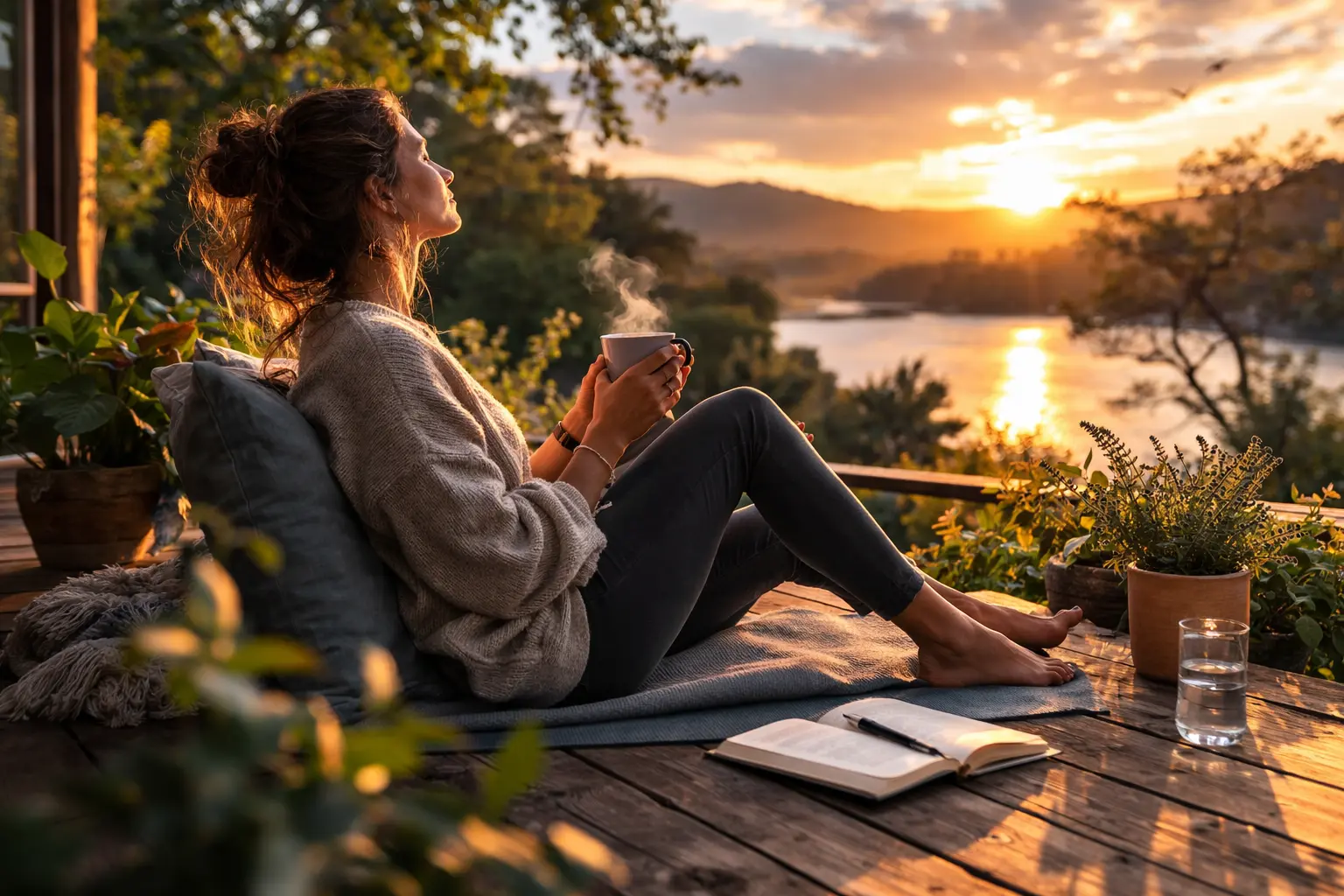
Your chest tightens, your mind races, and you can’t remember the last time you actually felt calm, but relaxation techniques for stress are the biological reset button your body has been waiting for.
Understanding stress and relaxation: the biological connection
When you face a deadline, argument, or unexpected challenge, your body launches into survival mode. The amygdala triggers the release of cortisol and adrenaline, your heart rate climbs, and blood vessels constrict. This fight-or-flight response kept our ancestors alive, but in modern life, it fires constantly. The good news is that relaxation techniques activate your parasympathetic nervous system, essentially flipping the biological switch. This system releases acetylcholine, a neurotransmitter that counteracts stress hormones. Your heart rate drops, digestion restarts, and your prefrontal cortex regains control. Think of it like this: stress is your body pressing the gas pedal, while relaxation is applying the brakes. Understanding this mechanism helps explain why simply telling yourself to calm down rarely works. You need to engage the nervous system directly through specific practices that signal safety to your brain.
Breathing techniques for stress relief
Your breath is the bridge between conscious and unconscious control. Unlike your heartbeat, you can deliberately slow your breathing, which directly influences your autonomic nervous system. When you practice diaphragmatic breathing, you activate the vagus nerve, the main highway of your parasympathetic system. Imagine sitting at your desk after a stressful meeting. Instead of shallow chest breathing, you breathe deeply into your belly for a count of four, hold for four, and exhale for four. Within minutes, your nervous system recognizes the signal and downregulates. Box breathing, used by military personnel and athletes, follows the same pattern: inhale for four, hold for four, exhale for four, hold for four. The repetition creates a rhythm that interrupts the stress cycle. Research shows that slow breathing reduces blood pressure and heart rate variability, measurable markers of relaxation. Even five minutes of intentional breathing can shift your physiology.
Progressive muscle relaxation: a step-by-step approach
Progressive muscle relaxation works because your muscles hold tension unconsciously. By deliberately tensing and releasing muscle groups, you develop body awareness and teach your nervous system to let go. Picture yourself lying down after a long day. You start with your toes, tensing them tightly for five to ten seconds while noticing the sensation of tightness. Then you release suddenly and observe the contrast as tension melts away. This sensory feedback is crucial. Your brain learns the difference between tension and relaxation, making it easier to recognize and release tension throughout your day. You move systematically upward through your calves, thighs, abdomen, chest, arms, shoulders, neck, and face. The entire process takes fifteen to twenty minutes. Many people discover they habitually clench their jaw or shoulders without realizing it. This practice builds that awareness. Over time, you can trigger relaxation with just a mental cue, without needing the full tensing cycle. It’s particularly effective for people who struggle with meditation because it gives your mind something concrete to focus on.
- Find a quiet and comfortable space to practice, ideally lying down or in a reclined position.
- Tense each muscle group firmly for five to ten seconds, then release suddenly and observe the sensation.
- Focus intently on the contrast between tension and relaxation in each muscle group before moving upward.
🔬 Science-backed benefits in 2 minuteschoose where to begin:
Mindfulness meditation: cultivating present moment awareness
Your mind naturally wanders to past regrets and future worries, which fuels anxiety. Mindfulness meditation trains your attention to return to the present moment without judgment. You sit quietly and notice your breath, sensations, or sounds without trying to change them. When your mind drifts, you gently redirect it back. This sounds simple but requires practice. Young adults often resist meditation because they expect their minds to go blank, which is unrealistic. Instead, mindfulness is about noticing thoughts arise and letting them pass like clouds. Research shows that regular practice reduces rumination, the repetitive thinking that amplifies stress. It also increases gray matter density in the prefrontal cortex, the region responsible for emotional regulation and decision-making. Even ten minutes daily can shift your baseline stress level. Some people use guided meditations or apps to anchor their practice. Others prefer silent sitting. The key is consistency. Over weeks and months, you’ll notice you react less intensely to stressors and recover faster emotionally.
Yoga and tai chi: integrating movement and mindfulness
Yoga and Tai Chi blend physical movement, breath work, and meditation into a unified practice. Unlike intense exercise that can elevate cortisol, these practices are designed to calm while building strength and flexibility. In yoga, you move through postures while maintaining awareness of your breath and body sensations. Downward dog stretches your hamstrings while slowing your heart rate. Child’s pose signals safety to your nervous system. Tai Chi involves slow, flowing movements that resemble a moving meditation. Your mind focuses entirely on the precise positioning and weight shifts, leaving no room for stress thoughts. Both practices improve proprioception, your sense of where your body is in space, which enhances body awareness and reduces anxiety. They also build functional strength without the adrenaline spike of high-intensity workouts. Many young adults find these practices more sustainable than traditional exercise because they feel restorative rather than punishing. Classes provide community and accountability, which increases adherence.
Nature therapy: harnessing the healing power of the outdoors
Spending time in natural environments triggers measurable physiological changes. When you walk through a park or forest, your parasympathetic nervous system activates, cortisol drops, and blood pressure decreases. The Japanese practice of shinrin-yoku, or forest bathing, involves immersing yourself in the forest atmosphere through all senses. You notice the scent of pine, the sound of birds, the texture of bark. This sensory engagement pulls your attention away from stress and into the present moment. Research shows that even twenty minutes in nature significantly reduces stress hormones. The effect intensifies with water features like streams or lakes. Young adults living in urban environments often underestimate how much they need this exposure. A lunch break walk in a nearby park can reset your nervous system better than scrolling your phone indoors. The combination of fresh air, natural light, and gentle movement creates a powerful stress-relief effect. Regular nature exposure also improves mood, enhances creativity, and strengthens immune function. It’s one of the most accessible and free relaxation techniques available.
Relaxation techniques for stress work by activating your parasympathetic nervous system and counteracting the physiological effects of chronic stress. Deep breathing, progressive muscle relaxation, mindfulness meditation, yoga, Tai Chi, and nature therapy are evidence-based strategies that reduce cortisol, lower heart rate, and enhance overall well-being. The key is finding practices that resonate with you and building them into your daily routine. Consistency matters more than intensity. Even fifteen minutes daily can create measurable shifts in how your body responds to stress.
Can relaxation techniques help with chronic stress?
Yes, relaxation techniques can be beneficial for managing chronic stress by regularly activating the parasympathetic nervous system and reducing stress hormone levels. When practiced consistently over weeks and months, these techniques can lower your baseline stress response and improve your ability to recover emotionally from stressors. Many people find that combining multiple techniques yields the best results.
Are relaxation techniques suitable for all age groups?
Yes, relaxation techniques can benefit individuals of all ages who experience stress. Young adults may prefer practices like yoga or nature walks, while others might gravitate toward breathing exercises or meditation. The most important factor is finding techniques that feel natural and sustainable for your lifestyle. Consistency and personal preference matter more than which specific technique you choose.
Others also read:
Disclaimer: This article is for informational purposes only and is not a substitute for professional medical advice. Always consult a healthcare professional for personal guidance.
This article has been prepared and reviewed by the GlobalHealthBeacon editorial team and is based on current medical research and published scientific literature available in 2026. It provides structured, evidence-based information to support informed health decisions.
← Back to the Main page on: relaxation techniques for stress
