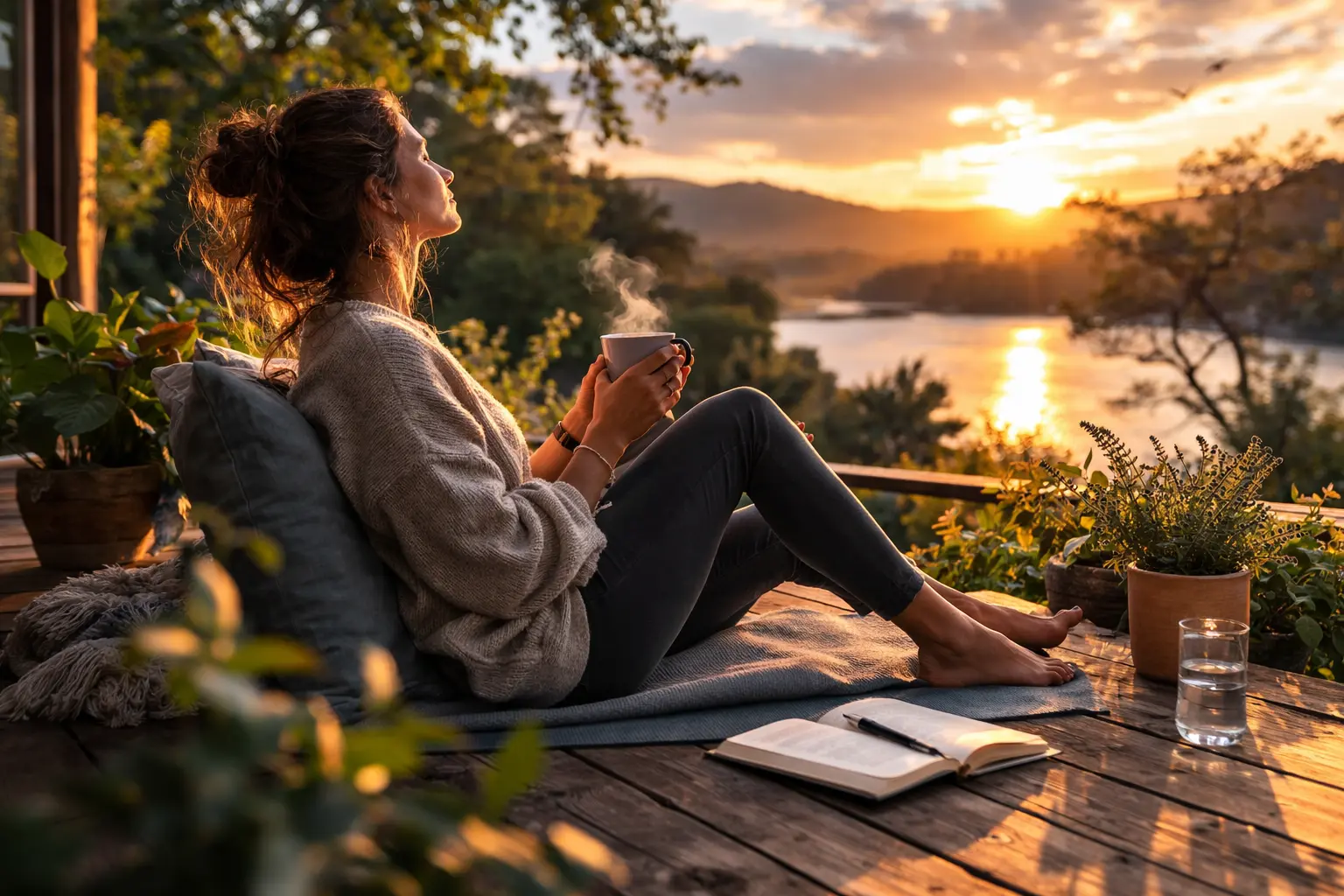
Your chest tightens, your mind races, and you feel like you’re drowning in tasks and expectations, but what if relaxation techniques for stress could actually give you back control of your nervous system instead of just being another thing on your to-do list?
Breathing techniques: the power of deep breaths
I remember sitting at my desk, hands shaking, unable to focus on anything because my anxiety had taken over. That’s when a colleague suggested I try deep breathing, and honestly, I was skeptical. But then I tried it: inhale slowly through my nose for four counts, feel your lungs expand and your belly rise, then exhale through your mouth for six counts. The first time I did this, something shifted. My shoulders dropped. My racing thoughts quieted. Now I practice this whenever stress creeps in, whether I’m before an important meeting or lying awake at night. What makes this work is the simplicity and immediacy. You don’t need special equipment or a quiet room. Just pause, focus on your breath, and let your body’s natural calming response kick in.
- Practice deep breathing for 5-10 minutes whenever you feel stressed.
- Incorporate breathing exercises into your daily routine for long-term stress relief.
- Experiment with different techniques like box breathing or diaphragmatic breathing to find what works best for you.
Meditation and mindfulness: finding inner peace
When I first heard about meditation, I thought it meant sitting perfectly still with a blank mind, which felt impossible for someone like me whose brain never stops. But mindfulness meditation isn’t about emptying your mind, it’s about observing your thoughts without judgment. I started with just five minutes in the morning, sitting on my couch with my eyes closed, noticing the sounds around me, the feeling of my body on the cushion, the thoughts that popped up and drifted away like clouds. Some days were harder than others. Some days my mind felt like a tornado. But gradually, I noticed I was less reactive to stress. When something frustrating happened, I had this tiny pause where I could choose my response instead of just reacting. That pause changed everything. It’s like giving yourself permission to step off the hamster wheel for a moment.
💬 Ready to feel better in 2 minutes?choose where to begin:
Yoga for stress relief: connecting body and mind
I started yoga because I thought it was just stretching, but I quickly learned it’s so much more than that. The first class left me sore and humbled, but it also left me feeling lighter somehow. What I love about yoga is that it forces you to be present. You can’t think about your email inbox when you’re balancing on one leg or holding a challenging pose. Your body demands your attention. I noticed my shoulders, which I’d been holding up to my ears from stress, started to relax. The combination of gentle stretching, controlled breathing, and mindful movement created this unexpected sense of calm that lasted hours after class. Even on days when I practice at home for just 15 minutes, I feel the difference in how I carry myself and respond to challenges.
Nature therapy: embracing the outdoors
There’s something about stepping outside that my brain just needed. I started taking walks in the park near my house, nothing fancy, just me and the trees and the sound of birds. At first I was still thinking about work, but gradually I noticed myself slowing down, really looking at the leaves, feeling the sun on my skin. One afternoon, sitting by the water, I realized my shoulders weren’t tense anymore and I wasn’t mentally rehearsing conversations. Nature has this way of putting things in perspective. Your problems feel smaller when you’re surrounded by something vast and beautiful and completely indifferent to your stress. Even 20 minutes outside makes a measurable difference in my mood and energy.
Explore the transformative power of relaxation techniques like deep breathing, meditation, yoga, and nature therapy. These practices can help alleviate stress, promote emotional well-being, and bring a sense of peace and balance to your life.
How often should I practice relaxation techniques?
Consistency is key when it comes to relaxation techniques. Aim to incorporate these practices into your daily routine for optimal stress relief.
Can relaxation techniques work for everyone?
While relaxation techniques can be beneficial for most individuals, it’s essential to find what resonates with you personally. Experiment with various methods to determine what works best for your unique needs.
Others also read:
Disclaimer: This article is for informational purposes only and is not a substitute for professional medical advice. Always consult a healthcare professional for personal guidance.
This article presents an experience-based perspective and has been reviewed by the GlobalHealthBeacon editorial team in 2026. It provides structured, evidence-based information to support informed health decisions.
