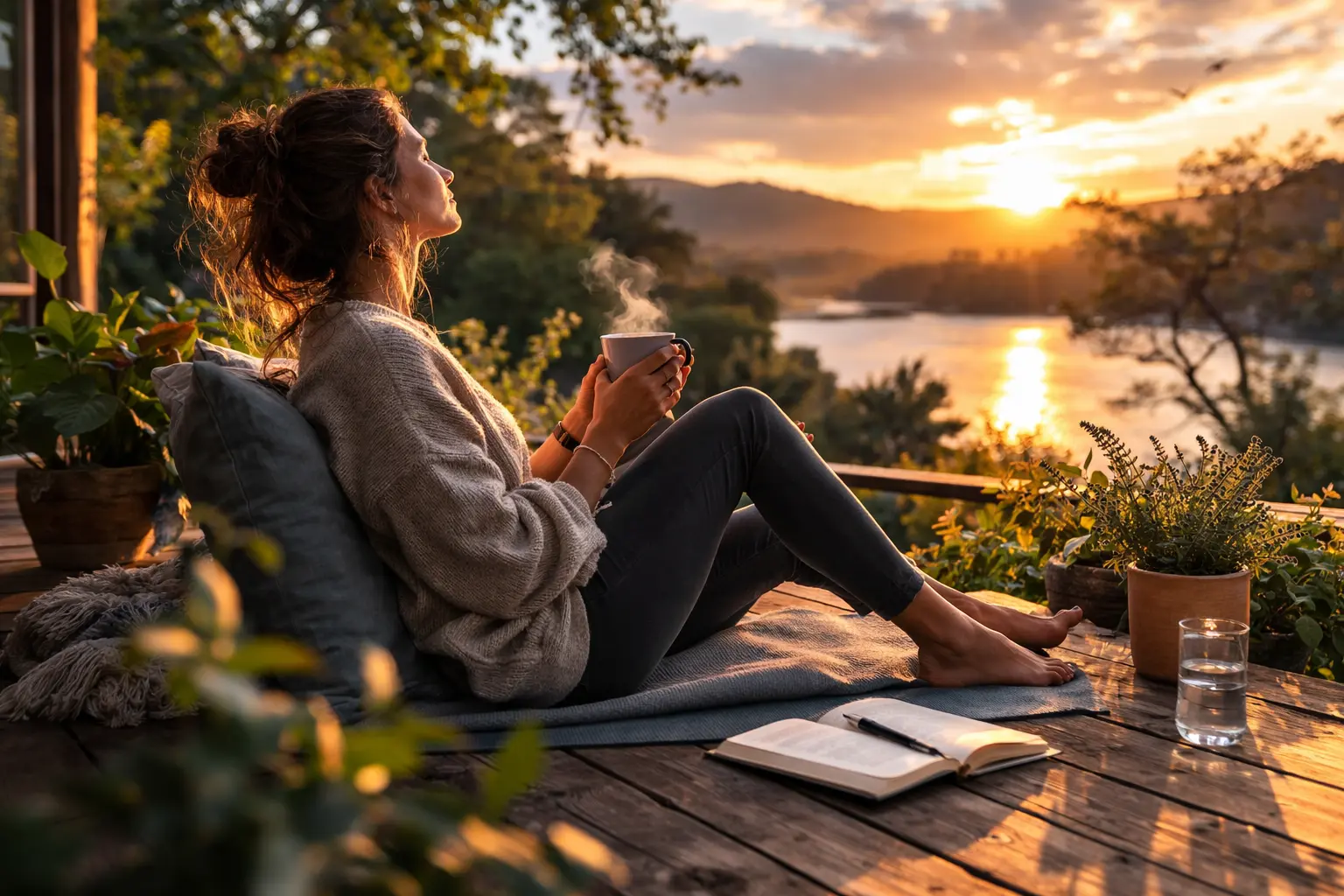
Your shoulders are tight, your mind won’t stop racing, and you feel that familiar knot in your chest again, but learning relaxation techniques for stress can actually rewire how your body responds to pressure and give you back control.
Deep breathing exercises for stress relief
Deep breathing exercises are one of the most accessible tools you have to calm your nervous system, and they work faster than you might expect. When stress hits, your breathing becomes shallow and rapid, which signals your body to stay in fight-or-flight mode. By deliberately slowing and deepening your breath, you send a powerful message to your nervous system that you are safe. Start by finding a quiet spot where you can sit comfortably for five to ten minutes. Breathe in slowly through your nose for a count of four, hold for four, then exhale through your mouth for a count of six. The longer exhale is key, as it activates your parasympathetic nervous system, the part responsible for relaxation. Many seniors find that practicing this technique before bed helps them sleep better, while others use it during the day when anxiety creeps in. A common mistake is trying to force the breath or expecting immediate results. Your body learns through repetition, so consistency matters more than perfection.
- Find a quiet and comfortable place to sit or lie down.
- Place one hand on your chest and the other on your abdomen to feel the breath moving through your body.
- Repeat this practice regularly to train your body to relax in response to deep breathing.
Progressive muscle relaxation (PMR) technique
Progressive muscle relaxation works by creating a dialogue between your mind and body. The technique involves deliberately tensing specific muscle groups for five to ten seconds, then releasing them and noticing the contrast between tension and relaxation. This practice helps you recognize where you hold stress physically, which many seniors don’t realize they do until they start paying attention. Begin with your toes, curl them tightly, hold, then release. Move upward through your feet, calves, thighs, buttocks, abdomen, chest, hands, arms, shoulders, neck, and face. The entire session takes about fifteen to twenty minutes. Picture this scenario: Margaret, a 68-year-old, spent years with chronic shoulder tension from worry. After two weeks of daily PMR practice, she noticed her shoulders naturally sat lower and her headaches decreased. One common pitfall is skipping the tension phase and only relaxing, which defeats the purpose. Your muscles need to experience the contrast to learn the difference. If you have arthritis or joint pain, you can modify by gently tensing muscles rather than clenching them hard.
📘 Fix your day in under 2 minuteschoose where to begin:
Guided imagery for stress reduction
Guided imagery invites you to create a mental sanctuary that your mind can retreat to whenever stress builds up. Unlike meditation, which focuses on the present moment, guided imagery uses your imagination to transport you somewhere peaceful and safe. Close your eyes and visualize a specific place where you feel calm, whether that is a beach from your past, a forest path, a garden, or even a favorite room from your childhood. Engage all five senses as you explore this place. What do you see? What sounds do you hear? What textures do you feel? What smells are present? This multisensory approach makes the experience vivid and powerful. Many seniors use guided imagery before medical appointments or during sleepless nights. You can listen to recorded guided imagery sessions online, or you can create your own mental script. Some people find it helpful to spend two to three minutes simply sitting with their eyes closed, breathing, before beginning the visualization. The key is consistency. Your brain becomes better at accessing this calm state the more you practice it.
Mindfulness meditation for inner peace
Mindfulness meditation teaches you to observe your thoughts and feelings without judgment, which is a skill that reduces anxiety and builds emotional resilience. Rather than trying to empty your mind or achieve a blank slate, you simply notice what arises and let it pass without getting caught up in it. Sit quietly for ten to fifteen minutes and focus on your breath. When your mind wanders, which it will, gently bring your attention back to your breath without frustration. You might notice thoughts like ‘I should be doing something else’ or ‘I am not doing this right.’ Simply acknowledge these thoughts and return to breathing. Over time, this practice creates distance between you and your worries. Consider Robert, a 72-year-old who struggled with ruminating thoughts about his health. After eight weeks of daily mindfulness practice, he reported that anxious thoughts still came, but they no longer hijacked his entire day. A mistake many beginners make is expecting meditation to feel peaceful immediately. Early sessions often feel restless or boring. This is normal and does not mean you are failing. The benefits accumulate gradually through consistent practice.
Yoga and tai chi for stress management
Yoga and tai chi blend gentle movement, controlled breathing, and mindfulness into a single practice that addresses stress from multiple angles. Both traditions have been used for thousands of years to promote physical health and mental clarity. Yoga involves holding poses that stretch and strengthen your body while you focus on breathing. Tai chi is a slow, flowing sequence of movements that resembles a moving meditation. For seniors, these practices offer the added benefit of improving balance, flexibility, and strength, which reduces fall risk and builds confidence. Many communities offer senior-specific classes that modify poses for joint limitations or reduced mobility. A typical session lasts thirty to sixty minutes and leaves most people feeling energized yet calm. You might start with just two sessions per week and gradually increase as your body adapts. The beauty of both practices is that you do not compete or compare yourself to others. Your practice is personal. Whether you hold a pose for thirty seconds or three minutes, you are doing it correctly if you are breathing and present.
Explore various relaxation techniques like deep breathing, PMR, guided imagery, mindfulness meditation, and yoga to combat stress naturally.
Can relaxation techniques help seniors manage chronic stress?
Yes, relaxation techniques can be effective for seniors in managing chronic stress by promoting relaxation and reducing tension in the body and mind.
How often should seniors practice relaxation techniques for optimal stress relief?
Seniors can benefit from practicing relaxation techniques daily or several times a week to maintain a sense of calm and improve overall well-being.
Others also read:
Disclaimer: This article is for informational purposes only and is not a substitute for professional medical advice. Always consult a healthcare professional for personal guidance.
This guide has been prepared and reviewed by the GlobalHealthBeacon editorial team and reflects current medical research as of 2026. It provides structured, evidence-based information to support informed health decisions.
