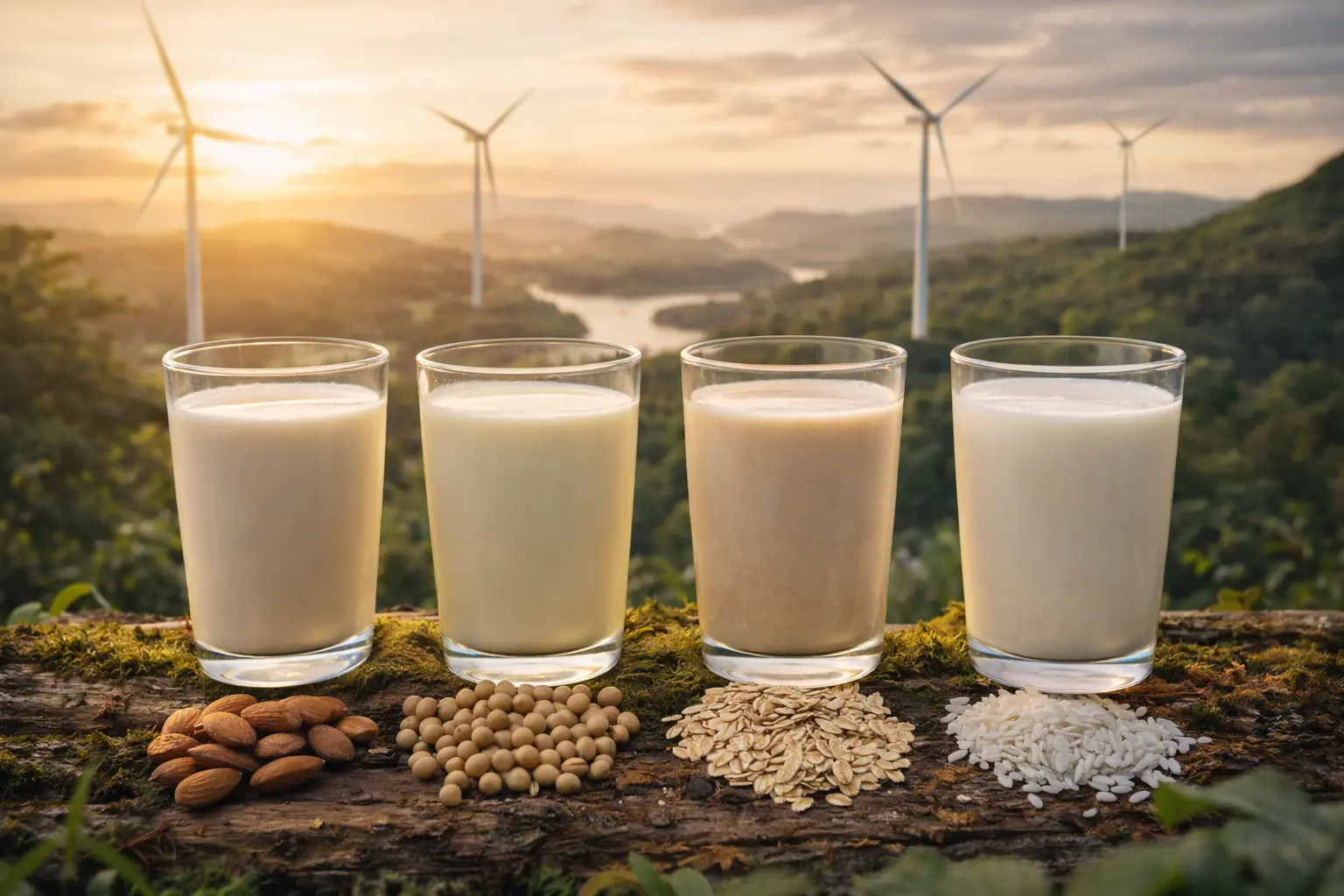
You’re standing in the grocery store feeling that familiar guilt wash over you as you reach for the dairy milk, knowing exactly how much water went into producing it, and wondering if there’s a better way to live without completely upending everything you know about breakfast.
Environmental benefits of plant-based milk
Here’s where it gets real: a single glass of dairy milk requires about 628 liters of water to produce, while oat milk needs just 10 liters. When you multiply that across your weekly shopping trips, you start to see the massive difference. Plant-based alternatives like almond, oat, and soy milk consistently demand fewer resources across the board. They require significantly less land to cultivate compared to dairy farming, which means fewer forests cleared and more ecosystems preserved. The greenhouse gas emissions are dramatically lower too, roughly a quarter of what dairy produces. Think about it this way: if just your household switched for a year, you’d save the equivalent of driving a car for thousands of miles. It’s not about being perfect; it’s about understanding that your choice at checkout actually matters.
- Reduced carbon footprint compared to dairy milk
- Lower water usage in production
- Less land required for cultivation
Personal stories of transition
Sarah, 26, remembers standing in her kitchen one morning, scrolling through climate articles on her phone while her coffee brewed. She’d been vaguely aware of environmental issues but never felt personally connected until she read about water scarcity in dairy farming regions. That afternoon, she bought her first carton of oat milk almost on impulse. The first week was awkward; her lattes tasted different, the texture threw her off. But by week three, she’d found her favorite brand, experimented with different oat milk options, and realized she actually preferred the taste. Now, eight months later, she can’t imagine going back. Her story mirrors that of thousands of young adults who’ve made similar switches, often sparked by a single moment of awareness. What makes these transitions stick isn’t willpower; it’s finding the right product that genuinely works for your palate and making it a normal part of your routine, not a sacrifice.
💬 Ready to feel better in 2 minutes?choose where to begin:
Challenges and rewards
Let’s be honest: the transition isn’t seamless for everyone. Your first attempt might taste like cardboard. You might spend three weeks trying different brands before finding one you actually enjoy. There’s the price factor too; plant-based options can cost 20-40% more at some stores. Some people struggle with the texture in their coffee or cereal. These aren’t small frustrations, and dismissing them does nobody any favors. But here’s what shifts the equation: the moment you realize you’re part of a solution instead of passively accepting the status quo. That sense of alignment between your values and your actions creates a genuine sense of accomplishment. Plus, once you’ve navigated the learning curve, the rewards compound. You feel more intentional about your choices, you often start exploring other plant-based foods, and conversations with friends naturally shift toward sustainability. The initial challenges fade quickly when you find your rhythm.
Impact on lifestyle
Switching to plant-based milk rarely stays contained to just milk. Marcus, 24, noticed this ripple effect firsthand. He started with oat milk in his coffee, then began swapping dairy yogurt for plant-based alternatives, then explored meatless Mondays, then started researching sustainable fashion brands. None of these changes felt forced; they flowed naturally from that first decision at the grocery store. When you make one choice aligned with your values, it becomes easier to make the next one. You start noticing which brands align with your ethics, you become more curious about food sourcing, and suddenly you’re having real conversations with friends about climate impact instead of just scrolling past articles. Your social circle often shifts too; you find yourself connecting with people who share these values. That single switch to plant-based milk becomes a gateway to a lifestyle that feels more intentional, more connected to something bigger than yourself, and honestly, more fulfilling.
Transitioning to plant-based milk offers significant environmental benefits, including reduced carbon footprint, water conservation, and land efficiency. Personal stories of this switch reflect a growing trend towards sustainability among young adults. Despite challenges, the rewards of contributing to a healthier planet make the transition fulfilling and impactful on lifestyle choices.
Is plant-based milk a better choice for the environment?
Yes, plant-based milk has a lower environmental impact compared to dairy milk due to reduced water usage, land requirements, and greenhouse gas emissions in its production.
What are the common challenges when transitioning to plant-based milk?
Some challenges include finding the right flavor that suits your taste preferences and adjusting to the different texture compared to dairy milk. However, the rewards of sustainability and environmental contribution outweigh these initial hurdles.
Others also read:
Disclaimer: This article is for informational purposes only and is not a substitute for professional medical advice. Always consult a healthcare professional for personal guidance.
This article presents an experience-based perspective and has been reviewed by the GlobalHealthBeacon editorial team in 2026. It provides structured, evidence-based information to support informed health decisions.
← Back to the main plant based milk environmental impact page
