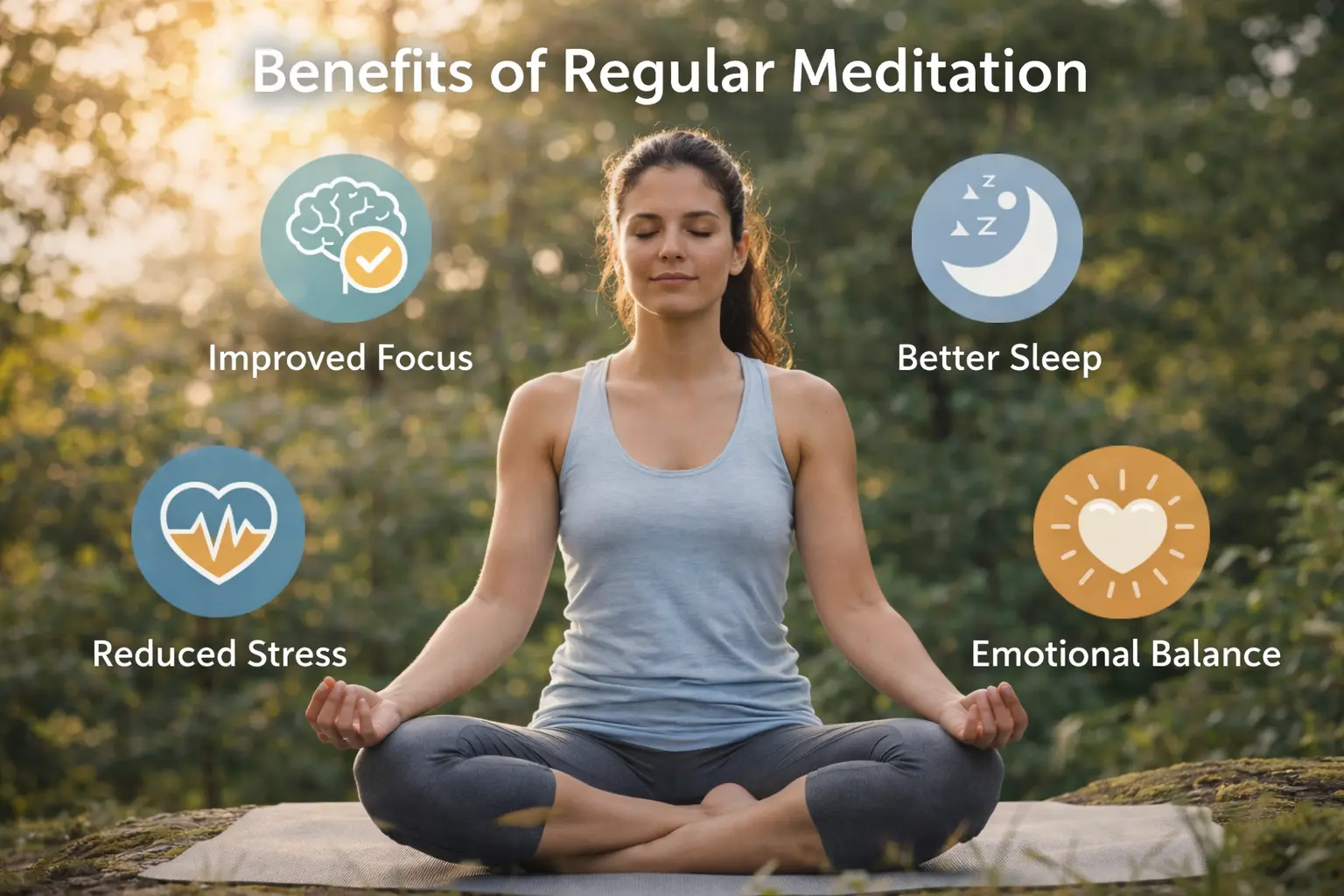
Your mind feels cluttered, your thoughts won’t settle, and you can’t remember where you put your glasses five minutes ago, but the benefits of regular meditation could be the quiet reset your brain and body have been desperately craving.
Enhanced mindfulness and clarity
Imagine sitting in your favorite chair, and for the first time in months, your mind feels genuinely quiet. That’s what consistent meditation practice offers seniors. Through regular practice, you develop a heightened awareness of the present moment, noticing details you’d normally rush past. One retired teacher shared how meditation helped her rediscover joy in simple moments: her morning coffee tasted richer, conversations with grandchildren felt more meaningful, and the constant mental chatter about yesterday’s worries simply faded. This deepened awareness isn’t mystical, it’s practical. As you train your mind to focus during meditation, that same focus naturally extends into daily life. You find yourself making clearer decisions because you’re not operating on autopilot. The mental fog that felt permanent begins lifting, replaced by a steadier, calmer presence.
- Improved focus and concentration
- Reduced mental fog and forgetfulness
- Better decision-making skills
Stress reduction and emotional well-being
Stress doesn’t announce itself loudly for most seniors. It creeps in quietly: tension in your shoulders, that tight feeling in your chest, the way you snap at someone you love over something trivial. Meditation works differently than you might expect. Rather than forcing relaxation, it creates a safe space where your nervous system can finally exhale. Consider Margaret, a 68-year-old who spent years managing anxiety about her health. When she started meditating for just ten minutes daily, something shifted. Not overnight, but gradually, she noticed the constant what-ifs quieted down. Her body felt less rigid. She could sit with her worries without them consuming her entire day. Meditation doesn’t erase life’s challenges, but it gives you distance from them, a mental buffer that makes everything feel more manageable. That inner peace you’re seeking isn’t a luxury, it’s something your mind can actually learn to access.
💬 Ready to feel better in 2 minutes?choose where to begin:
Physical health benefits
The connection between your mind and body is more powerful than most people realize. When you meditate regularly, your body responds in measurable ways. Your heart rate slows, your blood pressure can decrease, and inflammation throughout your body may reduce. For seniors managing multiple health concerns, these changes matter profoundly. Research suggests that consistent meditation supports better heart health and strengthens immune function, helping your body defend itself more effectively. Think of it like this: chronic stress keeps your body in a constant state of alert, exhausting your systems. Meditation essentially tells your body it’s safe to relax, allowing your natural healing processes to work more efficiently. Many seniors report feeling more energetic and vital after establishing a meditation routine, not because meditation is a magic cure, but because their bodies finally get the sustained calm they need to function optimally.
Improved sleep quality
Lying awake at 3 a.m., watching the hours slip by, feeling more exhausted than when you went to bed. That’s the reality for many seniors struggling with insomnia. Your mind races with thoughts, your body feels restless, and sleep feels impossibly far away. Meditation addresses this at the root. By calming both mind and body during the day, you’re essentially preparing yourself for deeper rest at night. When you practice meditation regularly, you’re training your nervous system to shift gears more easily, moving from the alert, active state into genuine relaxation. Seniors who meditate before bed often find they drift off faster and sleep more deeply. The racing thoughts quiet down because you’ve given your mind practice in settling. Your body, no longer flooded with stress hormones, can actually feel the fatigue it’s been masking. It’s not about forcing sleep, it’s about creating the conditions where sleep naturally returns.
Regular meditation practices offer seniors a multitude of benefits, including enhanced mindfulness, stress reduction, improved physical health, and better sleep quality. By making meditation a part of their routine, seniors can experience profound transformations in their overall well-being.
How often should seniors meditate to see benefits?
Seniors can start by meditating for a few minutes each day and gradually increase the duration as they become more comfortable with the practice. Consistency is key, so aim to meditate daily to reap the full benefits.
Can meditation help with chronic pain in seniors?
While meditation may not eliminate chronic pain entirely, many seniors find that it helps reduce the intensity of pain sensations and improves their ability to cope with discomfort. It can provide a valuable tool for managing chronic pain alongside other treatment options.
Others also read:
Disclaimer: This article is for informational purposes only and is not a substitute for professional medical advice. Always consult a healthcare professional for personal guidance.
This article presents an experience-based perspective and has been reviewed by the GlobalHealthBeacon editorial team in 2026. It provides structured, evidence-based information to support informed health decisions.
