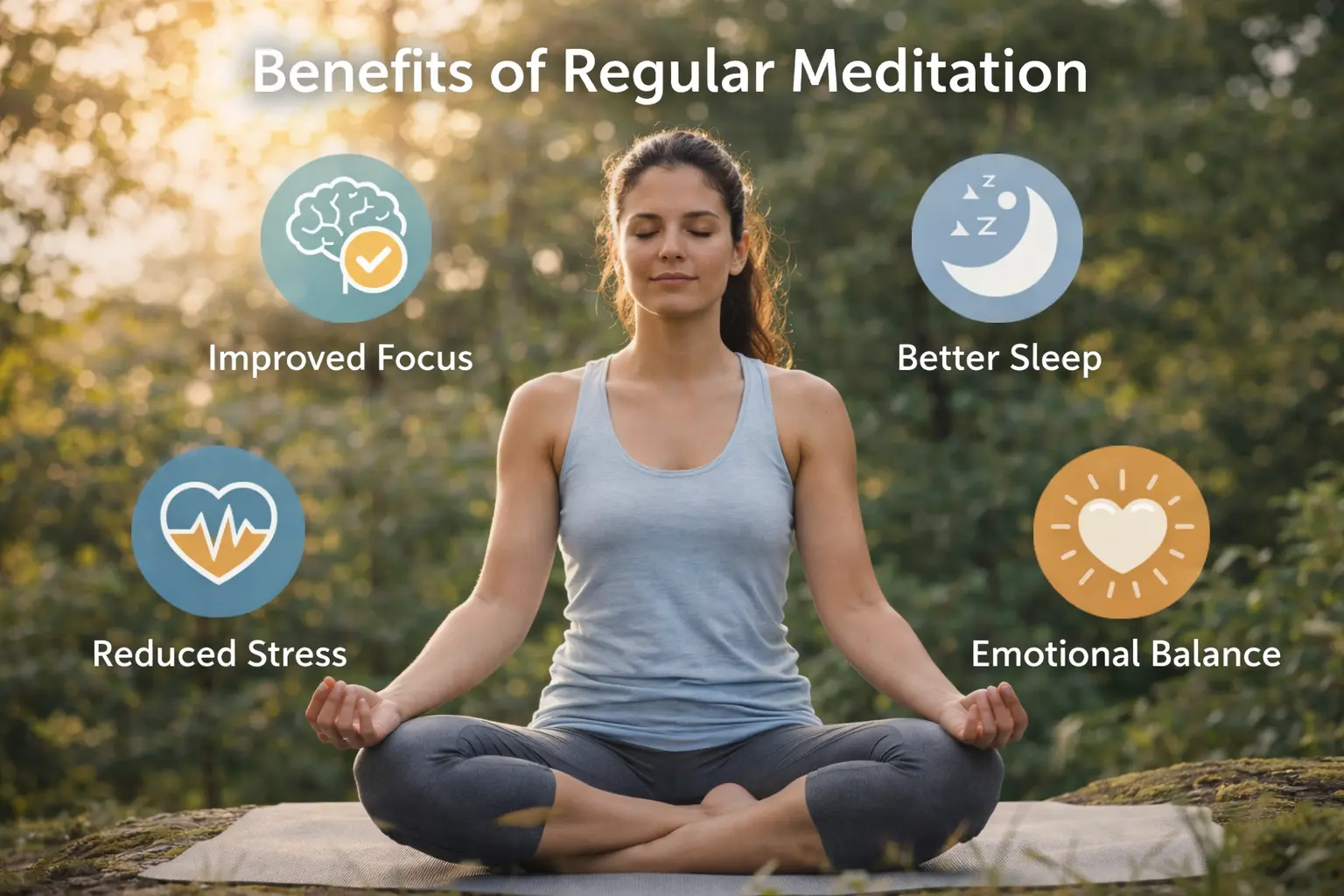
Your mind feels like a browser with 47 tabs open, you can’t focus on anything for more than five minutes, and sleep feels like a luxury you forgot existed – but the benefits of regular meditation might be the reset button you actually need.
Improved mental clarity and focus
Picture this: you’re in a meeting or trying to study, and your brain keeps jumping between what you need to do, what you said yesterday, and what you’re eating for dinner. Regular meditation trains your mind to stay anchored to the present moment, which directly sharpens your ability to focus. When you meditate, you’re essentially exercising your attention muscle. Start with just five minutes a day, and you’ll notice that distractions lose their grip on you. A young adult who meditates consistently often finds they can work through complex tasks without constantly checking their phone. The key is that meditation doesn’t just help you focus in the moment; it rewires how your brain processes information over time. You become better at filtering out irrelevant noise and zeroing in on what matters. Many young adults report that after two to three weeks of daily practice, they can read an entire article without rereading paragraphs or losing their place.
- Enhances mental acuity
- Improves focus and attention span
- Reduces mental clutter and enhances decision-making
Stress reduction and anxiety management
Stress for young adults isn’t just about feeling overwhelmed; it’s physical. Your shoulders tense, your jaw clenches, your heart races over emails. Meditation interrupts this cycle by activating your parasympathetic nervous system, which is essentially your body’s natural brake pedal. When you sit quietly and focus on your breath, you’re sending a signal to your nervous system that you’re safe, which lowers cortisol levels. Think of it like this: without meditation, stress compounds throughout the day. With it, you’re regularly resetting your baseline. A young adult dealing with work pressure, relationship concerns, or general life uncertainty can use meditation as an anchor. Even ten minutes of focused breathing before a stressful event can shift your entire response. You’ll notice you react less and respond more thoughtfully. The anxiety doesn’t disappear overnight, but it becomes manageable because you’ve built a tool to regulate your own nervous system.
📘 Fix your day in under 2 minuteschoose where to begin:
Better sleep quality
Insomnia and poor sleep plague young adults, often because their minds won’t shut off at night. Racing thoughts about tomorrow, replaying conversations, or scrolling endlessly are common culprits. Meditation creates a bridge between your waking mind and sleep by calming mental chatter before bed. The practice teaches your brain to release thoughts rather than grip them. A simple routine like meditating for ten to fifteen minutes before bed signals to your body that it’s time to wind down. Your heart rate slows, your breathing deepens, and your mind stops treating every thought as urgent. Young adults who meditate report falling asleep faster and waking fewer times during the night. You’re not forcing sleep; you’re creating the conditions where sleep naturally arrives. Many find that a brief body scan meditation or guided sleep meditation becomes a reliable ritual that their body learns to associate with rest.
Enhanced emotional well-being
Emotional regulation is something many young adults struggle with. You might feel fine one moment and frustrated the next, or you react strongly to small setbacks. Meditation develops your ability to observe emotions without being controlled by them. When you meditate regularly, you create space between what you feel and how you respond. This is emotional intelligence in action. You start noticing patterns: what triggers you, how your body signals emotions, and where you hold stress. Over time, you develop compassion for yourself and others because you understand that everyone’s struggling with their own inner noise. A young adult practicing meditation often finds they’re less reactive in relationships, more patient with themselves, and better able to communicate their needs. You’re not suppressing emotions; you’re learning to work with them skillfully. This foundation of self-awareness naturally extends to how you treat others, building deeper connections.
Beyond the mental and emotional shifts, meditation has measurable physical effects that young adults often overlook. Regular practice lowers blood pressure, reduces inflammation, and strengthens immune function. Your body literally changes at the cellular level when you meditate consistently. Stress hormones decrease, which means your body isn’t constantly in fight-or-flight mode, draining your energy and aging you faster. Young adults who meditate often notice they get sick less frequently, have more stable energy throughout the day, and experience fewer tension headaches. The practice also improves heart rate variability, which is a marker of overall cardiovascular health. Think of meditation as preventive medicine you can do anywhere, anytime, without a prescription. The physical benefits compound quietly over weeks and months. You might not feel dramatically different after one session, but after consistent practice, you’ll realize you have more energy, better digestion, and a stronger sense of physical resilience.
Regular meditation offers young adults a myriad of benefits, including enhanced mental clarity, stress reduction, improved sleep quality, emotional well-being, and various physical health benefits.
Is meditation suitable for beginners?
Yes, meditation is suitable for beginners. Start with short sessions of three to five minutes and gradually increase the duration as you become more comfortable with the practice. Use guided meditations or apps to help you stay on track.
How often should young adults meditate for optimal results?
For optimal results, young adults can start with just a few minutes of meditation daily and gradually increase the duration to ten to twenty minutes. Consistency is key to experiencing the full benefits of meditation. Even five minutes daily is better than sporadic longer sessions.
Others also read:
Disclaimer: This article is for informational purposes only and is not a substitute for professional medical advice. Always consult a healthcare professional for personal guidance.
This guide has been prepared and reviewed by the GlobalHealthBeacon editorial team and reflects current medical research as of 2026. It provides structured, evidence-based information to support informed health decisions.
