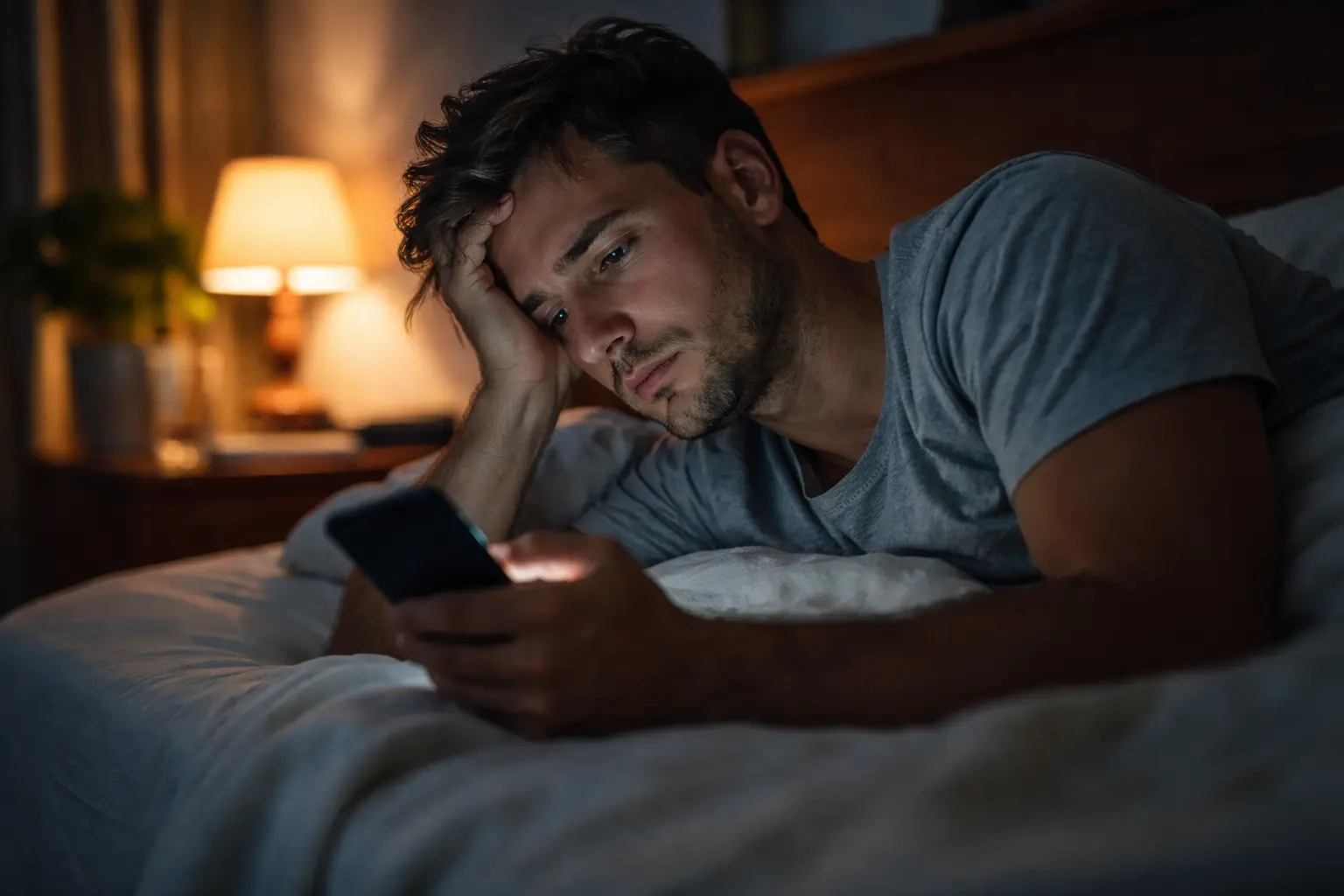
You’re lying in bed at 2 AM, eyes burning, scrolling mindlessly while your neck aches and your brain refuses to shut down, and you finally realize that the health implications of using screens have quietly taken over your entire life.
The impact of screen time on sleep patterns
I used to think I could just collapse into bed after hours of scrolling and fall asleep instantly. Turns out, my body had other plans. The blue light streaming from my phone was essentially telling my brain it was still midday, suppressing melatonin production and making genuine rest impossible. I’d lie there for hours, exhausted but wired, watching my sleep quality tank. What really clicked for me was understanding the circadian rhythm connection. Your body operates on a 24-hour cycle, and screens are basically hijacking that system. When you expose yourself to bright light in the evening, your brain thinks the sun is still up, delaying sleep onset and fragmenting the deep restorative stages you actually need. I started experimenting with a simple change: no screens after 9 PM. Within two weeks, I noticed falling asleep felt natural again, not like wrestling with my own biology.
- Create a screen-free bedtime routine to improve sleep quality.
- Limit screen time before sleep to reduce the negative impact on your sleep patterns.
- Consider using blue light filters on screens or wearing blue light-blocking glasses in the evening.
Digital eyestrain and its effects on vision
Around 3 PM every workday, my eyes would start burning like I’d been staring into a campfire. That dry, scratchy feeling became my afternoon reality. I realized I was barely blinking while focused on my screen, which meant my eyes weren’t getting the moisture they desperately needed. Digital eyestrain is real and it sneaks up on you. You might notice blurred vision when you look away from your screen, persistent headaches behind your eyes, or that gritty sensation that makes you want to rub your eyes constantly. The 20-20-20 rule changed everything for me: every 20 minutes, look at something 20 feet away for 20 seconds. It sounds simple, but it gives your eye muscles a genuine break. I also realized my screen was way too close and too bright. Adjusting it to arm’s length away and reducing brightness made a tangible difference within days. Some friends swear by blue light glasses, others use screen filters. The point is recognizing that your vision isn’t meant to stay locked on a single distance for hours.
💬 Ready to feel better in 2 minutes?choose where to begin:
Posture problems due to excessive screen use
My shoulders used to live somewhere near my ears by 5 PM. I’d catch myself hunched over my laptop, chin jutting forward like I was trying to merge with the screen itself. This posture became my default, and my neck paid the price with constant tension and occasional sharp pain. What I didn’t realize was how quickly bad screen posture compounds. You’re not just uncomfortable in the moment; you’re training your muscles to stay tense, creating knots that persist even when you’re not working. I started noticing my upper back aching during workouts and my shoulders constantly tight. The fix required intentional setup: screen at eye level so I wasn’t looking down, chair supporting my lower back, feet flat on the ground. I also set phone reminders to stand and stretch every hour. Those two-minute breaks where I’d extend my arms overhead or do gentle neck rolls seemed pointless at first, but they genuinely interrupted the cycle of tension building throughout the day. Investing in a basic ergonomic desk setup felt expensive until I realized how much money I’d have spent on massage therapy and pain relief.
Mental health impact of screen addiction
I didn’t connect my anxiety spikes to my screen habits until I noticed a pattern. After scrolling through social media for 30 minutes, I’d feel this weird mix of inadequacy and restlessness. Everyone’s highlight reel was making my real life feel somehow insufficient. The comparison trap is insidious because it happens subconsciously. You’re not actively thinking ‘I’m worse than this person,’ but your brain is registering the gap between their curated image and your unfiltered reality. I started noticing how my mood shifted depending on what I consumed. Doom-scrolling through news left me anxious and helpless. Comparing my body or achievements to influencers triggered self-doubt I didn’t even know I had. The mental health connection goes deeper than just comparison too. Excessive screen time, especially late at night, disrupts sleep, which tanks your mood regulation. You’re also getting constant dopamine hits from notifications and likes, which can make real-life interactions feel less stimulating. When I started being intentional about what I consumed and when, setting boundaries around social media, my anxiety noticeably decreased. It wasn’t about quitting entirely; it was about reclaiming control over the experience rather than letting it control me.
Understanding the health implications of excessive screen use is crucial. From sleep disruptions and vision problems to posture issues and mental health impacts, reducing screen time and practicing healthy screen habits can significantly improve your overall well-being.
Can blue light filters on screens really help reduce eye strain?
Yes, blue light filters can be effective in reducing digital eyestrain by minimizing the exposure to harmful blue light wavelengths emitted by screens.
What are some tips to improve posture while using screens?
To improve posture while using screens, ensure your screen is at eye level, take frequent breaks to stretch and move around, and invest in ergonomic furniture like a proper chair and desk setup.
Others also read:
Disclaimer: This article is for informational purposes only and is not a substitute for professional medical advice. Always consult a healthcare professional for personal guidance.
This article presents an experience-based perspective and has been reviewed by the GlobalHealthBeacon editorial team in 2026. It provides structured, evidence-based information to support informed health decisions.
← Back to the main health implications of using screens page
