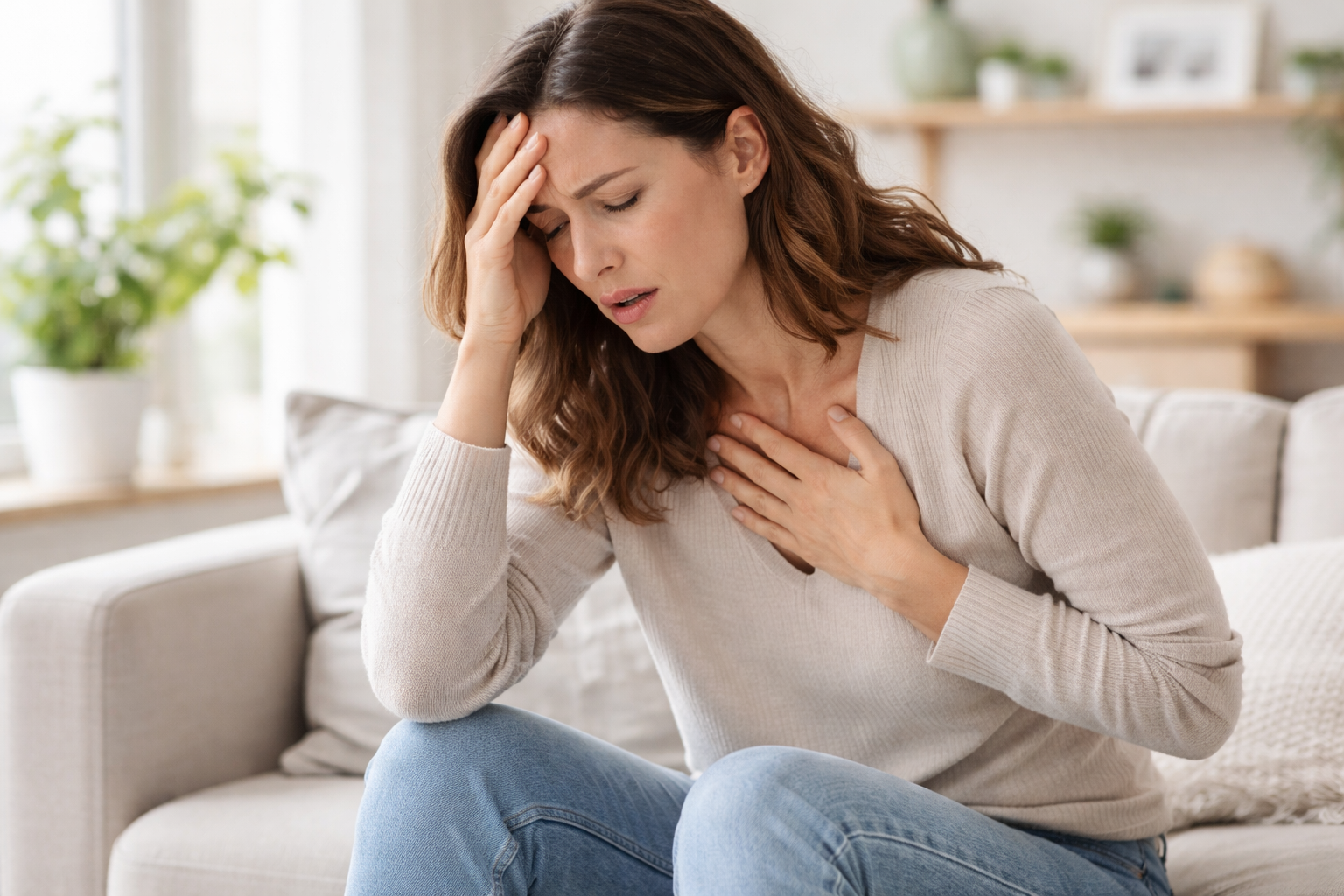
Your heart is pounding so hard you think it might burst, your chest feels tight, and suddenly the world feels like it’s closing in on you, but you have no idea why, and that terrifying uncertainty is exactly what panic attack symptoms feel like for millions of women every single day.
Understanding panic attack symptoms
Panic attack symptoms show up differently for every woman, but the physical sensations are unmistakable once they start. You might feel shortness of breath that makes you gasp for air, a rapid heartbeat that pounds in your ears, chest pain that mimics a heart attack, trembling hands, dizziness, or an overwhelming sense of impending doom. For many women, these symptoms arrive without warning during routine moments, like sitting at your desk at work or driving home from the grocery store. The emotional component is equally intense, creating a feedback loop where physical symptoms trigger fear, which intensifies the physical response. Some women describe it as feeling like they are losing control of their body entirely. Understanding that these symptoms are your nervous system in overdrive, not an actual medical emergency, is the first step toward managing them effectively.
- Learn to recognize the early warning signs of a panic attack, such as subtle tension, racing thoughts, or slight dizziness
- Practice deep breathing exercises to help calm your body and mind, starting with a simple 4-7-8 technique
- Seek professional guidance and support to better understand your symptoms and rule out other medical conditions
Managing panic attacks through mindfulness
Mindfulness techniques work by anchoring your attention to the present moment, which interrupts the cycle of fear and catastrophic thinking that fuels panic attacks. Meditation, even just five minutes daily, trains your brain to observe anxious thoughts without judgment or reaction. Yoga combines physical movement with breath awareness, releasing tension stored in your shoulders, chest, and jaw, areas where women often hold stress. Visualization involves imagining a calm place in vivid detail, engaging your senses to create a mental refuge you can access during stressful moments. Many women find that a consistent mindfulness practice reduces both the frequency and intensity of panic episodes over weeks and months. For example, a woman who practiced ten minutes of daily meditation reported that her panic attacks decreased from three times weekly to once every two weeks within six weeks. The key is consistency, not perfection, and finding the specific technique that resonates with you.
📘 Fix your day in under 2 minuteschoose where to begin:
Healthy lifestyle changes for panic attack relief
Your daily habits directly influence your nervous system’s sensitivity to stress triggers. Regular exercise, whether walking, swimming, dancing, or strength training, releases endorphins that naturally elevate mood and reduce anxiety. Aim for at least 150 minutes of moderate activity weekly, but even a 20-minute walk can calm your nervous system after a stressful day. Sleep quality matters enormously, as sleep deprivation amplifies anxiety and makes panic attacks more likely, so prioritize seven to nine hours nightly. A balanced diet rich in omega-3 fatty acids, magnesium, and B vitamins supports nervous system function, while excessive caffeine and sugar can trigger or worsen panic symptoms. One woman discovered that cutting back her coffee intake from four cups to one cup daily, combined with evening walks and consistent sleep, reduced her panic attacks by half within two months. These changes work because they address the underlying physiological stress that makes your nervous system reactive.
Seeking professional help for panic attacks
Cognitive-behavioral therapy, or CBT, is one of the most evidence-based treatments for panic attacks and works by helping you identify the thought patterns and beliefs that fuel your anxiety. A therapist trained in CBT guides you through recognizing triggers, challenging catastrophic thoughts like ‘I’m having a heart attack’ when your heart races, and developing practical coping strategies. For instance, a woman might learn that her panic attacks often follow stressful work meetings, allowing her to prepare with grounding techniques beforehand. Exposure therapy, another evidence-based approach, gradually helps you face situations you’ve been avoiding due to fear of panic, rebuilding confidence and reducing avoidance behaviors. Some women benefit from medication prescribed by a psychiatrist, used alongside therapy for faster symptom relief. The combination of therapy and lifestyle changes typically produces the best long-term outcomes, addressing both the immediate symptoms and the underlying anxiety patterns.
Building a strong support system
Isolation intensifies panic and anxiety, while connection provides both practical support and emotional validation that your experience is real and manageable. Sharing your panic attack experiences with trusted friends or family members helps them understand what you’re going through and reduces the shame or embarrassment many women feel. Support groups, whether in-person or online, connect you with other women navigating panic attacks, normalizing your experience and offering real strategies that have worked for others. A woman who joined a weekly support group reported feeling less alone and gaining confidence from hearing how others managed similar symptoms. Professional therapists can also help you communicate your needs to loved ones and develop a safety plan for when panic strikes. Building this network takes time and vulnerability, but the reassurance that you are not alone and that others have recovered from panic attacks is profoundly healing and motivating.
Others also read:
Disclaimer: This article is for informational purposes only and is not a substitute for professional medical advice. Always consult a healthcare professional for personal guidance.
This guide has been prepared and reviewed by the GlobalHealthBeacon editorial team and reflects current medical research as of 2026. It provides structured, evidence-based information to support informed health decisions.

