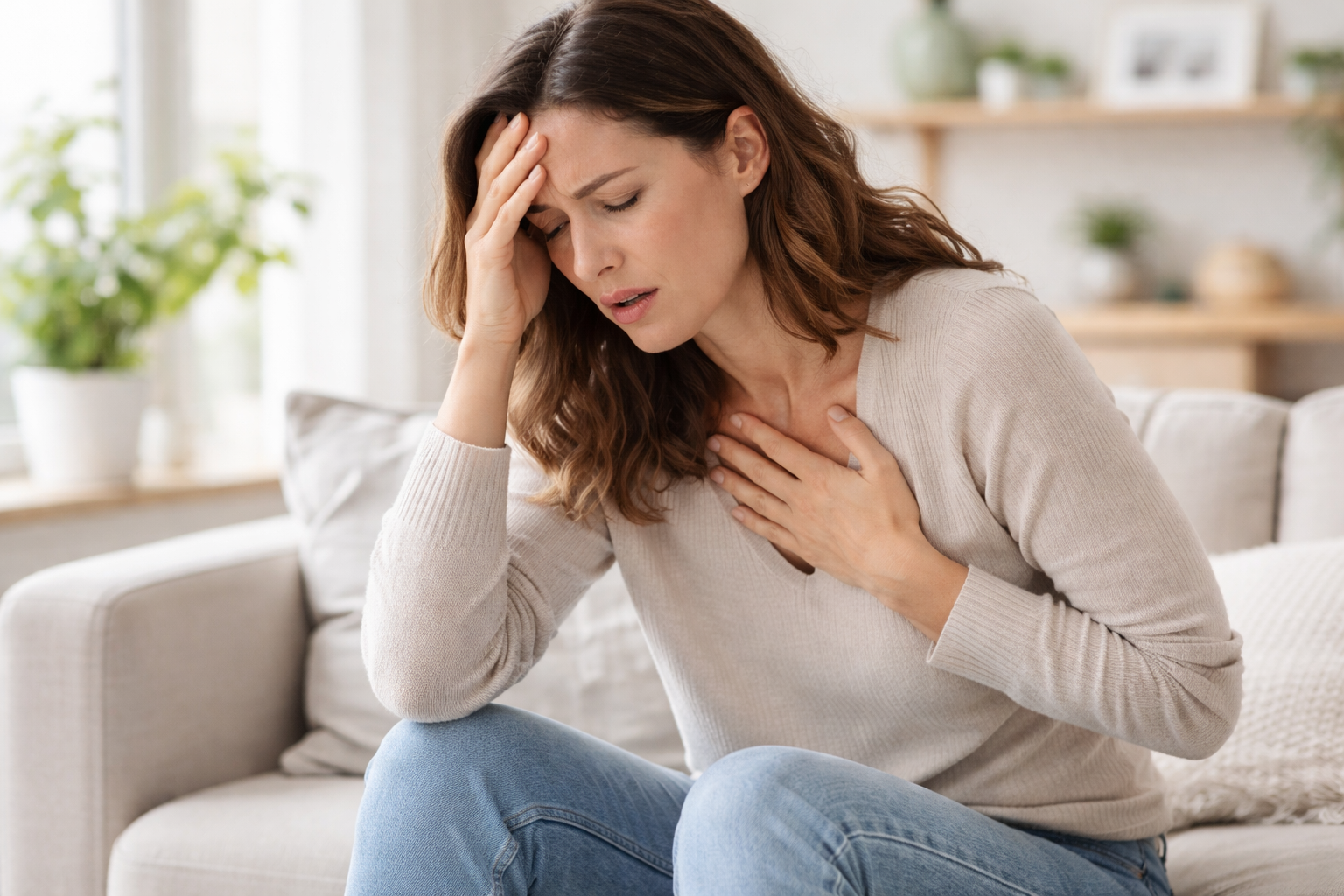
Your heart suddenly pounds like it’s about to explode, your chest tightens, and a wave of terror crashes over you for no reason you can name – that’s what panic attack symptoms feel like, and you’re not alone in experiencing this.
The physiology of panic attacks
When a panic attack strikes, your nervous system launches into overdrive. The amygdala, your brain’s threat-detection center, perceives danger and triggers the sympathetic nervous system. This cascade releases adrenaline and cortisol, hormones that prepare your body to face or flee from a threat. Your heart rate accelerates to pump blood to your muscles, breathing quickens to increase oxygen, and blood vessels constrict, sometimes causing dizziness or tingling sensations. Imagine your body treating a false alarm like a real emergency. Sweating increases as your body attempts to cool itself for physical exertion. Blood sugar spikes to fuel muscles. Your digestive system shuts down, which is why nausea often accompanies panic. This entire response evolved to protect us from genuine danger, but during a panic attack, there is no actual threat. Understanding this biological mechanism helps explain why panic attacks feel so terrifying yet are not physically dangerous.
Gender differences in panic attacks
Research consistently shows women experience panic attacks at roughly twice the rate of men, a disparity that extends across cultures and age groups. Hormonal fluctuations play a significant role. Estrogen and progesterone influence serotonin and GABA, neurotransmitters that regulate anxiety and mood. Many women report panic attacks worsening during specific phases of their menstrual cycle, particularly before menstruation when progesterone drops. Pregnancy, perimenopause, and menopause create additional hormonal shifts that can trigger or intensify panic symptoms. Beyond hormones, genetic predisposition matters. If your mother or sister experienced panic disorder, your risk increases. Life stressors also differ by gender. Women often juggle multiple roles – caregiving, work, household management – creating unique stress patterns. Socialization may play a role too. Women are more likely to seek help and report symptoms, while men may minimize or hide panic experiences. Additionally, women show heightened interoceptive awareness, meaning they notice internal bodily sensations more acutely, which can amplify panic responses when they occur.
Recognizing panic attack symptoms
Panic attack symptoms arrive suddenly and peak within minutes, though the fear can linger longer. Physical symptoms include a racing or pounding heartbeat, chest pain or pressure that mimics a heart attack, shortness of breath or hyperventilation, dizziness or lightheadedness, trembling or shaking, hot flashes or chills, nausea or stomach distress, and tingling sensations in your hands or feet. Cognitive and emotional symptoms are equally distressing. You might experience an overwhelming sense of impending doom, fear of dying, fear of losing control or going crazy, or a feeling of detachment from reality called depersonalization. A woman might be sitting at her desk when suddenly her heart races, her hands shake, and she becomes convinced she’s having a heart attack, only to have symptoms fade within 20 minutes. Another might experience panic while driving, feeling trapped and terrified. The unpredictability is part of what makes panic so frightening. Symptoms can vary between episodes. One attack might emphasize physical sensations while another feels primarily psychological. Recognizing your personal symptom pattern helps you understand what’s happening when panic strikes.
- Practice grounding techniques like the 5-4-3-2-1 method: identify five things you see, four you can touch, three you hear, two you smell, and one you taste to anchor yourself in the present moment.
- Engage in regular aerobic exercise such as brisk walking, cycling, or swimming at least three times weekly to reduce overall anxiety sensitivity and improve stress resilience.
- Work with a therapist trained in cognitive-behavioral therapy to identify panic triggers, challenge catastrophic thinking patterns, and develop personalized coping strategies that work for your life.
🔬 Science-backed benefits in 2 minuteschoose where to begin:
Impact of panic attacks on women’s health
Repeated panic attacks create a cycle that extends beyond the moments of acute fear. Women who experience frequent panic often develop anticipatory anxiety, constantly worrying about when the next attack will strike. This hypervigilance exhausts the nervous system and impairs sleep quality, which further destabilizes mood and increases anxiety sensitivity. Over time, chronic panic can evolve into panic disorder, characterized by persistent fear of future attacks. Some women begin avoiding situations where they experienced panic, restricting their lives in ways that feel safer but actually reinforce the anxiety cycle. A woman might stop driving on highways, attending social events, or going to the grocery store alone. This avoidance can lead to agoraphobia, where leaving home becomes increasingly difficult. The psychological toll is substantial. Depression frequently co-occurs with panic disorder, creating a dual burden that affects motivation, sleep, appetite, and overall quality of life. Physical health consequences include elevated blood pressure, increased inflammation markers, and higher risk of cardiovascular issues. Seeking timely intervention through therapy or medical care interrupts this cycle and prevents long-term complications.
Treatment approaches for women
Cognitive-behavioral therapy, or CBT, stands as the gold standard for panic disorder treatment. This approach helps you identify thought patterns that fuel panic, challenge catastrophic interpretations of bodily sensations, and gradually expose yourself to feared situations in a controlled way. For example, if you fear your racing heart means you’re having a heart attack, your therapist helps you understand the difference between panic symptoms and actual cardiac events, then practices breathing exercises while monitoring your heart rate to prove it’s safe. Medication options include selective serotonin reuptake inhibitors, or SSRIs, which increase serotonin availability and reduce panic frequency over weeks to months. Some women benefit from short-term benzodiazepines during acute phases, though long-term use carries dependency risks. Lifestyle modifications complement these approaches. Regular exercise reduces anxiety sensitivity and improves mood through endorphin release. Limiting caffeine and alcohol, which can trigger panic, helps stabilize your nervous system. Mindfulness meditation and yoga teach you to observe anxious thoughts without judgment. Sleep hygiene matters enormously since sleep deprivation amplifies anxiety. Many women find that combining therapy, lifestyle changes, and sometimes medication creates the most sustainable improvement in panic symptoms.
Research insights on women’s panic attacks
Contemporary neuroscience reveals that women with panic disorder show heightened activation in brain regions involved in threat detection and emotional processing. The amygdala responds more intensely to ambiguous stimuli, meaning women may interpret neutral bodily sensations as dangerous more readily than men do. This heightened interoceptive sensitivity is not a weakness but a neurobiological difference that shapes how panic manifests. Research also shows women have lower thresholds for responding to stressors, meaning smaller triggers can activate the panic response. Genetic studies indicate that panic disorder runs in families, with heritability estimates around 40 percent. Environmental factors like childhood trauma, chronic stress, or major life transitions significantly influence whether genetic vulnerability develops into clinical panic. Emerging research explores how hormonal contraceptives and hormone replacement therapy affect panic severity, with mixed findings suggesting individual variation. Brain imaging studies show that successful treatment, whether through therapy or medication, produces measurable changes in neural activity patterns. Understanding these mechanisms allows clinicians to tailor treatment to each woman’s unique neurobiological profile, moving beyond one-size-fits-all approaches.
Panic attacks represent a profound physiological response shaped by gender-specific factors including hormonal fluctuations, genetic predisposition, and life circumstances unique to women. Recognizing your personal symptom pattern, understanding the biological mechanisms at work, and seeking appropriate treatment through therapy, lifestyle modifications, or medication can significantly reduce panic’s impact on your life. Research continues to illuminate why women experience panic differently and how to address it effectively.
Can panic attacks be prevented?
While you cannot always prevent panic attacks entirely, consistent stress management through regular exercise, adequate sleep, mindfulness practice, and therapy can substantially reduce how often they occur and how intensely you experience them. Identifying and avoiding personal triggers when possible also helps lower your overall anxiety baseline.
Are panic attacks a sign of weakness?
No. Panic attacks are a physiological response involving your nervous system, brain chemistry, and sometimes genetic factors. They reflect how your body is wired, not your strength or character. Seeking help and learning to manage panic actually demonstrates courage and self-awareness.
Others also read:
Disclaimer: This article is for informational purposes only and is not a substitute for professional medical advice. Always consult a healthcare professional for personal guidance.
This article has been prepared and reviewed by the GlobalHealthBeacon editorial team and is based on current medical research and published scientific literature available in 2026. It provides structured, evidence-based information to support informed health decisions.

