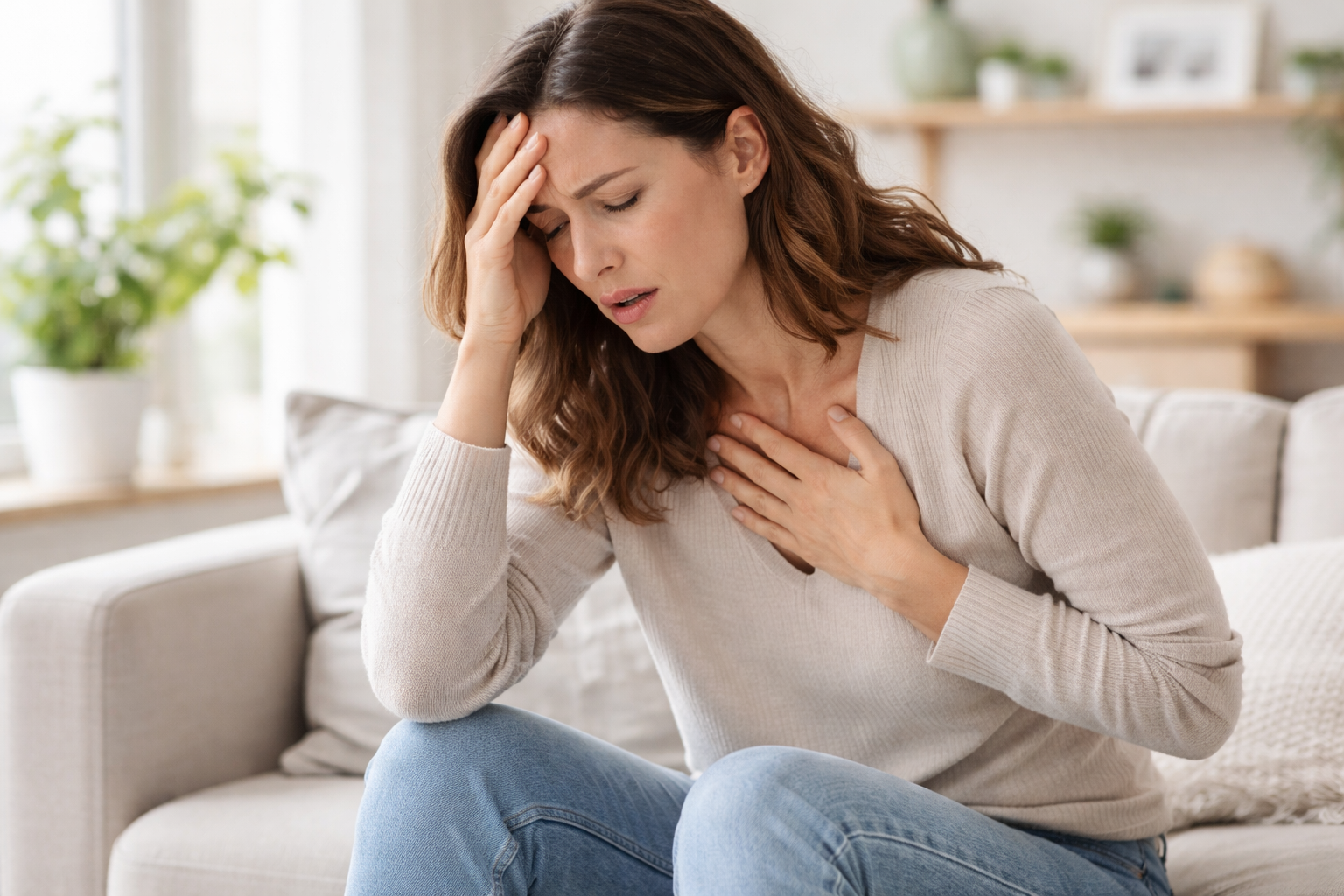
Your heart suddenly hammers so hard you think it might burst through your chest, your hands won’t stop shaking, and you can’t catch your breath no matter how hard you try – that’s panic attack symptoms hitting you all at once, and you’re not alone in feeling like you’re losing your mind.
The surprising physical symptoms
During a panic attack, your body feels like it’s staging a full revolt against you. One moment you’re fine, the next your heart is pounding so intensely you can feel it in your throat, your palms are drenched with sweat, and your legs feel like they might give out. Imagine sitting at your desk at work when suddenly your chest tightens, your fingers start tingling, and dizziness washes over you like a wave. You might feel nauseous, experience trembling throughout your body, or notice your vision blurring. These aren’t imaginary sensations – they’re real physical responses happening in your nervous system. Many women describe it as their body going into overdrive without permission. The shortness of breath can feel particularly terrifying because you’re gasping for air even though there’s plenty of oxygen around you. Some women report feeling hot flashes, chills, or an overwhelming sense of unreality. It’s not weakness or drama – it’s your body’s stress response firing at maximum intensity.
- Rapid heartbeat
- Shortness of breath
- Nausea or stomach upset
The overwhelming emotional rollercoaster
Beyond the physical chaos, panic attacks flood your mind with intense emotions that feel impossible to control. Fear grips you so tightly that you genuinely believe something catastrophic is happening right now. You might feel a sense of impending doom, like something terrible is about to occur, even though logically you know you’re safe. Picture this: you’re in a grocery store and suddenly you’re convinced you’re having a heart attack or losing your mind. The dread feels so real and overwhelming that it paralyzes you. Many women experience a desperate need to escape, an urge to run away from the situation even though the real threat is internal. There’s also this crushing sense of helplessness – you feel trapped in your own body with no way out. Some describe it as being trapped in a nightmare while awake. The emotional intensity can be so exhausting that you find yourself crying, shaking, or feeling completely numb afterward. It’s not sadness exactly – it’s a raw, primal fear that your mind can’t rationalize away no matter how hard you try.
💬 Ready to feel better in 2 minutes?choose where to begin:
The disorienting sensory experience
Panic attacks don’t just affect your heart and emotions – they hijack your entire sensory system. Everything around you suddenly feels magnified and distorted. Fluorescent lights seem blindingly bright, a coworker’s voice sounds unbearably loud, and textures that normally feel fine suddenly feel intolerable against your skin. It’s like someone turned up the volume and brightness on the entire world without your permission. You might feel detached from your surroundings, as if you’re watching yourself from outside your body, which adds another layer of terror. Some women describe feeling like they’re in a tunnel, unable to focus on anything except their panic. Smells become overwhelming, tastes change, and even the feeling of your clothes touching your skin can feel wrong. This sensory overload makes it nearly impossible to ground yourself or find comfort. You might find yourself unable to watch TV, be in crowded spaces, or even have conversations because everything feels too intense. The disorientation can make you feel confused about where you are or what’s happening around you.
The exhausting aftermath
When the panic finally subsides, you might think it’s over – but the aftermath can be just as difficult as the attack itself. Your body feels completely drained, as if you’ve just run a marathon even though you were sitting still the entire time. You’re mentally foggy, emotionally fragile, and sometimes even embarrassed about what just happened. Many women describe feeling depressed or anxious in the hours following an attack, worried that another one might strike at any moment. Your muscles ache, you might have a headache, and your entire body feels heavy and exhausted. You might struggle to concentrate at work or with your family, replaying the experience over and over in your mind. Some women feel vulnerable and hyperaware of their body for days afterward, noticing every little sensation and wondering if another attack is coming. The emotional toll is real too – you might feel ashamed, frustrated with yourself, or worried about being judged. Sleep can be disrupted, appetite changes, and motivation plummets. It’s not just physical exhaustion – it’s the emotional weight of having experienced something so overwhelming that your system needs time to recover and recalibrate.
Panic attacks manifest physically, emotionally, and sensory-wise, overwhelming those who experience them. The aftermath can be draining, leaving individuals feeling exhausted and fragile. Understanding the full scope of panic attack symptoms is crucial for those navigating this challenging mental health issue.
How long do panic attacks typically last?
Panic attacks can vary in duration, with some lasting for a few minutes while others can persist for up to 20-30 minutes. The intensity of symptoms and individual coping mechanisms play a role in determining the length of an attack.
Can panic attacks be prevented?
While it can be challenging to prevent panic attacks entirely, managing stress, practicing relaxation techniques, and seeking professional help through therapy or medication can help reduce the frequency and intensity of panic episodes.
Others also read:
Disclaimer: This article is for informational purposes only and is not a substitute for professional medical advice. Always consult a healthcare professional for personal guidance.
This article presents an experience-based perspective and has been reviewed by the GlobalHealthBeacon editorial team in 2026. It provides structured, evidence-based information to support informed health decisions.

