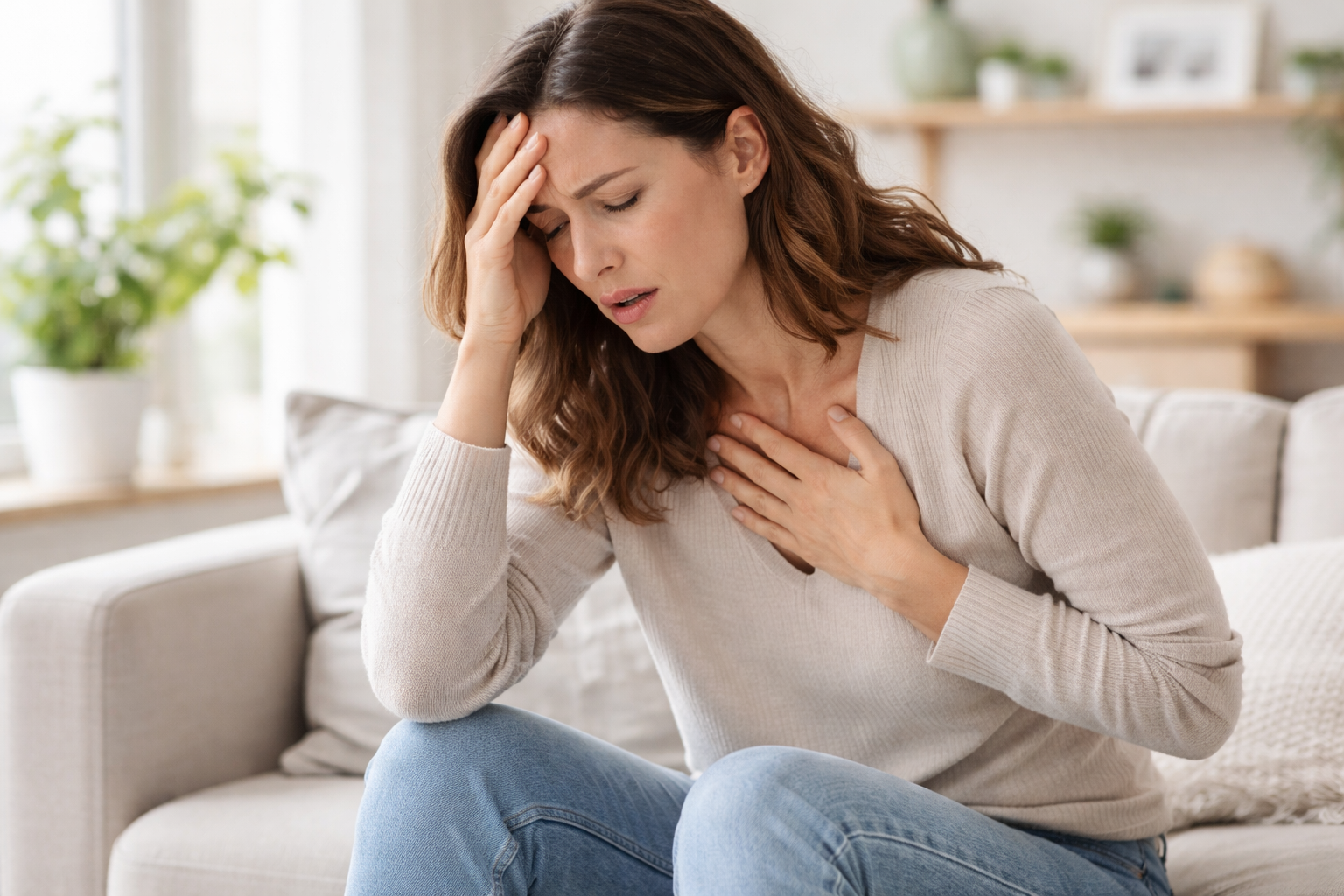
Your heart suddenly pounds so hard you think it might burst through your chest, your breathing becomes shallow and desperate, and an overwhelming sense of dread floods your entire body for no reason you can name – this is what panic attack symptoms feel like, and you’re not alone in experiencing them.
Understanding panic attack symptoms
Panic attacks arrive like an unexpected storm. Your body floods with adrenaline, triggering a cascade of physical responses that can feel genuinely dangerous even though they’re not. You might experience a rapid heartbeat that feels erratic and uncontrollable, shortness of breath that makes you gasp for air, chest pain or tightness that mimics a heart attack, dizziness that makes the room spin, trembling hands, or excessive sweating. These intense episodes often come on suddenly without warning and can be accompanied by a feeling of impending doom or a terrifying loss of control. For many women, the first panic attack happens unexpectedly, perhaps during a normal day at work or while driving. Understanding that these symptoms, while frightening, are your nervous system in overdrive rather than a medical emergency can help you begin to navigate these moments with slightly more clarity.
- Sudden onset of intense fear or discomfort that peaks within minutes
- Physical symptoms like sweating, nausea, chills, or hot flashes
- Feeling like you are detached from reality or experiencing a sense of unreality or depersonalization
Recognizing emotional signs
Beyond the physical sensations, panic attacks trigger powerful emotional responses that can be just as distressing as the bodily symptoms. You might feel an intense fear of losing control, convinced that something terrible is happening to you or that you are going crazy. Some women describe a paralyzing fear of dying, even though logically they know the panic attack itself is not life-threatening. There is often a sense of impending dread or doom that feels absolutely real in the moment, making it difficult to reassure yourself that this will pass. You might also experience a detached feeling from your surroundings or from your own body, as if you are watching yourself from outside. Recognizing these emotional cues as part of the panic response rather than actual danger signals is crucial. When you can identify that the fear is the symptom itself, not a warning of real danger, you begin to separate the emotion from reality, which is a powerful first step toward managing panic attacks more effectively.
📘 Fix your day in under 2 minuteschoose where to begin:
Coping strategies during a panic attack
When a panic attack strikes, having concrete strategies to employ can make the difference between spiraling deeper into fear and beginning to stabilize. Start with deep breathing exercises, such as the 4-7-8 technique: breathe in for four counts, hold for seven, and exhale for eight. This signals your nervous system that you are safe. Grounding techniques help anchor you to the present moment instead of the frightening sensations. Try the 5-4-3-2-1 method: identify five things you see, four you can touch, three you hear, two you smell, and one you taste. Positive self-talk matters too. Remind yourself that panic attacks always end, that the sensations are uncomfortable but not dangerous, and that you have survived every difficult moment before this one. Some women find it helpful to splash cold water on their face, which can interrupt the panic response. Others use progressive muscle relaxation, tensing and releasing each muscle group. The key is finding what works for you and practicing these techniques before you need them so they become automatic when panic arrives.
Seeking professional help
If panic attacks become frequent, lasting weeks or months, or if they begin interfering with your work, relationships, or daily activities, professional support is essential. A mental health professional, such as a therapist or psychiatrist, can provide a proper diagnosis and rule out any underlying medical conditions. Cognitive behavioral therapy (CBT) is one of the most effective treatments for panic disorder, helping you identify thought patterns that fuel panic and teaching you how to respond differently. Some women benefit from medication such as SSRIs or anti-anxiety medications, which can reduce the frequency and intensity of attacks. Lifestyle changes matter too: regular exercise, consistent sleep, limiting caffeine and alcohol, and stress management techniques all contribute to reducing panic vulnerability. A professional can also help you understand your specific triggers, whether they are situational, hormonal, or related to past experiences. Reaching out for help is not a sign of weakness; it is a practical step toward reclaiming your sense of safety and control.
Building a support network
Isolation intensifies panic, while connection provides grounding and perspective. Do not hesitate to confide in trusted friends or family members about your experiences with panic attacks. Explain what happens during an attack so they understand it is not a heart attack or a sign you are losing your mind. A strong support system provides emotional reassurance when you are struggling and practical help during challenging times. Some women find it valuable to join a support group, either in person or online, where they can connect with others who truly understand what panic attacks feel like. Knowing that other women experience the same symptoms and fears can be profoundly normalizing. Consider identifying one or two people who can be your go-to contacts during a panic attack, someone who will listen without judgment and remind you that you will be okay. Having a plan in place, such as a list of people to call or activities that help you feel safe, removes the burden of figuring out what to do when panic strikes. Your support network becomes your safety net.
Panic attacks present with both physical and emotional symptoms, but understanding these warning signs is key to managing them effectively. Techniques like deep breathing and grounding, seeking professional help when needed, and relying on a support network can empower you to navigate panic attacks with resilience and gradually reduce their hold on your life.
Can panic attacks occur without an obvious trigger?
Yes, panic attacks can happen suddenly and without a specific trigger. They are often characterized by intense fear or discomfort and may arise seemingly out of the blue. Sometimes they occur during moments of stress or change, but other times they appear random, which can make them feel even more frightening and unpredictable.
Are panic attacks dangerous or life-threatening?
While panic attacks can be distressing and feel genuinely dangerous in the moment, they are not typically considered life-threatening. However, it is essential to seek professional help if you experience recurrent or severe panic attacks to ensure proper management, support, and to rule out any underlying medical conditions that might need attention.
Others also read:
Disclaimer: This article is for informational purposes only and is not a substitute for professional medical advice. Always consult a healthcare professional for personal guidance.
This guide has been prepared and reviewed by the GlobalHealthBeacon editorial team and reflects current medical research as of 2026. It provides structured, evidence-based information to support informed health decisions.

