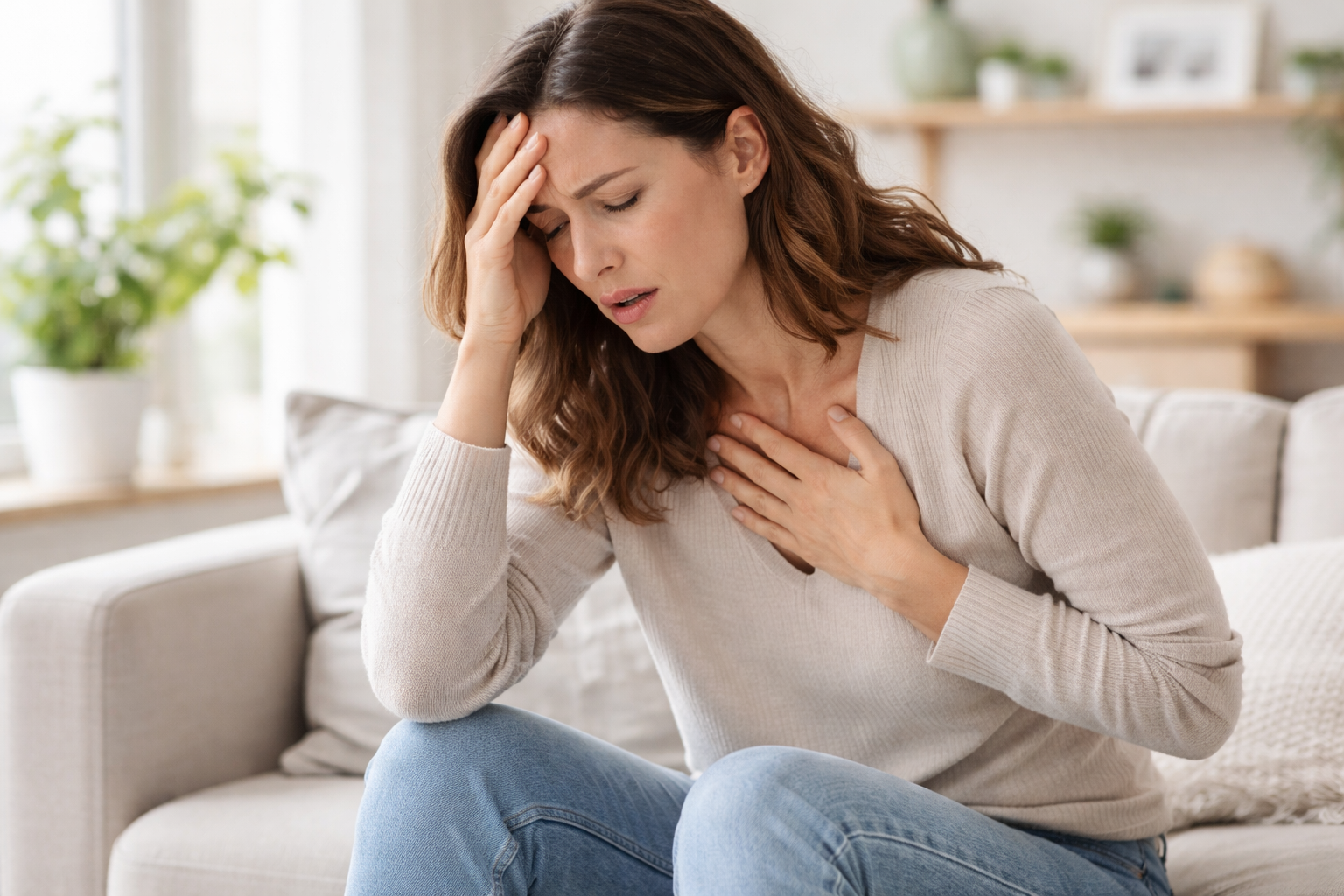
Your chest tightens, your heart pounds like it’s about to burst through your ribs, and suddenly the room feels like it’s closing in on you – that’s what panic attack symptoms feel like for so many seniors who experience them without warning.
Physical symptoms of panic attacks
When a panic attack hits, your body becomes a stranger to you. Imagine sitting quietly in your living room when suddenly your heart starts racing uncontrollably, your palms grow clammy, and you feel a crushing pressure across your chest. One senior described it as feeling like a vice grip tightening around her ribs. The trembling starts in your hands, spreads through your arms, and before you know it, you’re gasping for air as if you’ve just run a marathon. Some people experience dizziness so intense they have to grip the nearest chair to steady themselves. Others feel waves of hot and cold sweeping across their body, followed by nausea that makes them question whether they need to call an ambulance. These physical sensations are real and overwhelming, even though they’re not dangerous. Understanding what’s happening in your body during these moments can help you recognize the pattern and feel less frightened by what you’re experiencing.
- Rapid heartbeat and palpitations
- Sweating and chills
- Nausea and stomach distress
Emotional toll of panic attacks
The emotional weight of panic attacks often feels heavier than the physical symptoms. A senior named Margaret shared how she felt an overwhelming sense of dread wash over her, as if something terrible was about to happen, even though logically she knew she was safe at home. There’s a suffocating fear of losing control, a feeling that you might do something embarrassing or that your mind might not work properly. Many seniors describe it as being trapped in a nightmare while awake, unable to escape the grip of impending doom. The fear can become so intense that it creates a cycle: you worry about having another panic attack, which increases your anxiety, which makes another attack more likely. Some people start avoiding situations where they’ve had attacks before, which can slowly shrink their world. The emotional aftermath can linger for hours or even days, leaving you feeling exhausted and emotionally drained. It’s important to recognize that these feelings, while intense, are temporary and treatable.
💬 Ready to feel better in 2 minutes?choose where to begin:
Coping strategies and support
Learning to manage panic attacks takes practice and patience, but it’s absolutely possible. One effective technique is the 4-7-8 breathing method: breathe in for four counts, hold for seven, and exhale for eight. This slows your racing heart and signals your nervous system that you’re safe. Another helpful approach is grounding yourself using your five senses – name five things you see, four you can touch, three you hear, two you smell, and one you taste. This pulls your mind away from panic and anchors you to the present moment. Many seniors find that talking to a therapist or counselor who specializes in anxiety can provide tools tailored to their specific situation. Support groups, whether in-person or online, connect you with others who truly understand what you’re going through. Don’t underestimate the power of simply telling a trusted family member or friend what’s happening – sometimes just knowing someone cares and believes you makes all the difference. Professional help is not a sign of weakness; it’s a sign of wisdom and self-care.
Maintaining mental well-being
Your mental health deserves the same attention you give your physical health. Start by identifying activities that bring you genuine joy, whether that’s gardening, reading, spending time with grandchildren, or pursuing a hobby you’ve always loved. These moments of pleasure act as anchors that remind you life is good even when panic tries to convince you otherwise. Establish a daily self-care routine that feels manageable – perhaps a morning walk, journaling, or meditation, even just for five minutes. Stay connected to people who matter to you; isolation amplifies anxiety while relationships build resilience. Consider limiting caffeine and alcohol, both of which can trigger or worsen anxiety symptoms. Regular physical activity, even gentle movement like tai chi or water aerobics, helps release tension and improves mood. Most importantly, be kind to yourself on difficult days. Recovery isn’t linear, and having a setback doesn’t erase your progress. Asking for help when you need it isn’t giving up – it’s giving yourself the best chance at living fully and peacefully.
Panic attack symptoms can manifest both physically and emotionally, causing distress and fear. Seniors can benefit from understanding these symptoms, seeking support, and prioritizing their mental well-being to navigate through these challenging episodes.
Are panic attacks dangerous for seniors?
Panic attacks are not life-threatening but can be frightening and intense. It’s essential to seek medical advice to rule out any underlying health conditions that may be contributing to these episodes.
Can panic attacks be prevented?
While it’s not always possible to prevent panic attacks entirely, managing stress, practicing relaxation techniques, and seeking professional help can reduce the frequency and intensity of these episodes.
Others also read:
Disclaimer: This article is for informational purposes only and is not a substitute for professional medical advice. Always consult a healthcare professional for personal guidance.
This article presents an experience-based perspective and has been reviewed by the GlobalHealthBeacon editorial team in 2026. It provides structured, evidence-based information to support informed health decisions.

