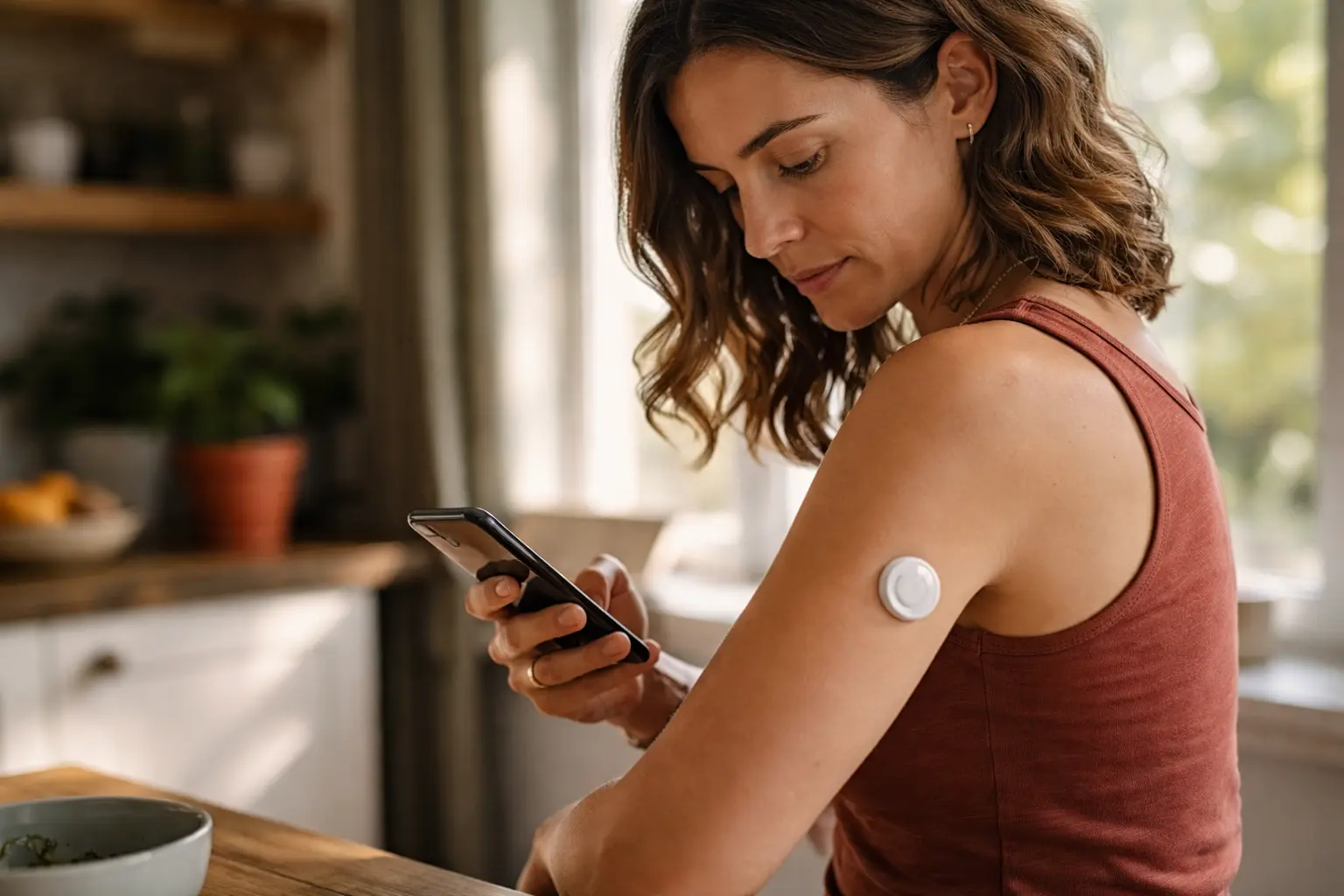
Tired of guessing whether your blood sugar is about to crash or spike, only to feel shaky, foggy, or exhausted without warning? A continuous glucose monitor explained is the difference between flying blind and actually knowing whats happening inside your body right now.
What is a continuous glucose monitor (CGM)?
A Continuous Glucose Monitor is a small wearable device about the size of a coin that sits on your skin and tracks your glucose levels 24/7. Inside, theres a thin sensor roughly the width of a hair that sits just under your skin in the fatty tissue, measuring glucose in your interstitial fluid. This isnt blood glucose, but rather the fluid surrounding your cells, which lags blood glucose by about 5 to 15 minutes. A transmitter wirelessly sends this data to a receiver or your smartphone, giving you real-time updates every few minutes. For young adults managing diabetes or prediabetes, this means you can see exactly how your morning coffee, that afternoon workout, or late-night snack affects your glucose in real time. No more waiting for lab results or relying on how you feel.
- Provides continuous monitoring of glucose levels
- Sends alerts for high or low glucose levels
- Helps identify trends and patterns in glucose levels
How does a continuous glucose monitor work?
The magic behind a CGM is surprisingly straightforward. The sensor uses electrochemistry to measure glucose in the fluid around your cells. When glucose molecules touch the sensor, they trigger a tiny electrical signal that gets converted into a glucose reading. The transmitter, placed on top of the sensor, picks up this signal and sends it wirelessly to your receiver or phone every 1 to 5 minutes depending on the brand. Youll see your current glucose level displayed as a number, plus trend arrows showing whether your glucose is rising, falling, or staying steady. If your glucose goes too high or too low, the device vibrates or beeps to alert you. Think of it like having a personal glucose assistant in your pocket, constantly checking in and warning you before things get out of hand. For someone in their 20s or 30s, this real-time feedback loop is transformative because you can adjust your behavior immediately instead of discovering problems hours later.
📘 Fix your day in under 2 minuteschoose where to begin:
Benefits of using a continuous glucose monitor
Using a CGM shifts you from reactive to proactive glucose management. Instead of testing your finger with a lancet multiple times a day, youre getting hundreds of data points automatically. This means you can finally see the full picture of how your body responds to different foods, stress levels, sleep quality, and exercise intensity. For example, you might discover that your morning cortisol spike causes a natural glucose rise even before breakfast, or that a 20-minute walk after meals keeps your glucose stable while a sedentary evening causes a spike. Young adults often find this empowering because you gain real control over your health decisions. You can experiment with meal timing, portion sizes, or exercise routines and see the results immediately. Beyond personal insight, CGMs also reduce the burden of constant finger pricks, lower your risk of missing dangerous glucose swings, and give you data to share with your doctor for more informed treatment decisions.
Tips for using a continuous glucose monitor
Getting the most from your CGM requires attention to a few key practices. First, calibration matters. Even though many newer CGMs require minimal or no finger stick calibration, always follow your devices specific instructions because accuracy depends on it. Second, sensor placement is crucial. Choose a site with enough fatty tissue, like your abdomen or back of your arm, and keep it clean and dry before insertion to prevent infection and ensure good adhesion. Third, stay aware of your alerts and notifications. Dont ignore them or silence them out of habit because theyre your early warning system. Fourth, give yourself grace during the learning curve. Your first week with a CGM might feel overwhelming with all the data, but most young adults adjust quickly and start spotting meaningful patterns by week two or three. Finally, use the data constructively. Instead of obsessing over every fluctuation, look for weekly patterns and trends that inform bigger decisions about your lifestyle.
Understanding continuous glucose monitor reports
Your CGM generates detailed reports that paint a complete picture of your glucose patterns over days, weeks, or months. These reports typically show your average glucose level, time spent in your target range, and how often you experience highs or lows. Many devices also display graphs showing your glucose curve throughout the day, revealing when you tend to spike or dip. For young adults, the real value is in spotting your personal patterns. Maybe your glucose is most stable on days you exercise, or perhaps you notice that stress at work triggers afternoon spikes. Some apps break this down by meal type, showing how your body responds to carbs versus protein versus fat. The key is reviewing these reports regularly, ideally weekly or monthly, and asking yourself what you can learn. Did cutting back on sugary drinks help? Did adding a walk after dinner smooth out your evening glucose? Use the data as feedback to refine your approach, and share these insights with your healthcare provider so they can adjust your treatment plan if needed.
Continuous Glucose Monitors are wearable devices that provide continuous monitoring of glucose levels, offering valuable insights into managing diabetes effectively. Understanding how CGMs work, their benefits, and tips for usage can empower individuals to take control of their glucose levels and make informed decisions.
How often should I calibrate my Continuous Glucose Monitor sensor?
It’s crucial to calibrate your CGM sensor as per the manufacturer’s recommendations, usually a few times a day, to ensure accurate readings.
Can I wear my Continuous Glucose Monitor while swimming or showering?
Most CGM devices are waterproof and can be worn while swimming or showering, but always consult the device manual for specific instructions.
Disclaimer: This article is for informational purposes only and is not a substitute for professional medical advice. Always consult a healthcare professional for personal guidance.
This guide has been prepared and reviewed by the GlobalHealthBeacon editorial team and reflects current medical research as of 2026. It provides structured, evidence-based information to support informed health decisions.
