Part of: Digital Health
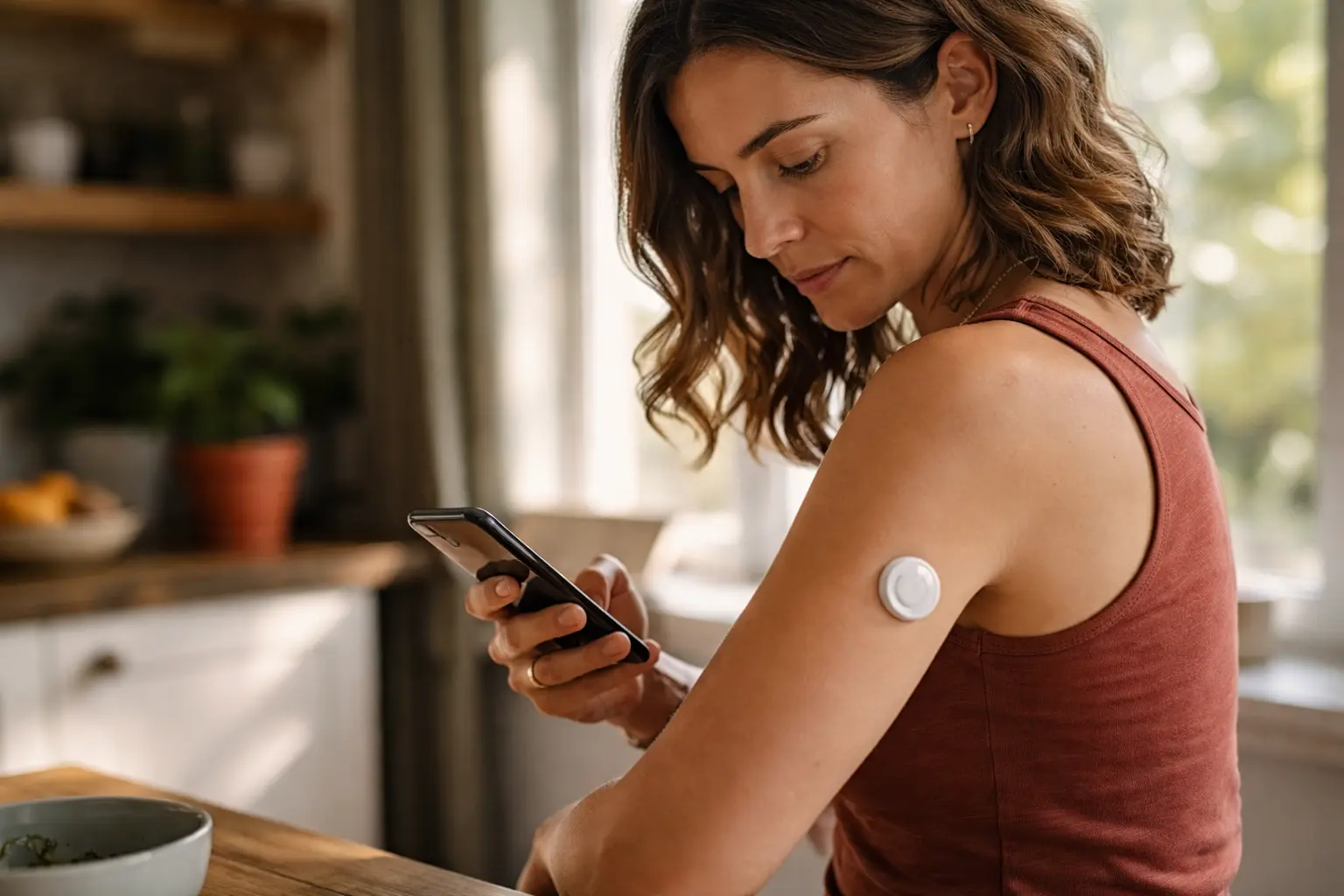
A continuous glucose monitor (CGM) is a small wearable device that automatically tracks blood sugar levels throughout the day and night, providing real-time readings and trend data to help people manage glucose more effectively than traditional finger-stick testing. The system consists of a thin sensor placed under the skin that measures glucose levels in interstitial fluid every few minutes, a transmitter that sends this data wirelessly to a receiver or smartphone app, and a display interface that shows current readings, historical patterns, and alerts for abnormal blood sugar levels.
CGM technology has become an important tool for diabetes management across diverse populations, from newly diagnosed individuals to those managing long-term diabetes care. The device enables users to understand how different foods, activities, stress, and medications affect their blood glucose patterns in real time, supporting more informed decision-making about diet, exercise, and treatment adjustments. Unlike traditional monitoring methods that provide only snapshots of glucose at specific moments, continuous glucose monitoring reveals the complete glucose picture, including trends, peaks, and valleys that occur between measurements.
The accuracy, comfort, ease of use, and integration capabilities of CGM systems vary across different devices and brands, making it essential for users to understand their options and choose a system that aligns with their individual lifestyle and health goals. Whether someone is newly diagnosed with diabetes, managing their condition as a young adult, navigating CGM use during different life stages, or seeking to optimize their current monitoring approach, understanding how CGM technology works and how to use it effectively is fundamental to successful glucose management.
This comprehensive overview section provides in-depth exploration of continuous glucose monitor technology from multiple perspectives. Detailed articles cover how sensors function, scientific principles underlying glucose sensing, practical setup and troubleshooting guidance, real-world experiences from users across different age groups and life circumstances, comparative reviews of leading devices, and strategies for avoiding common mistakes and maximizing the benefits of continuous monitoring technology.
This National Institute of Diabetes and Digestive and Kidney Diseases (NIDDK) resource explains how continuous glucose monitoring systems use a small sensor under the skin to measure glucose levels throughout the day and night, helping people with diabetes track patterns and manage blood sugar. → Click here