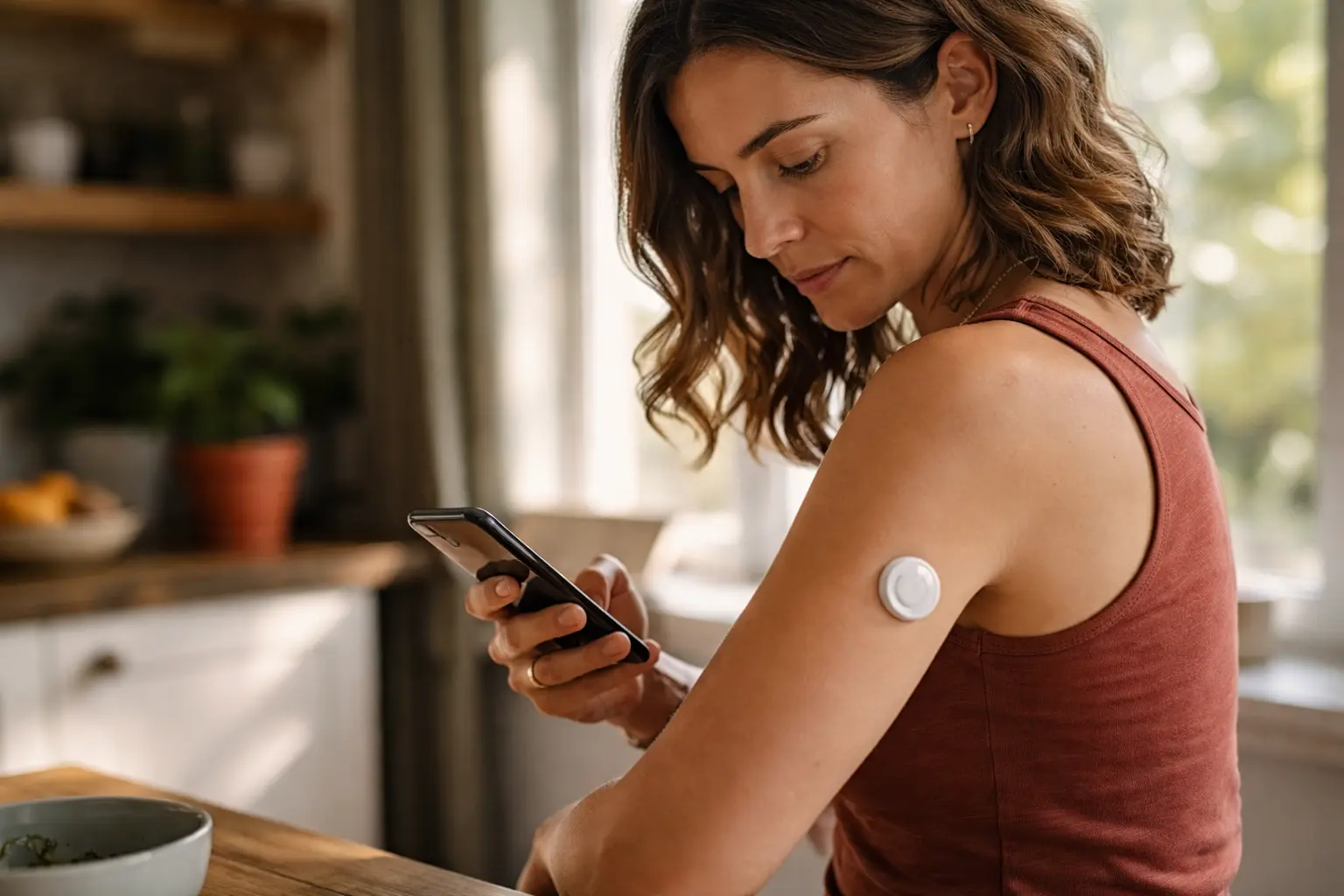
You’re tired of the constant guessing game, the finger pricks that interrupt your day, and that nagging anxiety about what your blood sugar is doing right now, but a continuous glucose monitor explained simply could be the shift that finally gives you real answers and actual peace of mind.
The CGM shift
Remember when you had to stop what you were doing, find a quiet corner, and prick your finger just to know if your blood sugar was climbing or crashing? That was my reality until I switched to a CGM. The transition felt overwhelming at first, honestly. I worried about wearing a sensor, about whether it would hurt, about the learning curve. But within days, something shifted. Instead of testing four or five times a day and flying blind between those moments, I could see my glucose trending in real time. A graph appeared on my phone showing whether I was stable, rising, or dropping. That immediate feedback changed everything. I could see how specific foods affected me, how stress spiked my numbers, how exercise brought them down hours later. No more surprises at 2 AM. No more wondering if I was about to go low during an important meeting. The uncertainty that had shadowed my days for years finally lifted.
- Immediate feedback on blood sugar trends
- Ability to personalize treatment plans based on data
- Reduced need for constant finger pricks
Empowerment through data
Having real data in your hands is empowering in ways I never expected. Before CGM, I relied on my doctor’s advice and general guidelines, but I didn’t truly understand my own body. With CGM, I became the expert on myself. I could see patterns that my healthcare team might have missed. For example, I noticed my numbers always spiked after my morning coffee, but only if I had it on an empty stomach. With food first, the spike was minimal. My doctor and I could now have conversations backed by actual evidence, not guesses. I started adjusting my insulin doses based on what the data showed, and suddenly my A1C improved without feeling like I was restricting myself. The graphs revealed hidden fluctuations that happened while I slept, helping me fine-tune my evening insulin. This level of control gave me confidence I’d never felt before. I wasn’t just managing diabetes anymore, I was actively shaping my health outcomes.
💬 Ready to feel better in 2 minutes?choose where to begin:
Enhanced quality of life
Freedom looks different when you live with diabetes. For me, it meant not having to plan my entire day around blood sugar checks. I could go to the gym without obsessing over whether I needed to test beforehand. I could sit through a movie without that familiar anxiety creeping in. I could travel without packing a bag full of supplies and worrying about finding a bathroom to test. One weekend, I went hiking with friends for the first time in years. Before CGM, I would have stressed the entire time about managing my glucose in the backcountry. With my sensor, I could actually enjoy the moment. I checked my phone occasionally, made small adjustments if needed, and spent the rest of my time present with my friends. That’s the real gift of CGM, not just the data, but the mental space it freed up. Diabetes stopped being the main character in my daily story and became something I managed quietly in the background.
Community support and connection
The loneliness of diabetes is real, but it doesn’t have to stay that way. When I started using CGM, I found online communities of young adults doing the same thing. We shared screenshots of our graphs, laughed about the weird food combinations that spiked our numbers, and celebrated our wins together. One person mentioned a trick for keeping their sensor secure during water sports, another shared how they negotiated with their insurance to cover the costs. These weren’t generic tips from a pamphlet, they were real solutions from real people living the exact same life. We talked about the emotional stuff too, the frustration of a stubborn high, the fear that comes with a sudden drop. Having people who got it, who didn’t need explanations or sympathy, was healing. I realized I wasn’t broken or alone. I was part of a growing community of young adults taking control of their health in ways previous generations couldn’t. That sense of belonging made the whole experience feel less isolating and more like we were all figuring this out together.
Continuous Glucose Monitoring has revolutionized diabetes care for young adults by providing real-time data, empowering informed decision-making, enhancing quality of life, and fostering a sense of community and support.
Is CGM suitable for all types of diabetes?
CGM is primarily used for Type 1 and Type 2 diabetes. While not mandatory, it can greatly benefit individuals needing frequent blood sugar monitoring.
Do CGM devices require calibration?
Most CGM devices still require occasional calibration with fingerstick measurements. However, technology advancements are reducing this need over time.
Others also read:
Disclaimer: This article is for informational purposes only and is not a substitute for professional medical advice. Always consult a healthcare professional for personal guidance.
This article presents an experience-based perspective and has been reviewed by the GlobalHealthBeacon editorial team in 2026. It provides structured, evidence-based information to support informed health decisions.
← Back to the main continuous glucose monitor explained page
