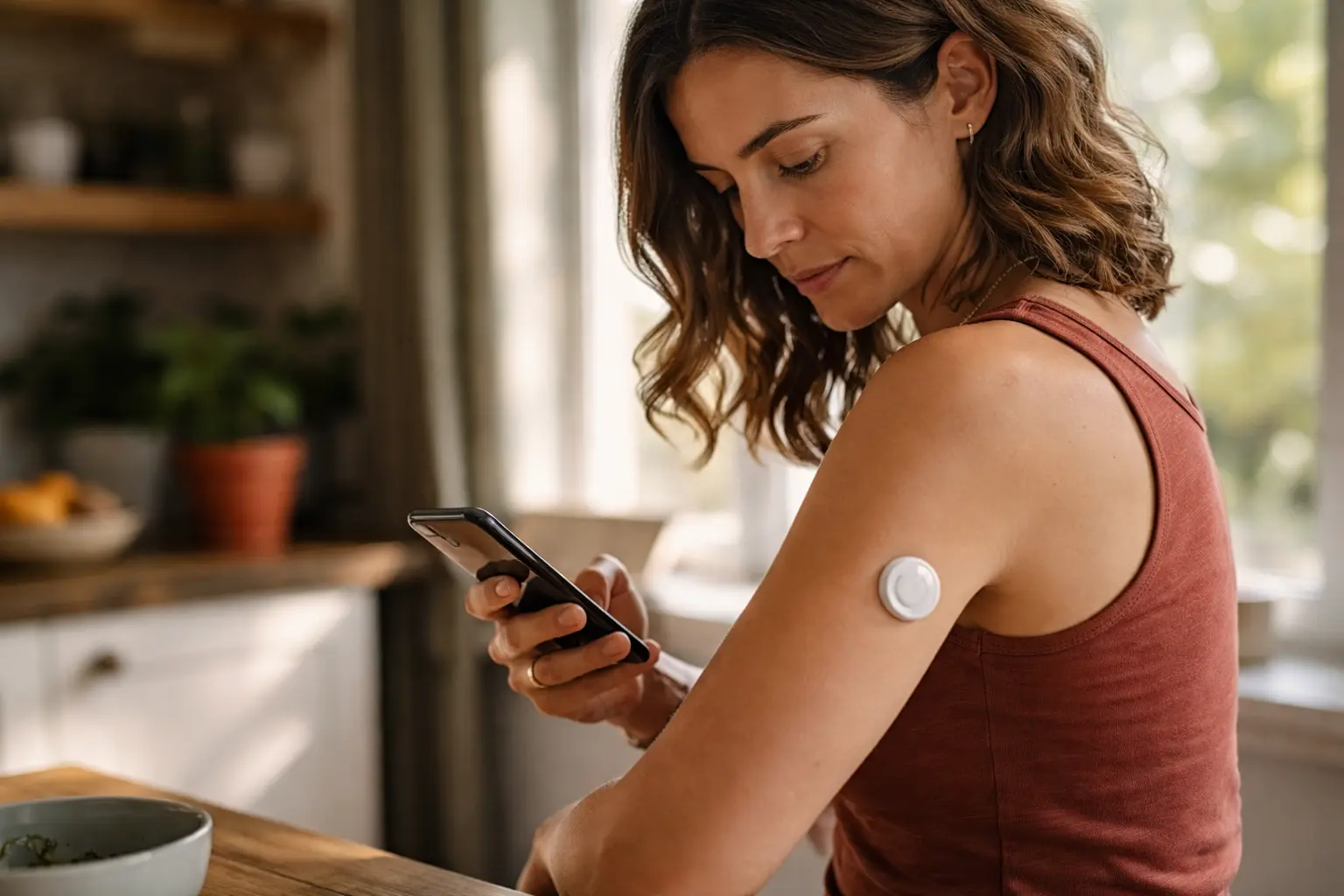
Tired of finger pricks, guessing games about what your body needs, and feeling like your blood sugar is a mystery you can’t solve? A continuous glucose monitor explained simply means real-time answers to what your body is actually doing right now.
Understanding continuous glucose monitoring
Continuous glucose monitoring (CGM) is a small wearable sensor that sits on your skin and tracks your blood sugar levels every few minutes throughout the day and night. Instead of checking your glucose with a finger prick once or twice daily, you get a constant stream of data that shows exactly how your body responds to food, stress, sleep, and movement. Imagine eating breakfast and seeing within minutes whether your body spiked or stayed stable. That’s the power of CGM. The sensor measures glucose in the fluid under your skin and sends readings to a receiver or smartphone app, giving you trends and patterns you simply cannot see with traditional testing. For women especially, this continuous data becomes invaluable because you can track how your cycle, hormones, and life events affect your glucose in real time. You stop guessing and start knowing. No more wondering if that afternoon fatigue is low blood sugar or just a long day. The technology eliminates the anxiety of the unknown and replaces it with clarity and control.
- CGM provides continuous data on blood sugar trends throughout the day and night.
- It helps you make informed decisions about diet, medication, and physical activity to better manage diabetes.
- With CGM, you can avoid the hassle of frequent finger pricks and gain a more complete picture of your glucose control.
Benefits of CGM for women’s health
Women’s bodies are unique in how hormones influence blood sugar, and CGM technology gives you the tool to understand your personal patterns. During different phases of your menstrual cycle, your insulin sensitivity shifts. Some women find their glucose runs higher in the luteal phase, while others experience more stable readings during ovulation. Without CGM, these patterns stay hidden. With it, you can plan your meals, exercise, and medication around your actual body rhythms rather than generic advice. Beyond the cycle, CGM helps you navigate perimenopause and menopause when hormonal shifts can make blood sugar management feel unpredictable. You can identify which foods trigger spikes for you specifically, not just follow a standard diabetic diet. One woman might find that pasta with protein and fat keeps her stable, while another’s glucose climbs no matter what. CGM reveals your individual truth. You also gain confidence in your choices because you see the immediate feedback. That walk after dinner? You can watch your glucose drop. That stress at work? You see the cortisol-driven spike. This real-time feedback loop transforms diabetes management from a burden into an empowering practice of self-knowledge.
📘 Fix your day in under 2 minuteschoose where to begin:
Using CGM for pregnancy and gestational diabetes
Pregnancy changes everything about glucose metabolism, and gestational diabetes adds a layer of complexity that demands precision. If you develop gestational diabetes, tight glucose control directly protects your baby from complications like excessive birth weight and respiratory issues. CGM becomes your partner in this critical time. Instead of checking blood sugar four to six times daily with finger pricks, you get continuous readings that show whether your fasting glucose stays in target range and how your body handles each meal. Many women find that the constant feedback reduces anxiety because they can see they are actually in control. For example, a woman might discover that her morning fasting glucose is slightly elevated, so she adjusts her evening snack or timing. Within days, she sees the improvement on her CGM graph. That tangible evidence of progress is powerful during pregnancy when you feel vulnerable and want to do everything right for your baby. CGM also catches dangerous lows quickly, which is crucial because hypoglycemia during pregnancy can be serious. You get alerts before you feel symptoms, giving you time to treat safely. The technology transforms gestational diabetes from a scary diagnosis into a manageable condition where you have real-time data to make informed choices every single day.
Tips for comfortably wearing a CGM device
Wearing a sensor on your body for two weeks at a time requires some practical planning so it stays comfortable and secure. First, choose your placement wisely. The back of your upper arm works well for many women because it is less visible under sleeves and less likely to catch on clothing. The abdomen is another popular spot, though some women find it uncomfortable during exercise or when wearing tight waistbands. The back of your thigh works if you prefer hidden placement. Once you choose a spot, keep the skin clean and dry before applying the sensor. Some women use a skin barrier wipe to help the adhesive stick longer, especially if they sweat or swim regularly. If you have sensitive skin, you can apply a thin layer of barrier cream around the sensor edges to prevent irritation. During the two-week wear period, gently pat the sensor dry after showering rather than rubbing. If the adhesive starts peeling, waterproof tape designed for medical devices can extend the wear life. Many women also rotate placement sites to avoid skin irritation from constant adhesive contact. Wear loose clothing over the sensor if it bothers you visually, or embrace it as a sign you are taking care of yourself. Some women even decorate their sensors with stickers or patterns to make them feel less clinical. The goal is making CGM feel like a natural part of your routine, not a burden.
The future of CGM technology for women
CGM technology is evolving rapidly, and the devices becoming available are designed with women’s lives in mind. Sensors are getting smaller and more discreet, with some new models barely visible under clothing. Battery life is improving, meaning fewer replacements and less disruption to your routine. Integration with other health apps is expanding, so your glucose data connects with your period tracker, workout app, and sleep monitor to give you a complete picture of your health. Artificial intelligence is being built into some systems to predict glucose trends before they happen, alerting you to eat or move before you actually spike or crash. This shift from reactive to predictive management is game-changing. Future devices may also require fewer calibrations or fingersticks, making the experience even less invasive. For women specifically, developers are creating features that account for hormonal fluctuations, pregnancy planning, and life stage transitions. Some companies are working on non-invasive options that don’t require a needle insertion, which could eliminate one of the main barriers women mention about CGM adoption. As these technologies mature, CGM will become not just a diabetes management tool but a personalized health coach that understands your unique body and supports your wellness goals at every stage of life.
Continuous glucose monitoring (CGM) technology offers women valuable insights into blood sugar control, providing real-time data to make informed decisions about health. From pregnancy to daily management, CGM devices play a crucial role in empowering women to take charge of their wellness.
Is CGM technology suitable for women with different types of diabetes?
Yes, CGM technology can benefit women with type 1, type 2, or gestational diabetes by providing continuous insights into blood sugar levels for better management.
How often should CGM sensors be replaced?
CGM sensors typically need to be replaced every 7 to 14 days, depending on the specific device. Regularly changing sensors ensures accurate and reliable glucose monitoring.
Others also read:
Disclaimer: This article is for informational purposes only and is not a substitute for professional medical advice. Always consult a healthcare professional for personal guidance.
This guide has been prepared and reviewed by the GlobalHealthBeacon editorial team and reflects current medical research as of 2026. It provides structured, evidence-based information to support informed health decisions.
