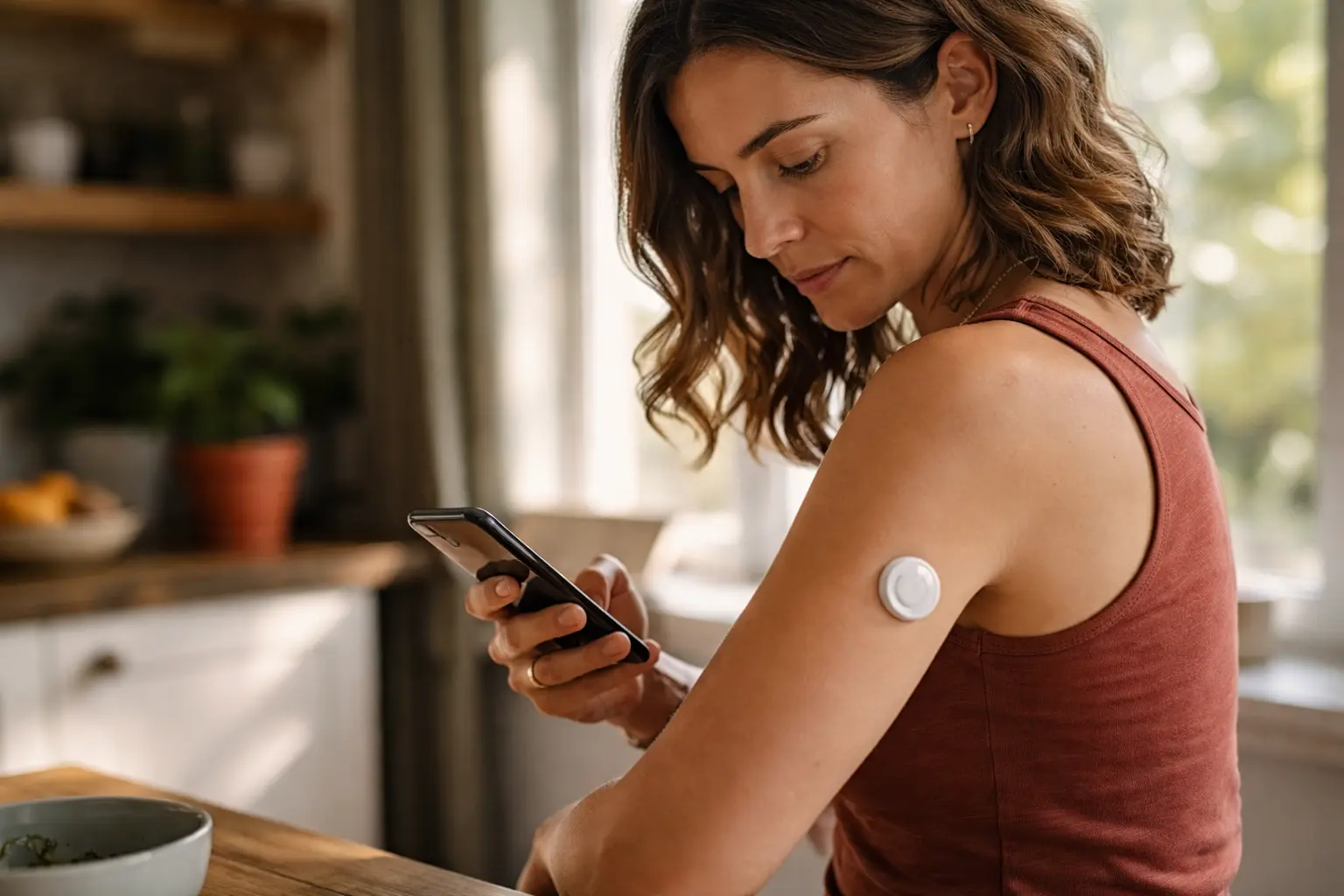
Tired of finger pricks, guessing games, and those scary midnight blood sugar crashes that jolt you awake in a cold sweat? A continuous glucose monitor explained simply is the difference between living in the dark about your blood sugar and actually knowing what’s happening in your body, minute by minute.
How CGMs work
Continuous glucose monitors track glucose levels in real-time through a small sensor inserted just under your skin, typically on your abdomen or arm. This sensor measures glucose levels in the interstitial fluid, the fluid surrounding your cells, which closely mirrors your blood sugar. Instead of pricking your finger multiple times daily, the sensor automatically sends readings to a receiver or smartphone every few minutes, often between 5 and 15 minute intervals depending on the device. Think of it like having a tiny laboratory working 24/7 beneath your skin. For seniors managing diabetes, this constant stream of data replaces the old routine of testing at specific times. You wake up and immediately see your overnight glucose trend. You eat lunch and watch how your body responds in real-time. The sensor communicates wirelessly, eliminating the pain and inconvenience of traditional finger-stick testing while providing a much more complete picture of your glucose patterns throughout the day and night.
Benefits of CGMs for seniors
CGMs offer seniors the advantage of continuous monitoring, providing alerts when blood sugar drifts too high or too low before serious problems develop. This proactive approach can prevent severe hypoglycemic episodes, those dangerous lows that cause confusion and weakness, or hyperglycemic spikes that accumulate damage over time. Beyond safety, seniors gain peace of mind knowing their glucose patterns are being tracked automatically. Many devices allow family members or caregivers to view readings remotely, adding an extra layer of security for those living alone or with mobility challenges. The data collected helps identify patterns you might never notice otherwise. Maybe your blood sugar always dips after your morning walk, or rises after certain foods. With this knowledge, you can adjust your routine proactively rather than reactively. Seniors also appreciate reduced finger-stick testing, which means less pain, fewer infections, and better compliance with monitoring overall. The convenience factor alone helps many older adults stay more engaged with their diabetes management.
Choosing the right CGM device
Selecting a CGM involves understanding your specific situation and preferences. First, research the major devices available on the market today, each with different features, costs, and compatibility requirements. Some systems require a separate receiver while others connect directly to your smartphone, which matters if you prefer simplicity or already use a smartphone regularly. Consider accuracy ratings, as different manufacturers have varying levels of precision in their glucose readings. Ease of use is critical for seniors, so evaluate whether the insertion process feels manageable, if the display is large enough to read comfortably, and whether the app interface is intuitive. Data accessibility matters too, especially if you want to share readings with your doctor or family members. Think about sensor wear time, as some last 10 days while others last 14, affecting how often you need to change them. Insurance coverage and out-of-pocket costs vary significantly between devices, so check your plan before deciding. Finally, consult with your healthcare provider or diabetes educator who understands your medical history, current medications, and lifestyle. They can recommend devices that align with your specific needs and help you navigate insurance approval.
- Research different CGM devices available on the market and compare their key features.
- Consider factors like accuracy ratings, ease of use, display size, smartphone compatibility, and data accessibility.
- Consult with a healthcare professional to determine the best CGM for your specific needs and insurance coverage.
🔬 Science-backed benefits in 2 minuteschoose where to begin:
Monitoring blood glucose trends
CGMs shine when it comes to revealing patterns that finger-stick testing simply cannot show. By analyzing trends in glucose levels over hours and days, you see exactly how your body responds to different situations. Eat a large pasta dinner at 6 PM and watch your glucose climb steadily over the next two hours. Take a 30-minute walk after breakfast and observe how it smooths out your morning spike. Skip your afternoon snack and notice the gradual decline that follows. These patterns become your personal roadmap for managing blood sugar. Seniors can use this data to make informed decisions about meal timing, portion sizes, exercise duration, and medication adjustments in consultation with their doctor. Some people discover they’re sensitive to certain foods they never suspected. Others find that their blood sugar responds better to exercise at specific times of day. Over weeks and months, this accumulated knowledge transforms diabetes management from guesswork into science. You’re not just taking medication and hoping for the best. You’re actively learning how your unique body works and adapting your lifestyle accordingly.
Enhancing diabetes management
CGMs contribute to better diabetes management by offering a comprehensive view of glucose patterns throughout the day and night, revealing the complete picture that isolated finger-stick tests cannot provide. This information empowers seniors to work with their healthcare team to make timely adjustments to their treatment plan, whether that means changing medication doses, adjusting meal composition, or modifying exercise routines. Many seniors find that having objective data reduces anxiety about their diabetes. Instead of wondering if they’re doing things right, they can see concrete evidence of how their efforts are paying off. The device tracks your A1C equivalent, the average glucose level over time, which is the gold standard for assessing long-term diabetes control. Improved glycemic control means reduced risk of complications like neuropathy, kidney disease, and vision problems. For seniors, this translates to maintaining independence, staying active, and enjoying better quality of life. Doctors also appreciate the detailed reports CGMs generate, which show glucose variability and patterns that guide more precise treatment decisions. The combination of continuous data and professional guidance creates a feedback loop that continuously improves your diabetes management over time.
Utilizing CGMs for personalized care
With the ability to set customizable alerts for low or high blood sugar levels, seniors can tailor their CGM experience to suit their individual needs and preferences. If you tend to have lows at night, you can set a lower threshold alert that wakes you before things become dangerous. If you’re sensitive to highs, you can set tighter upper limits. Some seniors prefer frequent alerts to stay engaged, while others want minimal notifications to avoid constant interruptions. This flexibility means the device adapts to your lifestyle rather than forcing you into a rigid system. Many CGMs also allow you to track additional factors like meals, exercise, stress, and sleep, creating a holistic picture of what influences your glucose. Over time, you might discover that poor sleep consistently raises your morning glucose, or that stress during family visits causes unexpected spikes. This personalized approach enables proactive management of diabetes rather than reactive crisis management. You’re not just treating symptoms as they appear. You’re understanding your body deeply enough to prevent problems before they start. Enhanced quality of life follows naturally when you feel in control of your health rather than controlled by your condition.
Continuous glucose monitors provide real-time data on blood sugar levels, allowing seniors to monitor trends, enhance diabetes management, and personalize their care for optimal health outcomes.
Are CGMs safe for seniors to use?
Yes, CGMs are safe for seniors and provide valuable insights into their blood glucose levels, aiding in better diabetes management.
How often should CGM sensors be replaced?
CGM sensors typically need to be replaced every 7-14 days, depending on the device used and individual circumstances.
Others also read:
Disclaimer: This article is for informational purposes only and is not a substitute for professional medical advice. Always consult a healthcare professional for personal guidance.
This article has been prepared and reviewed by the GlobalHealthBeacon editorial team and is based on current medical research and published scientific literature available in 2026. It provides structured, evidence-based information to support informed health decisions.
← Back to the Main page on: continuous glucose monitor explained
