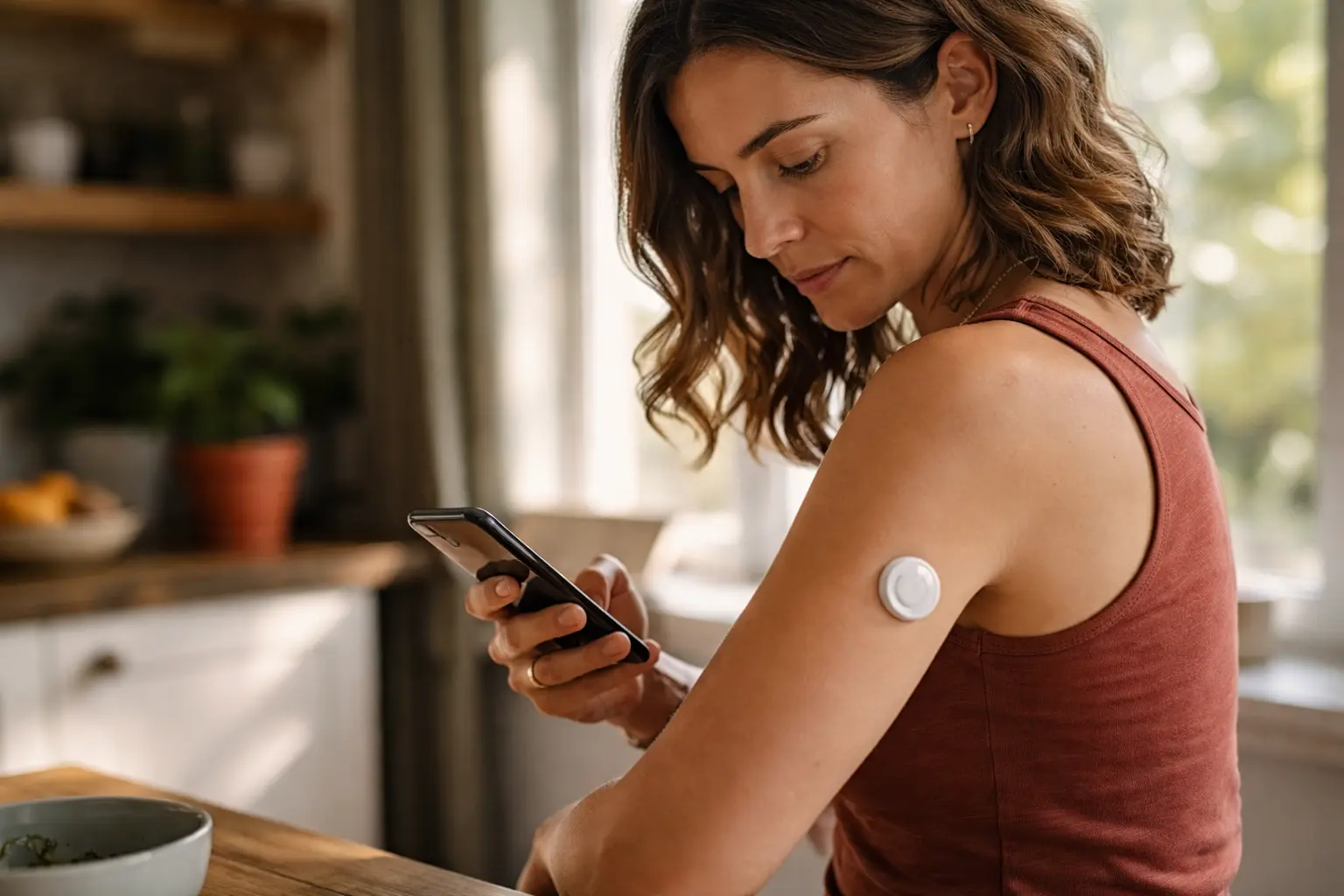
Tired of finger pricks, confused readings, and wondering if your continuous glucose monitor explained properly – here’s what actually happens under your skin and why it matters for your health.
How a continuous glucose monitor works
A continuous glucose monitor, or CGM, is a small sensor about the size of a postage stamp that sits just under your skin, typically on your abdomen or arm. Once inserted, it measures glucose levels in your interstitial fluid, which is the fluid surrounding your cells, roughly every five minutes. Think of it as a tiny laboratory working 24/7 beneath your skin. The sensor uses an enzyme-based electrochemical reaction to detect glucose molecules and converts that signal into a readable number on your phone or receiver. For women managing their glucose, this means you get real-time data without the constant finger-prick routine that used to dominate diabetes management. The device transmits readings wirelessly, creating a continuous picture of how your body responds to food, stress, exercise, and hormonal fluctuations throughout your menstrual cycle, which can significantly impact glucose patterns.
The importance of sensor accuracy
Accuracy is everything when you’re relying on a device to guide your health decisions. CGM sensors use sophisticated algorithms that translate raw electrical signals into glucose readings, but this conversion process isn’t perfect. The sensor measures glucose in interstitial fluid, not blood directly, which means there’s typically a 5 to 15-minute lag between what your blood glucose actually is and what the sensor reports. For women, this matters especially during hormonal shifts when glucose can swing rapidly. Regular calibration, where you compare sensor readings to fingerstick tests, helps the device learn your individual patterns and improve accuracy over time. Some newer CGM systems require fewer calibrations because their algorithms have become smarter, but understanding this relationship between sensor signals and actual glucose levels empowers you to recognize when readings might be off and when to double-check with a traditional test.
Factors influencing sensor performance and reliability
Your CGM’s accuracy depends on more than just the device itself. Where you insert the sensor matters significantly; areas with good blood flow and stable tissue, like the back of your arm or abdomen, tend to perform better than bony areas or places prone to movement. Hydration plays a surprisingly important role because interstitial fluid composition changes when you’re dehydrated, which can throw off sensor readings. Temperature fluctuations, whether from hot showers, saunas, or even intense exercise, can temporarily affect sensor function. Compression at the insertion site, like sleeping on the sensor or wearing tight clothing over it, can also distort readings. For women specifically, hormonal changes throughout your cycle can influence how your body distributes glucose and fluids, potentially affecting sensor performance. Additionally, certain medications, skin conditions, or lipohypertrophy (thickened tissue from repeated injections) can impact how well the sensor reads your glucose levels.
- Choose insertion sites with adequate subcutaneous tissue and good blood flow, rotating between your abdomen, back of arm, and thigh to prevent tissue damage and maintain sensor accuracy.
- Maintain consistent hydration throughout the day by drinking water regularly, as dehydration alters interstitial fluid composition and can cause sensor reading fluctuations.
- Avoid extreme temperature exposure and protect your sensor during hot showers or intense workouts by using waterproof patches or sensor covers designed for your specific CGM model.
🔬 Science-backed benefits in 2 minuteschoose where to begin:
Calibration and data interpretation
Calibration is your conversation with the CGM, teaching it how your body’s glucose behaves. Most systems require you to enter a fingerstick glucose reading at specific times, usually twice daily, which anchors the sensor’s readings to actual blood glucose values. This process helps the algorithm correct for drift, which is the gradual shift in sensor accuracy over time. Beyond calibration, learning to interpret your CGM data is where the real power lies. You’ll start noticing patterns: how certain foods spike your glucose, how stress or poor sleep affects your levels, and how your menstrual cycle influences your glucose trends. Many women find that tracking these patterns alongside their cycle helps them anticipate glucose swings and adjust their eating or activity accordingly. Understanding concepts like time in range, average glucose, and glucose variability gives you a fuller picture than single snapshots ever could, allowing you to make informed decisions about your daily choices.
Sensor longevity and maintenance
A CGM sensor typically lasts 10 to 14 days, depending on the brand, but how you care for it directly impacts whether it stays accurate for the full duration. Rotating your insertion sites is crucial; using the same spot repeatedly can cause lipohypertrophy, thickened scar tissue that interferes with sensor readings. Keep a mental map of where you’ve placed sensors and space them out by at least an inch or two. The adhesive patch holding your sensor needs attention too; if it’s peeling or loose, moisture and movement can compromise the sensor’s stability and accuracy. Some women use additional adhesive patches or protective covers to extend sensor life, especially during workouts or swimming. Proper insertion technique matters as well; if the sensor isn’t inserted at the right angle or depth, it may never read accurately. Taking time to learn your specific device’s insertion process and maintaining consistent site rotation practices ensures you get reliable readings throughout each sensor’s lifespan.
CGM technology advancements
The CGM landscape has transformed dramatically over the past few years, with newer systems offering improved accuracy, longer wear time, and reduced calibration requirements. Some of the latest models use advanced enzyme technology and better algorithms that require minimal or no fingerstick calibration, making them more convenient for women juggling busy lives. Smaller sensors mean less noticeable devices under clothing, and improved adhesives keep sensors secure through workouts and daily activities. Real-time alerts have become more sophisticated, allowing you to set custom thresholds and receive notifications tailored to your specific glucose targets. Integration with smartphones and smartwatches means you can discreetly check your glucose without pulling out a separate device. Some systems now offer predictive alerts that warn you before your glucose drops or rises too quickly, giving you time to take action. Staying informed about these advancements helps you choose a CGM that aligns with your lifestyle, preferences, and specific health needs.
Understanding how continuous glucose monitors work, from sensor mechanics to the factors that influence their accuracy, empowers you to use this technology effectively. Sensor performance depends on proper insertion, calibration, maintenance, and awareness of environmental and physiological factors that affect readings. For women, recognizing how hormonal cycles, hydration, and lifestyle choices impact glucose patterns adds another layer of insight. Regular calibration, thoughtful site rotation, and staying current with technology improvements ensure you get reliable data to guide your health decisions. By mastering these elements, you transform a CGM from a simple monitoring device into a powerful tool for understanding your body’s unique glucose behavior.
How often should I calibrate my CGM sensor?
Calibration frequency varies by device; most traditional CGM systems require calibration every 12 hours, typically in the morning and evening. Newer systems may require calibration only once or twice daily or not at all, depending on the technology. Always follow your specific device manufacturer’s guidelines, as proper calibration directly impacts reading accuracy. Some women find it helpful to calibrate at consistent times each day to establish a routine.
Can CGM sensors be reused after removal?
Most CGM sensors are designed for single-use only and should not be reused after removal. Reusing sensors can lead to inaccurate readings, reduced adhesive effectiveness, and compromised sensor function. The enzyme coating that detects glucose degrades over time, making reused sensors unreliable. Using a fresh sensor for each wear period ensures you receive accurate glucose data for your health management.
Others also read:
Disclaimer: This article is for informational purposes only and is not a substitute for professional medical advice. Always consult a healthcare professional for personal guidance.
This article has been prepared and reviewed by the GlobalHealthBeacon editorial team and is based on current medical research and published scientific literature available in 2026. It provides structured, evidence-based information to support informed health decisions.
← Back to the Main page on: continuous glucose monitor explained
