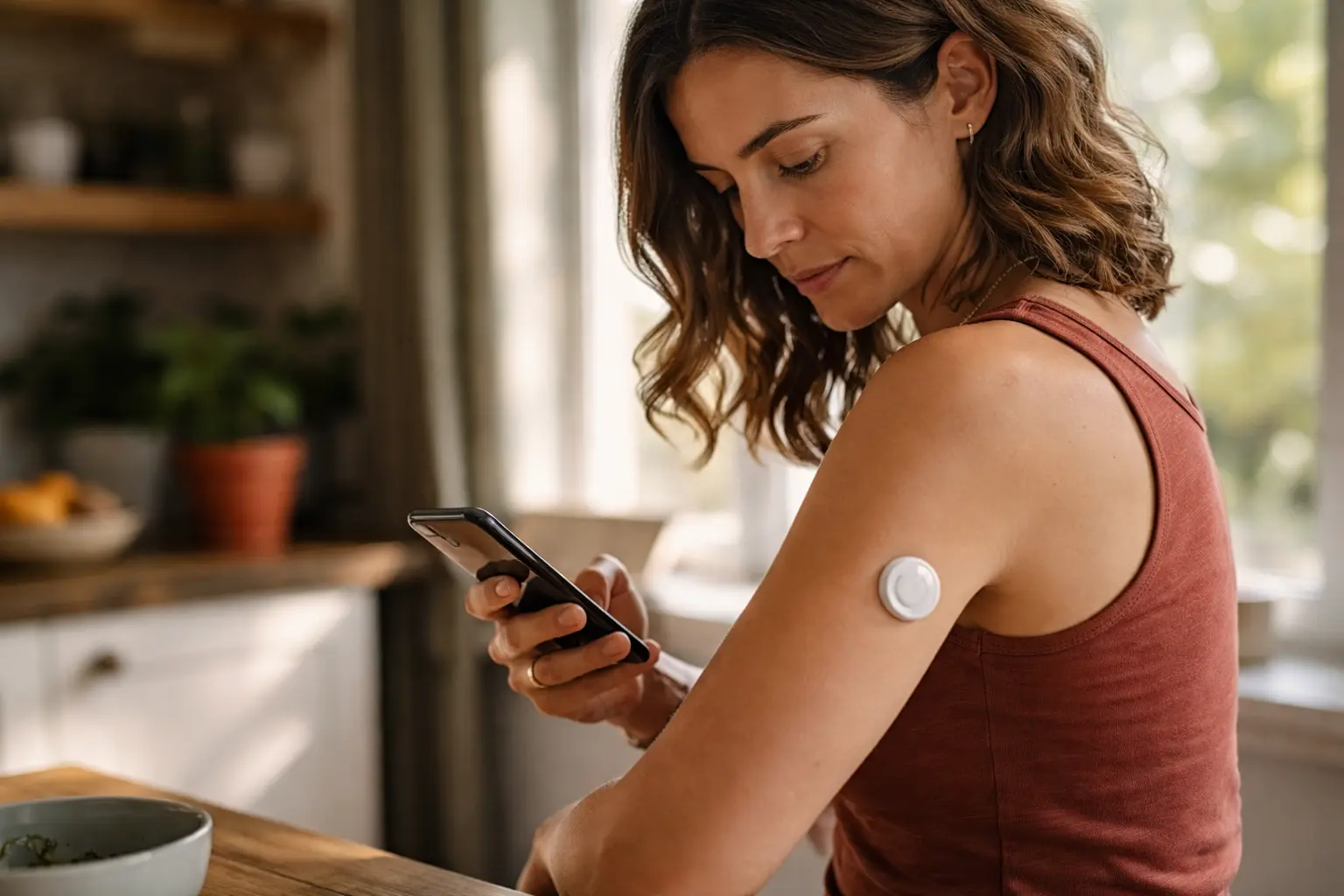
Tired of finger pricks, guessing games, and blood sugar surprises that derail your day? Continuous glucose monitors are changing the game for young adults who want real answers about what their body is actually doing, and this is how they work.
How CGM technology works
Continuous glucose monitors are wearable devices that sit just under your skin, typically on your abdomen or arm, measuring glucose levels in the interstitial fluid surrounding your cells. Think of it like having a tiny lab assistant living on your body 24/7. The sensor uses an enzyme-based electrochemical reaction to detect glucose and transmits readings wirelessly to a receiver or smartphone every few minutes, usually every 5 to 15 minutes depending on the brand. Unlike traditional finger-stick testing, which gives you a single snapshot at one moment in time, a CGM creates a continuous story of your blood sugar throughout the day and night. You see the trends, the patterns, the dips and spikes. For a young adult juggling work, exercise, social meals, and stress, this real-time feedback reveals exactly how your body responds to pizza at midnight, that morning run, or the coffee you grabbed before a big presentation. The sensor itself is about the size of a large coin and stays attached for 10 to 14 days before needing replacement, making it practical for daily life.
Benefits of CGM for young adults
For young adults managing diabetes, CGMs eliminate the constant mental burden of wondering what your glucose is doing right now. Instead of pricking your finger 4 to 8 times daily, you get automatic readings that paint a complete picture of your metabolic patterns. Imagine being able to see exactly how your favorite restaurant’s pasta affects your blood sugar, or how that new workout routine changes your glucose stability. This knowledge is empowering because it shifts you from reactive management (treating lows and highs after they happen) to proactive management (preventing them before they start). Young adults often balance unpredictable schedules, travel, dating, and social eating, and a CGM adapts to that reality. You can make informed decisions about food choices, exercise timing, and medication adjustments without constantly testing. Many users report reduced anxiety because they stop obsessing about whether they are high or low and instead trust the data. The convenience factor alone is significant: no more carrying lancets, test strips, or finding private places to test in public. You simply glance at your phone or watch to know where you stand, which means better engagement with your own health management.
Understanding CGM data
CGM data is only useful if you know how to read it. Most devices display your current glucose level, the trend arrow showing whether you are rising or falling, and a graph of your readings over the past few hours. Start by looking at your daily patterns over a week or two. Are you consistently high after breakfast? Do you crash mid-afternoon? Does your glucose spike after certain foods but not others? These patterns are clues. For example, a young adult might notice their glucose rises sharply after eating white bread but stays stable after oatmeal, or that exercise in the morning keeps them stable all day while evening workouts cause overnight lows. Once you spot patterns, you can experiment with adjustments: maybe eating protein with carbs, changing meal timing, or adjusting insulin doses. Common mistakes include obsessing over every single reading instead of looking at the bigger picture, or making changes too quickly without giving them time to show effects. The real power comes from tracking what you eat, when you exercise, your stress level, and sleep quality alongside your glucose data. Over time, you develop intuition about your own body. Many CGM apps now include notes and tagging features so you can mark meals, workouts, or stressful events and correlate them with glucose responses.
- Review your daily glucose trends over at least 3 to 7 days to identify consistent patterns rather than reacting to single readings.
- Note what you eat, when you exercise, your stress level, and sleep quality alongside your glucose data to spot correlations.
- Make one small adjustment at a time (like adding protein to breakfast or moving your workout earlier) and observe the effect for several days before changing something else.
- Consult with your healthcare provider or a diabetes educator to interpret your specific patterns and ensure adjustments align with your treatment plan.
🔬 Science-backed benefits in 2 minuteschoose where to begin:
Accuracy and reliability of CGMs
CGMs are remarkably accurate, but they are not perfect, and understanding their limitations matters. The sensor measures glucose in interstitial fluid, which lags slightly behind blood glucose by about 5 to 15 minutes, meaning rapid changes might not show up instantly. If your glucose is dropping fast, the CGM might show you are still in range when you are actually approaching a low. Sensor placement affects accuracy too; if the sensor is not positioned correctly or if there is scar tissue or inflammation at the site, readings can drift. Most CGM systems require periodic calibration with a traditional finger-stick test, especially in the first day or two after insertion. Some newer systems claim factory calibration, but many users find occasional manual calibration improves accuracy. Environmental factors matter as well: extreme heat, humidity, or pressure on the sensor can cause errors. A common mistake is trusting a single reading without context. If a reading seems off, check how you are feeling and consider whether the sensor might need calibration. Accuracy also depends on the specific CGM brand; some are more accurate than others, particularly in the lower and higher glucose ranges. Working with your healthcare provider to understand your specific device and its quirks is essential for safe and effective use.
Future trends in CGM technology
CGM technology is evolving rapidly, and the next generation of devices will be even more seamless and intelligent. Current trends include smaller, more discreet sensors that are less noticeable under clothing, longer wear times (some new systems last 14 to 21 days), and improved accuracy across a wider range of glucose levels. Predictive algorithms are becoming smarter, alerting you not just when you are high or low, but when you are predicted to go low in the next 15 or 30 minutes, giving you time to act. Integration with smartwatches, fitness trackers, and other health apps is expanding, creating a more complete picture of your overall wellness. Some devices now connect directly to insulin pumps, allowing for automated insulin delivery based on CGM readings. Artificial intelligence is being used to learn your individual patterns and provide personalized recommendations. For young adults, this means less manual work and more automated support. Non-invasive CGMs that measure glucose through the skin without a subcutaneous sensor are in development, which could eliminate insertion anxiety and improve comfort. The cost and insurance coverage landscape is also improving, making CGMs more accessible. As these technologies mature, the burden of diabetes management continues to shift from the person to the device, freeing up mental energy for living your life.
Conclusion on CGM technology
Continuous glucose monitors represent a genuine shift in how young adults can approach diabetes management. They transform blood sugar from a mystery you check a few times daily into a transparent, continuous story you can learn from and respond to. The combination of real-time data, trend information, and the ability to correlate glucose with your food, activity, stress, and sleep creates a powerful feedback loop for understanding your own body. This knowledge builds confidence and reduces the anxiety that often comes with diabetes. While CGMs are not perfect and require some learning curve, the benefits for most young adults far outweigh the minor inconveniences. You gain freedom from constant testing, better insight into your health, and the ability to make informed decisions that fit your lifestyle rather than forcing your lifestyle to fit rigid diabetes management rules. Working closely with your healthcare provider to interpret your CGM data and adjust your treatment plan ensures you are getting the maximum benefit. For young adults navigating work, school, relationships, travel, and all the other demands of this life stage, a CGM is a practical tool that supports both your health and your quality of life.
CGM technology offers young adults a comprehensive, real-time view of their glucose patterns and trends, enabling informed decisions about food, activity, and treatment. Understanding how to read and act on CGM data, recognizing the technology’s accuracy considerations, and staying informed about emerging features and improvements are key to maximizing the benefits of continuous glucose monitors for long-term health.
Are CGMs suitable for all types of diabetes?
CGMs are primarily designed for individuals with type 1 and type 2 diabetes who use insulin or other glucose-lowering medications. While they may not be suitable for all cases, particularly those managing diabetes through diet and lifestyle alone, consulting with a healthcare provider can help determine if a CGM is appropriate for your specific diabetes management needs and goals.
Can CGM data replace traditional blood glucose monitoring?
While CGM data provides valuable insights and continuous monitoring, it is not intended to replace traditional blood glucose monitoring entirely. Regular calibration with fingerstick measurements is still recommended, especially during the first few days of sensor wear or if readings seem inaccurate. Some situations, such as rapid glucose changes or when making critical treatment decisions, may still benefit from confirmatory fingerstick testing.
Others also read:
Disclaimer: This article is for informational purposes only and is not a substitute for professional medical advice. Always consult a healthcare professional for personal guidance.
This article has been prepared and reviewed by the GlobalHealthBeacon editorial team and is based on current medical research and published scientific literature available in 2026. It provides structured, evidence-based information to support informed health decisions.
← Back to the Main page on: continuous glucose monitor explained
