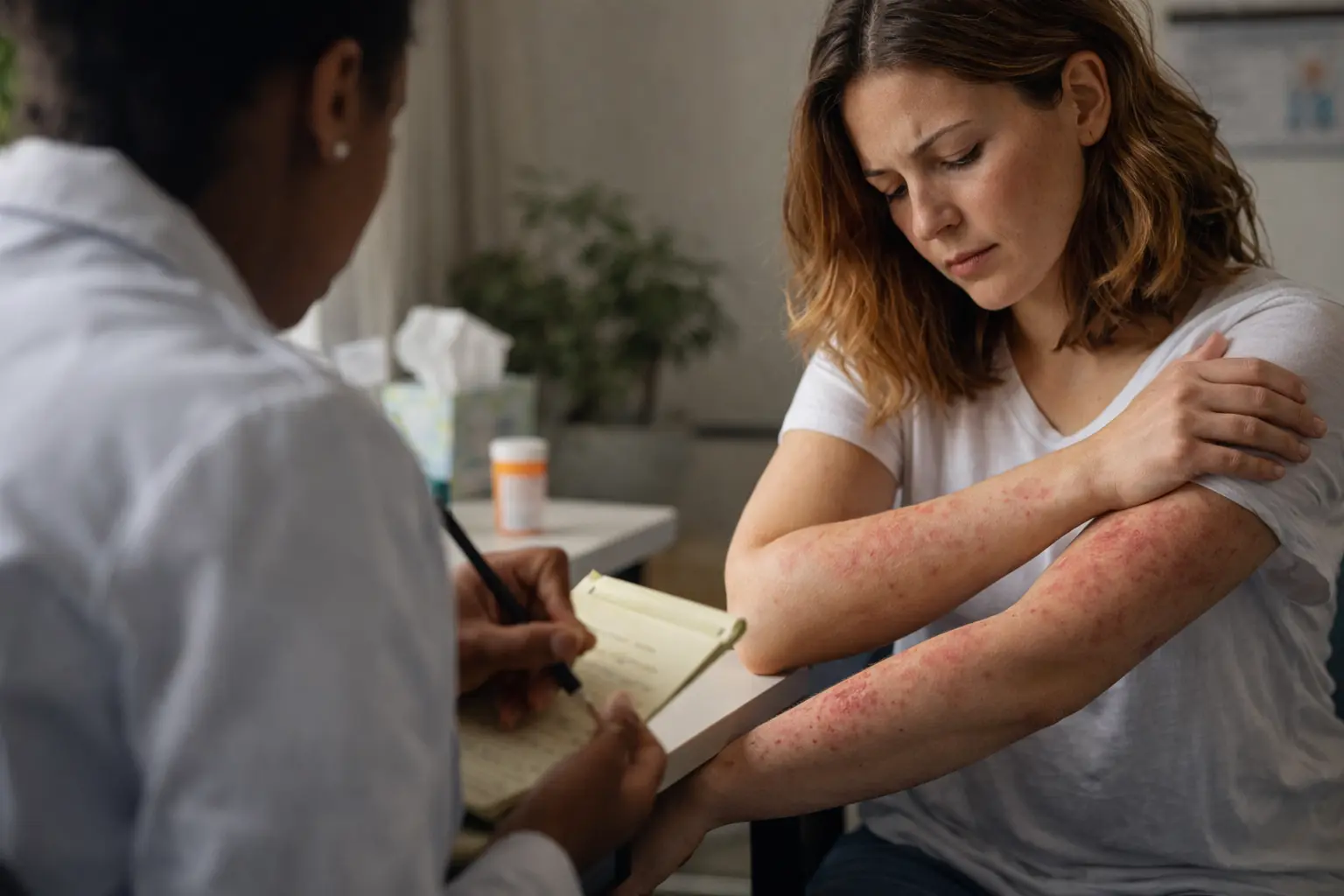
Your skin is burning and itchy, you’ve tried everything, and nothing makes sense – is it contact dermatitis versus allergy, and why won’t anyone just tell you straight what’s actually happening to your body?
What is contact dermatitis?
Contact dermatitis happens when your skin touches something it doesn’t like and reacts defensively. The reaction is localized, meaning it shows up exactly where the irritant made contact. You might notice redness, intense itching, or small fluid-filled blisters within hours or days. Common culprits include laundry detergent residue on clothing, nickel in jewelry, fragrances in lotions, rubber gloves, or even the adhesive on bandages. For seniors, this becomes especially relevant because skin becomes thinner and more sensitive with age. A retired teacher might develop a rash on her hands from switching to a new dish soap, or a golfer might notice irritation under his watch band from sweat mixing with metal. The key distinguishing feature is that the rash appears only in the area of direct contact. If you touched something with your left hand and only your left hand breaks out, that’s your first clue you’re dealing with contact dermatitis rather than a systemic allergic reaction.
- Keep a simple log noting when rashes appear and what you touched beforehand to identify patterns.
- Switch to fragrance-free, hypoallergenic products and give your skin two to three weeks to recover.
- Wear cotton gloves when cleaning or handling chemicals, and remove jewelry if you notice irritation developing.
Understanding allergic reactions
Allergic reactions involve your immune system overreacting to a substance it perceives as a threat, even though that substance is harmless to most people. Unlike contact dermatitis, allergies can trigger symptoms throughout your entire body. You might develop hives scattered across your chest and arms, experience swelling in your lips or throat, feel itchy all over, or in severe cases, struggle to breathe. Common allergens for seniors include pollen from seasonal changes, pet dander if you have cats or dogs, certain medications, shellfish or nuts, or even latex. An allergy typically develops over time as your body becomes sensitized to a trigger. You might have had a cat for years without problems, then suddenly develop sneezing and skin reactions. The timeline matters too: allergic reactions can appear within minutes of exposure or take several hours to develop. Because seniors often take multiple medications, drug allergies become increasingly important to monitor and document carefully.
📘 Fix your day in under 2 minuteschoose where to begin:
Distinguishing symptoms
The location and pattern of your symptoms tell a powerful story about what’s actually happening. Contact dermatitis creates a clear boundary where the irritant touched your skin, like a rash that follows the outline of your watchband or sock line. It’s uncomfortable but typically contained. Allergic reactions, by contrast, spread unpredictably. You might get hives on your neck even though you touched the allergen with your hands. Allergies can also cause systemic symptoms like difficulty breathing, dizziness, throat tightness, or gastrointestinal upset. A senior who develops a localized red, blistered patch after using a new hand cream is likely experiencing contact dermatitis. But if that same person breaks out in widespread hives, feels their throat tightening, and struggles to catch their breath after eating shellfish at dinner, that’s an allergic reaction requiring immediate medical attention. The severity matters too: contact dermatitis is usually uncomfortable but not dangerous, while severe allergies can be life-threatening. Understanding this distinction helps you respond appropriately and communicate clearly with your healthcare provider.
Preventive measures
Prevention is far easier than treatment, especially as your skin becomes more delicate with age. For contact dermatitis, start by identifying and avoiding your personal triggers. If you know nickel irritates your skin, choose stainless steel or gold jewelry instead. If fragrance causes problems, buy unscented versions of everything from soap to laundry detergent. Wear protective gloves when gardening, cleaning, or doing dishes, and choose cotton-lined gloves to prevent sweat buildup. Read product labels carefully and introduce new skincare items one at a time so you can pinpoint what causes reactions. For allergies, the strategy shifts to allergen avoidance and preparedness. If you have a known severe allergy, carry an epinephrine injector at all times and ensure family members know how to use it. Get allergy testing done through your doctor to identify exactly what triggers your reactions. Keep antihistamines on hand and take them before seasonal allergy season arrives. Seniors with multiple allergies should maintain a written list of all allergens and share it with their healthcare provider, pharmacist, and family members. This proactive approach prevents emergencies and gives you genuine peace of mind.
Seeking medical advice
Knowing when to call your doctor matters as much as knowing what to do at home. If a rash persists beyond two weeks despite avoiding suspected triggers, or if it worsens despite your best efforts, schedule an appointment with your primary care doctor or a dermatologist. Bring photos of the rash if possible, along with your timeline of when it started and what you were doing when it appeared. If you suspect an allergy, ask your doctor about allergy testing, which can identify specific triggers through skin prick tests or blood tests. For seniors taking multiple medications, any new skin reaction warrants a conversation with your pharmacist and doctor because medications can cause allergic reactions that mimic dermatitis. If you experience swelling in your face or throat, difficulty breathing, or severe itching that prevents sleep, seek immediate medical attention or call emergency services. Your doctor can prescribe topical steroids for contact dermatitis or antihistamines and other medications for allergies. They can also rule out other conditions that might look similar, like fungal infections or autoimmune skin diseases. Don’t hesitate to ask questions or request a referral to a specialist if your symptoms don’t improve.
Contact dermatitis and allergies differ fundamentally in how they start, where they show up, and how you should respond. Contact dermatitis is a localized reaction to direct skin contact with an irritant, while allergies involve your immune system reacting to a substance throughout your body. Recognizing these differences helps you identify your triggers, take appropriate preventive steps, and know when to seek professional help. By staying observant and proactive, you can manage either condition effectively and protect your skin health as you age.
How can I tell if I have contact dermatitis or an allergy?
Contact dermatitis usually affects only the area of skin that touched the irritant or allergen, creating a clear boundary or pattern. Allergic reactions may manifest as hives or swelling throughout your body, sometimes far from where you made contact with the trigger. A healthcare professional can provide a definitive diagnosis through examination, history-taking, and sometimes allergy testing.
Are there any home remedies for contact dermatitis or allergies?
Mild contact dermatitis may improve with cool compresses, oatmeal baths, or fragrance-free moisturizers, but identifying and avoiding the trigger is essential. For allergies, home remedies have limited effectiveness. Both conditions benefit from medical evaluation, especially in seniors, to ensure proper diagnosis and appropriate treatment that won’t interact with other medications you’re taking.
Others also read:
Disclaimer: This article is for informational purposes only and is not a substitute for professional medical advice. Always consult a healthcare professional for personal guidance.
This guide has been prepared and reviewed by the GlobalHealthBeacon editorial team and reflects current medical research as of 2026. It provides structured, evidence-based information to support informed health decisions.
