Your doctor keeps mentioning your A1C levels and you’re staring at that number on your lab results wondering what it actually means for your life right now, and honestly, nobody’s really explained it in a way that makes sense without all the medical jargon.
Understanding A1C levels
Think of your A1C level as a report card for your blood sugar over the past two to three months. Unlike a daily finger-stick test that shows you your blood sugar right now, the A1C test reveals the bigger picture. For seniors, this matters because it shows whether your diabetes management strategy is actually working over time. If you’ve been eating better and taking your medications, the A1C will reflect that effort. The test measures how much glucose has attached itself to your hemoglobin, the protein in red blood cells that carries oxygen. Higher A1C levels signal that excess sugar has been floating around in your bloodstream, which increases your risk of complications like heart disease, kidney problems, and vision issues. Most healthcare providers recommend seniors aim for an A1C below 7%, though your personal target might be different depending on your overall health, other conditions, and how long you’ve had diabetes.
- Higher A1C levels can increase the risk of diabetes complications.
- A1C levels between 5.7-6.4% may indicate prediabetes.
- Aiming for an A1C level below 7% is often recommended for most seniors with diabetes.
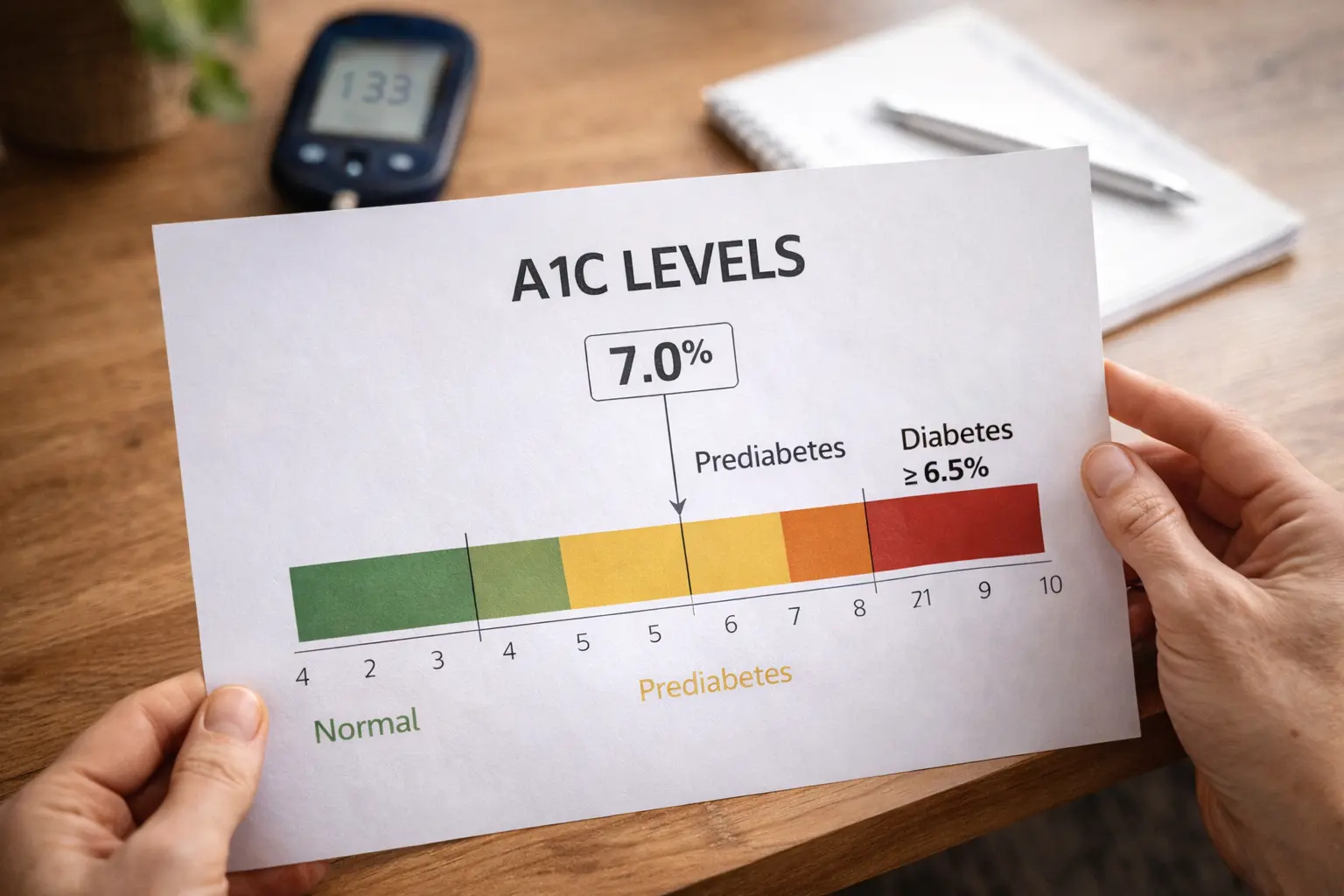
Interpreting A1C levels chart
The A1C chart breaks down into clear ranges so you can see exactly where you stand. Below 5.7% means your blood sugar is in the normal range, which is ideal. Between 5.7% and 6.4% signals prediabetes, a warning sign that changes now could prevent full diabetes development. Once you hit 6.5% or higher, you have diabetes. If you’re already managing diabetes, your chart shows you whether you’re in good control (usually under 7%), fair control (7% to 8%), or needing adjustment (above 8%). Imagine you’ve been checking your A1C every three months for a year. You start at 8.2%, then drop to 7.8%, then 7.3%, and finally reach 6.9%. That downward trend tells you and your doctor that your lifestyle changes and medications are working. Conversely, if your A1C climbs from 7.1% to 7.6% to 8.2%, it’s a signal to reassess your diet, activity level, stress, and medication compliance. The chart isn’t meant to shame you, it’s a tool to guide your next steps.
📘 Fix your day in under 2 minuteschoose where to begin:
Maintaining healthy A1C levels
Keeping your A1C in a healthy range requires consistent effort across three main areas: food, movement, and medication. Start with food choices. Instead of white bread, choose whole grains. Swap sugary drinks for water or unsweetened tea. Fill half your plate with non-starchy vegetables like broccoli, spinach, and bell peppers. A practical example: if you normally eat a bowl of cereal with whole milk for breakfast, switch to oatmeal with berries and nuts, which releases energy more slowly and keeps your blood sugar stable. Exercise doesn’t mean joining a gym. A 30-minute walk after dinner, gardening, or swimming twice a week makes a real difference. Movement helps your muscles use glucose more efficiently. For medication, take it exactly as prescribed, even on days you feel fine. Many seniors skip doses thinking they don’t need it, but consistency is what creates that downward A1C trend. Monitor your carbohydrate portions, reduce added sugars, and consider keeping a food diary for a week to spot patterns. Small adjustments compound into significant A1C improvements over months.
Consulting your healthcare provider
Your doctor is your partner in this, not just someone who delivers test results. Before your appointment, write down your questions and any patterns you’ve noticed. Bring your blood sugar log if you check at home. Ask your doctor what your specific A1C target should be, because it’s not one-size-fits-all. A 75-year-old with multiple health conditions might safely aim for 7.5% to 8%, while a healthier 65-year-old might target 6.5% to 7%. Your provider can explain whether your current medications are working or if adjustments are needed. They can refer you to a diabetes educator who teaches practical meal planning and carb counting. They can also screen for complications like kidney disease or nerve damage that might change your treatment plan. If your A1C isn’t improving despite your efforts, discuss whether stress, sleep problems, or medication side effects might be interfering. Some seniors find that working with a registered dietitian, even for a few sessions, transforms their understanding of how food affects their numbers. Regular check-ups every three to six months keep you accountable and allow your doctor to catch problems early.
Tracking progress and making adjustments
Create a simple tracking system to monitor your A1C journey. Write down each test result with the date, then note what you were doing differently that quarter. For example: January A1C 7.8% (started walking daily), April A1C 7.4% (added more vegetables), July A1C 6.9% (reduced bread portions). This visual record shows you what actually works for your body. If your A1C plateaus or rises, it’s time for a conversation with your doctor about next steps. Maybe your medication needs adjustment, or perhaps you’ve hit a point where diet and exercise alone need reinforcement. Some seniors benefit from setting small, specific goals rather than focusing solely on the A1C number. Instead of thinking ‘I need to lower my A1C,’ try ‘I’ll walk 20 minutes five times a week’ or ‘I’ll eat vegetables at every lunch.’ These concrete actions lead to A1C improvements. Don’t get discouraged if progress is slow. A1C changes take time because it reflects three months of averages. Celebrate small wins like choosing grilled chicken instead of fried, or drinking water instead of soda. Every positive choice contributes to your next test result.
Understanding your A1C levels is vital for seniors managing diabetes. Regular monitoring, healthy lifestyle habits, and collaboration with your healthcare provider are essential for maintaining optimal A1C levels and overall well-being.
What is a normal A1C level for seniors?
A normal A1C level for seniors is typically below 7%. However, individual targets may vary based on health conditions and treatment plans. It’s important to work closely with your healthcare provider to determine your target range.
How often should seniors check their A1C levels?
Seniors with diabetes should generally have their A1C levels checked at least every 3-6 months. More frequent testing may be recommended for individuals with changing health conditions or treatment plans.
Others also read:
Disclaimer: This article is for informational purposes only and is not a substitute for professional medical advice. Always consult a healthcare professional for personal guidance.
This guide has been prepared and reviewed by the GlobalHealthBeacon editorial team and reflects current medical research as of 2026. It provides structured, evidence-based information to support informed health decisions.

