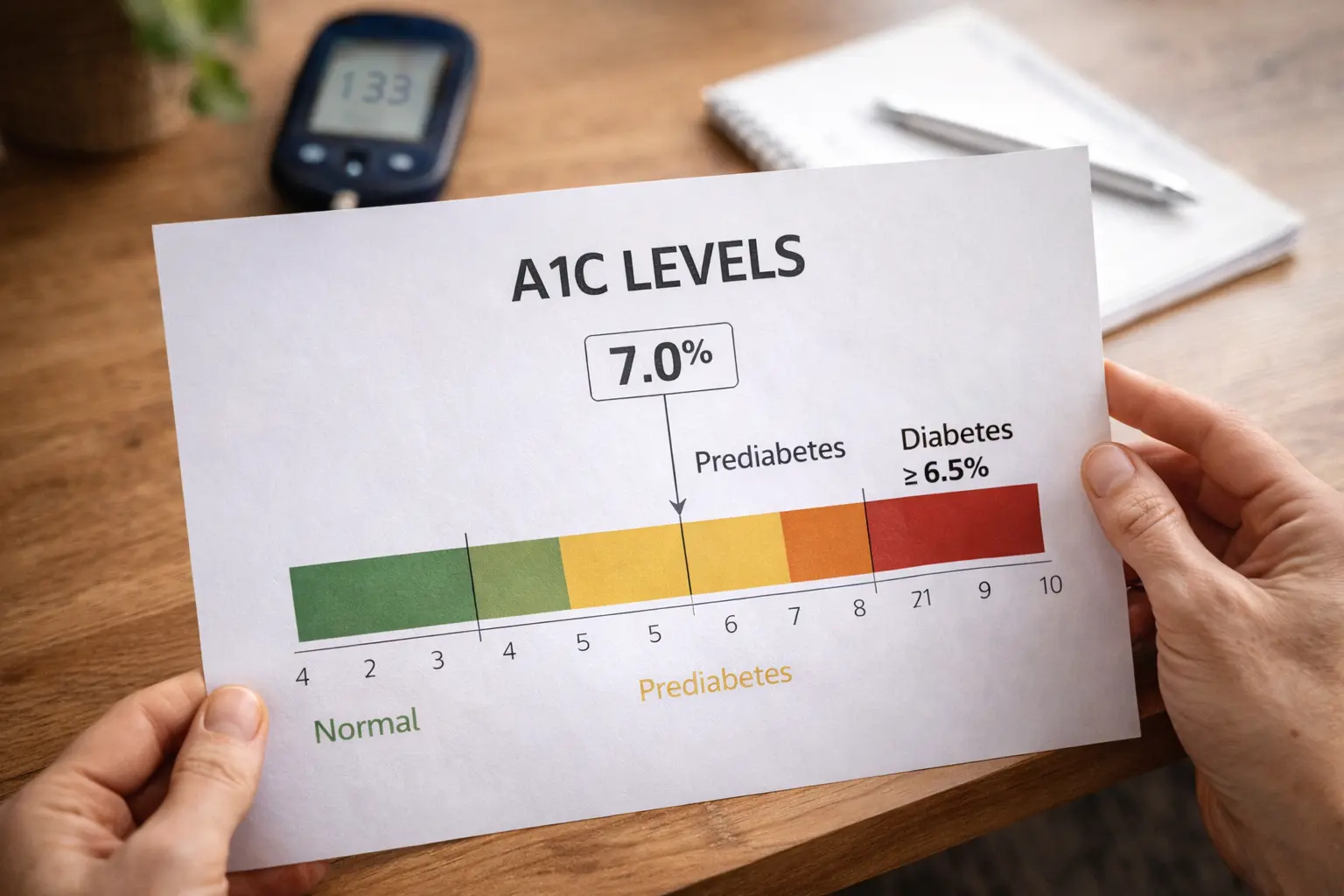
You’re exhausted all the time, your mouth feels perpetually dry, and you can’t shake the feeling that something’s off with your body, so you finally get your A1C levels checked and suddenly that a1c levels chart your doctor hands you becomes the roadmap to understanding what’s been happening inside.
Understanding A1C levels
Your A1C level is essentially a three-month snapshot of your blood sugar story. Think of it like this: every time you eat, your body processes glucose, and some of that glucose binds to hemoglobin in your red blood cells. The A1C test measures how much glucose has stuck around over time. For most women, a normal A1C sits below 5.7 percent, which means your blood sugar has been behaving well. If you see numbers between 5.7 and 6.4 percent, that’s the prediabetes zone, a warning light that shouldn’t be ignored. Anything above 6.5 percent indicates diabetes has developed. Understanding where you fall on this spectrum helps you grasp what your body’s been trying to tell you through those symptoms you’ve been experiencing.
- A1C test measures glucose bound to hemoglobin in your red blood cells
- Higher A1C levels reveal poor blood sugar control over months, not just days
- Tracking A1C levels helps prevent serious complications like nerve damage and heart disease
Maintaining healthy A1C levels
Stabilizing your A1C doesn’t require perfection, just consistent, thoughtful choices. Start with what you eat: load your plate with colorful vegetables, choose whole grains over refined carbs, add lean proteins like chicken or fish, and include healthy fats from avocados or olive oil. A practical example: swap your morning white toast for oatmeal with berries, or trade sugary snacks for almonds and cheese. Exercise matters too, even gentle movement like a 20-minute walk after meals can significantly impact your numbers. Stress management often gets overlooked, but chronic stress raises cortisol, which actually pushes blood sugar higher. Try journaling, yoga, or simply sitting quietly for ten minutes daily. Small, sustainable habits beat dramatic overhauls every time.
💬 Ready to feel better in 2 minutes?choose where to begin:
Impact of A1C levels on daily life
High A1C levels don’t just show up on a lab report, they show up in how you feel and function. Many women describe overwhelming fatigue that coffee can’t fix, a heaviness that makes climbing stairs feel like climbing mountains. You might notice you’re getting more infections than usual, or small cuts take forever to heal. Some experience blurred vision or tingling in their fingers and toes. One woman shared how her constant thirst led her to drink water obsessively, disrupting her sleep and work. These aren’t random symptoms, they’re your body signaling that blood sugar has been running too high for too long. The encouraging part: when you bring your A1C down, these symptoms often improve dramatically, sometimes within weeks.
Celebrating progress and success
Watching your A1C number drop is genuinely thrilling. Maybe your first test showed 7.8 percent and three months later it’s 7.2 percent. That might seem like a small shift, but it represents real changes in your body, real improvements in how you’ll feel long-term. Celebrate these wins, even the small ones. Some women treat themselves to new workout clothes when they hit a milestone, others call a friend to share the news. Progress isn’t always linear, and that’s okay. You might have a month where stress or illness bumps your number back up slightly, but the overall trend matters. Each positive choice you make, each meal you prepare mindfully, each walk you take, builds momentum. You’re not just chasing a number, you’re reclaiming your energy and your future.
Understanding your A1C levels is key to managing your overall health. By keeping your levels within a healthy range, you can prevent complications and enjoy a better quality of life.
What should I do if my A1C levels are high?
If your A1C levels are high, consult with your healthcare provider to create a personalized plan. This may include dietary adjustments, exercise recommendations, and medication if necessary.
Can A1C levels fluctuate?
Yes, A1C levels can vary based on factors like diet, exercise, stress, and overall health. Regular monitoring and consistent lifestyle habits can help stabilize your A1C levels.
Others also read:
Disclaimer: This article is for informational purposes only and is not a substitute for professional medical advice. Always consult a healthcare professional for personal guidance.
This article presents an experience-based perspective and has been reviewed by the GlobalHealthBeacon editorial team in 2026. It provides structured, evidence-based information to support informed health decisions.

