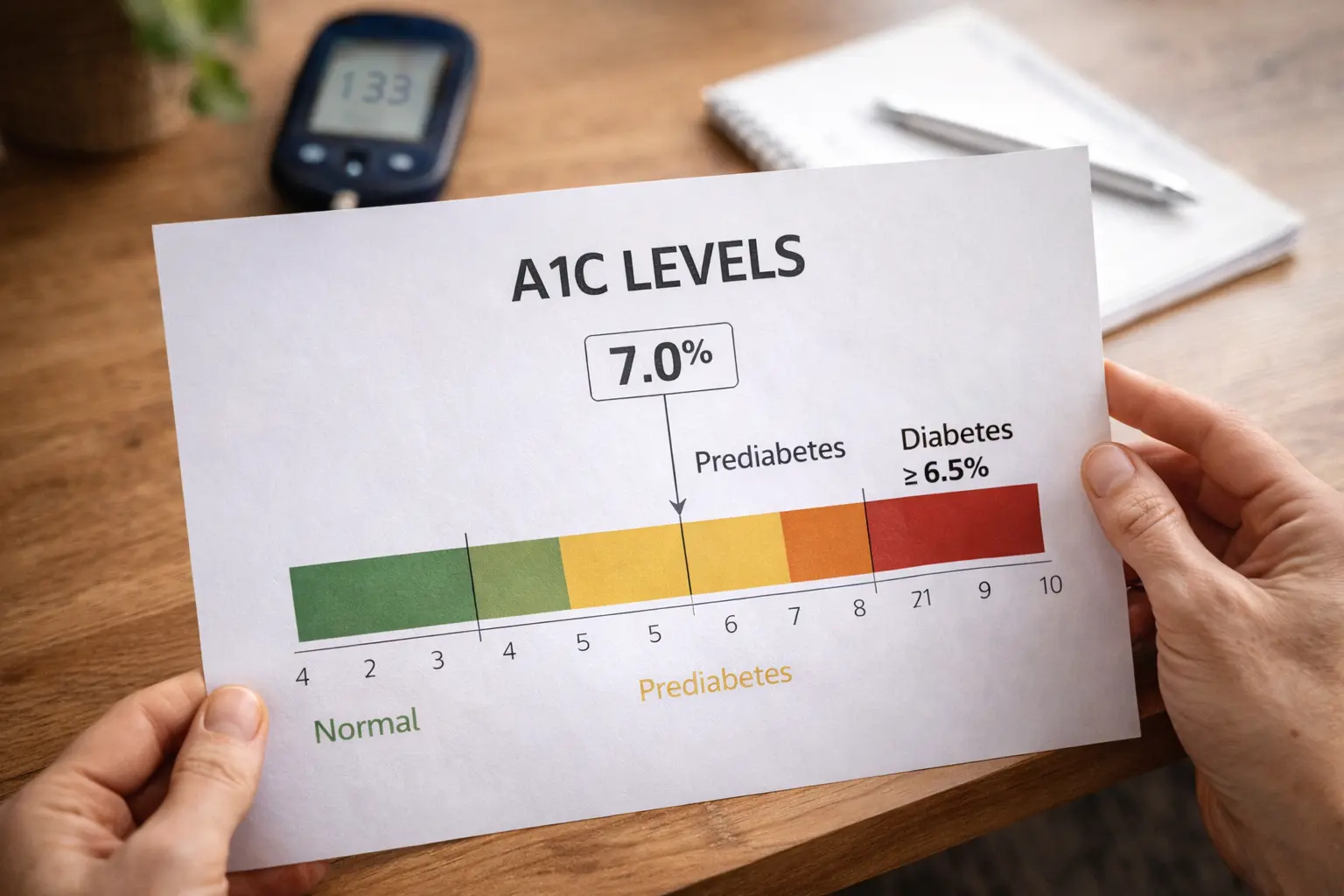
You’re 28, feeling fine, and then your doctor mentions your A1C levels chart shows something worth paying attention to, and suddenly you’re wondering if this number actually matters or if it’s just another health scare.
What is A1C and why does it matter?
Hemoglobin A1C, often shortened to A1C, is a blood test that reveals your average blood glucose levels over the past two to three months. Think of it as a historical record written on your red blood cells. When glucose enters your bloodstream, it attaches to hemoglobin, a protein in red blood cells. Since red blood cells live about three months, the A1C test captures a longer-term picture than a single finger-stick glucose reading. For young adults, understanding this test matters because blood sugar patterns established now can influence your health trajectory for decades. If you have a family history of diabetes, are overweight, or live a sedentary lifestyle, your A1C becomes an early warning system. It’s not about being sick right now, it’s about understanding whether your body is trending toward metabolic problems before symptoms appear.
Interpreting your A1C levels
A1C results are reported as a percentage, and the ranges are straightforward but important to understand. Below 5.7% is considered normal, meaning your average blood sugar has been well-controlled. Between 5.7% and 6.4% falls into the prediabetes range, which signals that glucose regulation is starting to slip but hasn’t crossed into diabetes territory yet. At 6.5% or higher, a diagnosis of type 2 diabetes is typically made. For young adults, seeing a result in the 5.7% to 6.4% range can feel like a wake-up call, but it’s actually valuable information. This prediabetes stage is when lifestyle interventions are most effective. A 25-year-old with an A1C of 6.2% has years to reverse this trend through diet, exercise, and stress management. The same result at 55 might require medication sooner. Your age, genetics, and current habits all influence what your A1C means for your personal health outlook.
Steps to prepare for an A1C test
Preparing for an A1C test is simpler than many blood tests because fasting isn’t required, though your doctor may have specific instructions based on your situation. First, follow any guidance your healthcare provider gives you about fasting or timing, as some clinics prefer morning appointments or specific conditions. Second, create a complete list of all medications and supplements you’re taking, including over-the-counter items, vitamins, and herbal products, because certain substances can theoretically affect results. Third, stay well-hydrated in the days leading up to your test. Proper hydration makes your veins more accessible and easier to draw from, reducing the chance of a difficult stick. Fourth, wear loose-fitting clothing on your test day to make blood pressure monitoring and blood drawing easier. Finally, try to reduce stress before the appointment, as acute stress can temporarily elevate glucose levels. If you’ve had a particularly stressful week or illness, mention this to your healthcare provider, as they may want to note it when interpreting results.
- Follow fasting instructions provided by your healthcare provider.
- Inform your doctor about all medications and supplements you take.
- Stay hydrated in the days before your test.
- Wear loose-fitting clothing for easier blood drawing.
- Reduce stress and mention recent illness or stressful events to your provider.
🔬 Science-backed benefits in 2 minuteschoose where to begin:
Benefits of regular A1C testing
Regular A1C testing transforms abstract health concerns into concrete data you can act on. For young adults, testing every one to three years provides a baseline and tracks trends over time. If your first A1C is 5.4%, and three years later it’s 5.9%, you’re seeing a gradual climb that might prompt dietary changes before it becomes a bigger problem. This longitudinal view helps you and your doctor identify patterns that single glucose readings miss. Testing also motivates behavior change. Knowing your A1C number makes the impact of your choices tangible. That extra 30 minutes of exercise weekly, the switch from sugary drinks to water, the decision to meal prep on Sundays, these actions have measurable consequences reflected in your next test result. Additionally, regular testing catches metabolic issues early when they’re most reversible. Young adults with prediabetes who receive this information and make lifestyle changes can normalize their A1C within months to a year, potentially avoiding decades of diabetes management.
Risks and limitations of A1C testing
While A1C testing is valuable, it has real limitations worth understanding. A1C shows average glucose over three months but misses the daily fluctuations that matter for how you feel and function. You could have an A1C of 5.8% but experience dangerous blood sugar spikes and crashes throughout the day that the test doesn’t reveal. Certain conditions affect A1C accuracy, including hemolytic anemia, kidney disease, and some blood disorders. Pregnancy, recent blood transfusions, and some medications can skew results. For young adults with irregular sleep schedules, high stress, or intense athletic training, A1C alone doesn’t capture the full metabolic picture. Additionally, A1C testing doesn’t measure insulin resistance directly, which is often the root problem in prediabetes. Two people with identical A1C levels might have completely different underlying metabolic issues requiring different interventions. This is why A1C works best combined with fasting glucose tests, glucose tolerance tests, and continuous glucose monitoring when appropriate.
The bottom line on A1C testing
For young adults, A1C testing serves as a valuable checkpoint in your metabolic health journey. It’s not a diagnosis that defines you, but rather information that empowers you to make informed decisions about your lifestyle and medical care. If you have risk factors like family history of diabetes, obesity, sedentary habits, or poor diet quality, getting a baseline A1C in your twenties or thirties gives you a reference point and potential years to intervene before serious disease develops. If your A1C is normal, regular testing every few years maintains awareness. If it’s elevated, you now have specific data to discuss with your healthcare provider about next steps, whether that’s dietary changes, increased physical activity, stress management, or medication. The key is viewing A1C testing not as a scary verdict but as useful information that helps you stay proactive about your health during the decades when your choices have the most impact.
A1C testing measures your average blood sugar over three months and provides crucial insight into your metabolic health. For young adults, understanding your A1C levels and getting regular tests can help you catch prediabetes early and make lifestyle changes before more serious health issues develop.
How often should I get an A1C test?
Most healthcare providers recommend A1C testing every three years for adults without diabetes or risk factors. If you have prediabetes, risk factors like obesity or family history, or are managing diabetes, testing twice yearly or more frequently may be appropriate. Your doctor can recommend a schedule based on your individual situation.
Can lifestyle changes affect A1C levels?
Yes, lifestyle changes significantly impact A1C levels. Regular physical activity, eating a balanced diet low in refined sugars and processed foods, managing stress through meditation or exercise, getting adequate sleep, and maintaining a healthy weight can all lower A1C over time. Many people with prediabetes have normalized their A1C within three to six months through consistent lifestyle modifications.
Others also read:
Disclaimer: This article is for informational purposes only and is not a substitute for professional medical advice. Always consult a healthcare professional for personal guidance.
This article has been prepared and reviewed by the GlobalHealthBeacon editorial team and is based on current medical research and published scientific literature available in 2026. It provides structured, evidence-based information to support informed health decisions.

