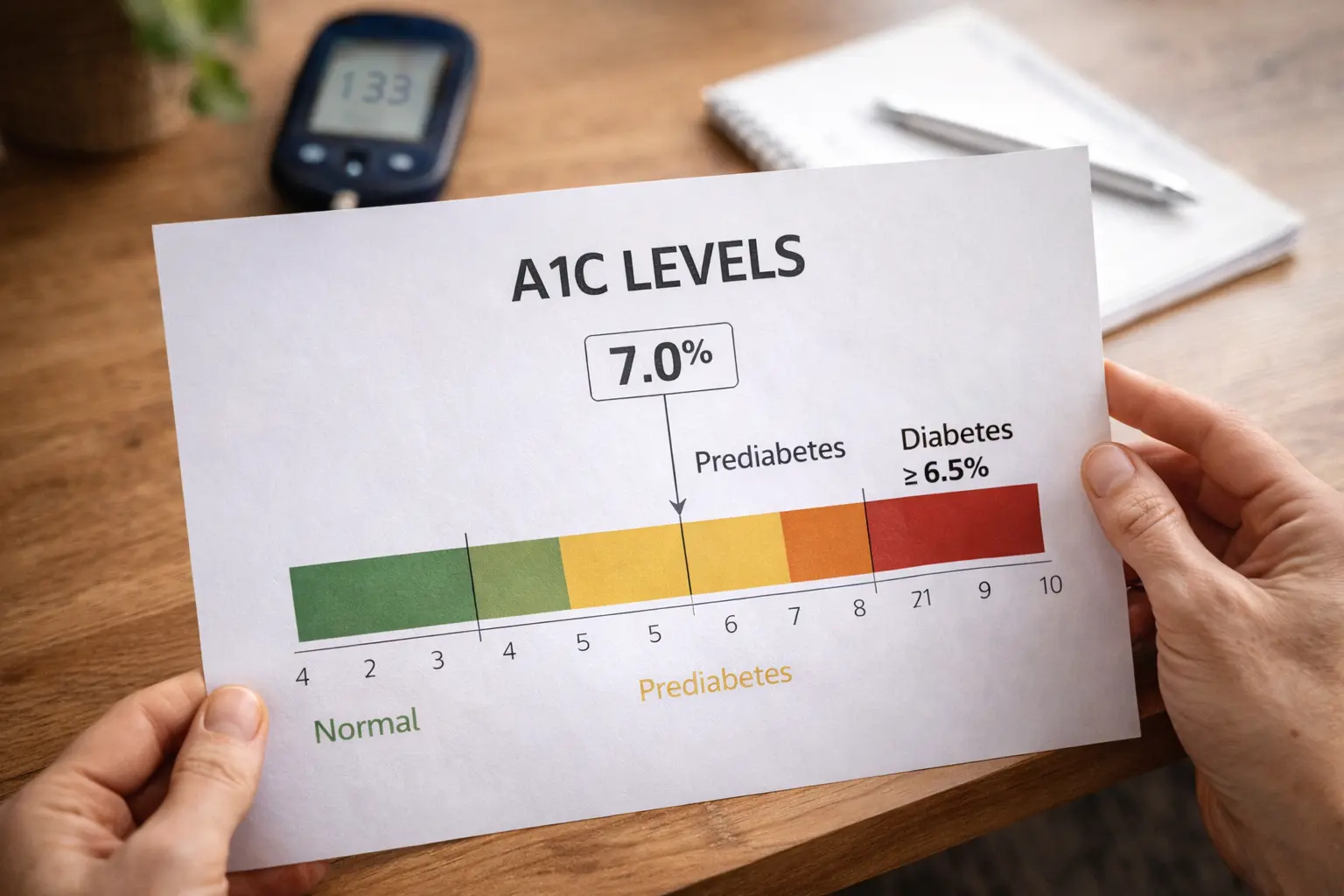
You wake up tired again, your vision feels fuzzy, and you are wondering if this is just getting older or something more, so you finally check your a1c levels chart at your doctor’s office and realize everything suddenly makes sense.
Deciphering A1C levels
A1C levels measure your average blood sugar over the past 2 to 3 months, and honestly, it took me years to really understand what those numbers meant. I remember sitting in my doctor’s office, staring at the results, feeling lost. The A1C test captures the bigger picture of your glucose control, not just a single moment in time like a fingerstick test would. Think of it like your three-month report card for blood sugar management. When my doctor first explained it to me, I realized I had been fixating on daily readings when I should have been looking at the long-term trend. For seniors especially, understanding this number becomes the foundation for everything else. It tells you whether your current habits are working or if adjustments are needed.
- A1C levels below 5.7% are considered normal.
- Levels between 5.7% and 6.4% indicate prediabetes.
- An A1C level of 6.5% or higher suggests diabetes.
Navigating diet and lifestyle changes
When my A1C came back at 6.8%, I knew I had to make real changes, not just talk about them. My doctor didn’t hand me a restrictive diet plan that felt impossible. Instead, we talked about swapping my morning toast for oatmeal with berries, adding a 20-minute walk after lunch, and actually drinking water instead of reaching for sweet tea. The lifestyle piece is where most seniors struggle because it feels overwhelming. I started small: one change per week. First, I cut back on processed snacks. Then I added movement. Then I worked on sleep and stress. What surprised me most was how these changes connected. Better sleep meant fewer cravings. More movement meant better energy. A balanced diet rich in whole foods, regular exercise even just gentle walking, and stress management techniques like deep breathing or gardening made a real difference in my numbers.
💬 Ready to feel better in 2 minutes?choose where to begin:
Monitoring and testing
I used to dread my A1C tests, but once I started tracking my progress, it became motivating instead of scary. My healthcare provider recommended testing every three months at first, then every six months once my levels stabilized. Keeping a simple log helped me see the connection between what I ate, how much I moved, and my actual numbers. I started noticing patterns. My A1C dropped 0.4% in three months just from consistent walking and cutting sugary drinks. Working closely with your healthcare provider to establish a testing schedule removes the guesswork. You are not just getting a number; you are getting real data about whether your efforts are paying off. Some seniors benefit from home glucose monitors between tests, which give daily feedback without the anxiety of waiting months for results.
Embracing support and resources
I felt alone in this until I joined a local diabetes support group at my community center. Hearing other seniors talk about their struggles and victories made everything feel less isolating. A diabetes educator taught me how to read food labels properly, something I had been doing wrong for years. My doctor’s office connected me with a nutritionist who didn’t judge my love of comfort food but helped me find healthier versions I actually enjoyed. Healthcare professionals, diabetes educators, and support groups are not luxuries; they are tools that make managing A1C levels genuinely manageable. Online communities and apps also help seniors track their progress without feeling tech-overwhelmed. The journey feels less daunting when you have people in your corner who understand exactly what you are going through.
Understanding and managing A1C levels is crucial for seniors with diabetes or prediabetes. By deciphering these levels, making dietary and lifestyle changes, monitoring regularly, and seeking support, seniors can take control of their health and well-being.
How often should seniors test their A1C levels?
Seniors should work with their healthcare provider to determine the appropriate frequency for testing their A1C levels. Typically, testing every 3 to 6 months is recommended, though newly diagnosed individuals may test more frequently to track progress.
What can seniors do to lower their A1C levels?
Seniors can lower their A1C levels by following a healthy diet, engaging in regular physical activity, managing stress effectively, and taking prescribed medications as directed by their healthcare provider.
Others also read:
Disclaimer: This article is for informational purposes only and is not a substitute for professional medical advice. Always consult a healthcare professional for personal guidance.
This article presents an experience-based perspective and has been reviewed by the GlobalHealthBeacon editorial team in 2026. It provides structured, evidence-based information to support informed health decisions.

