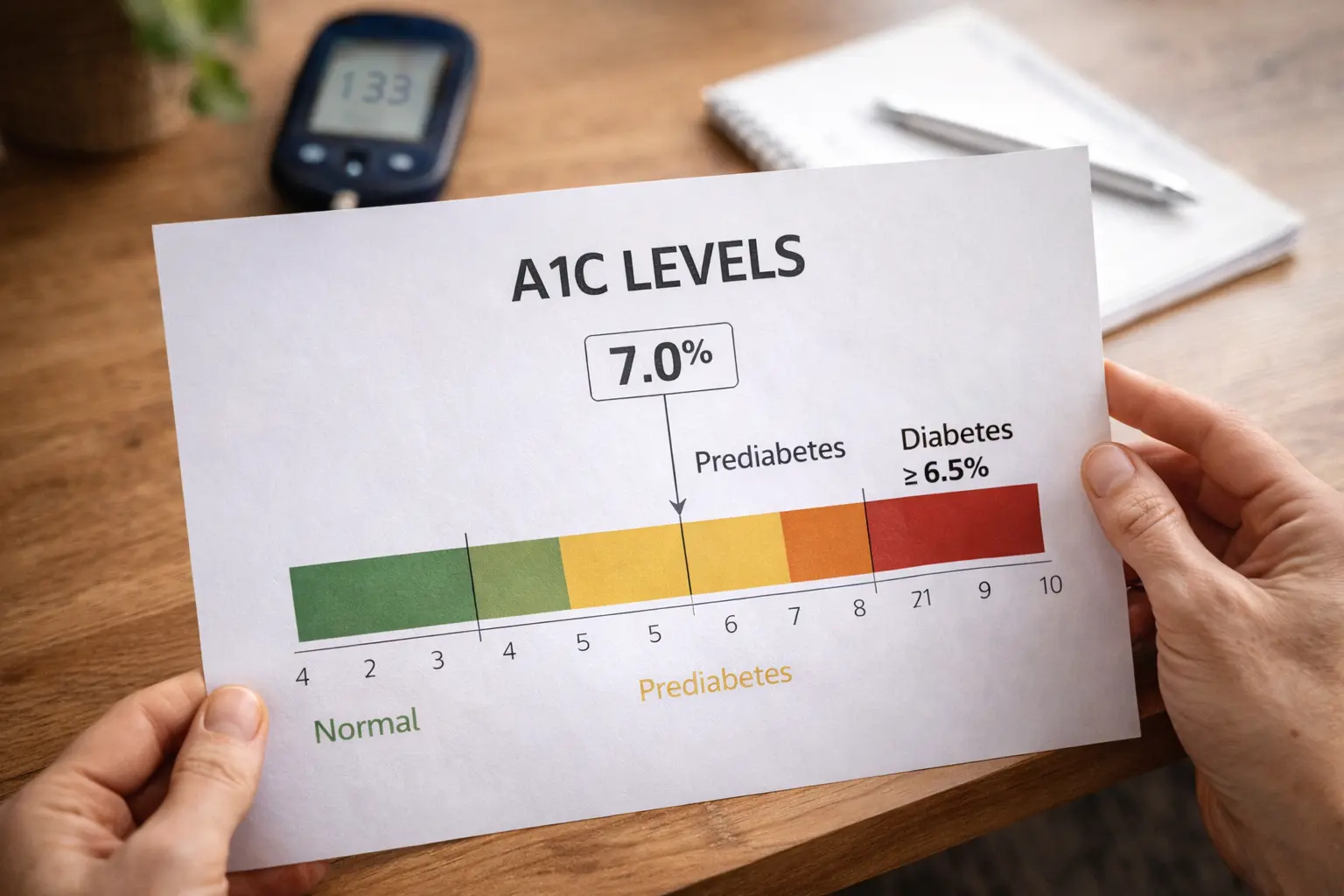
Staring at your A1C levels chart and feeling completely confused about what those numbers actually mean for your health is more common than you think, and it’s time someone explained it in plain language.
Decoding A1C levels
Your A1C levels chart is essentially a three-month report card for your blood sugar control. Unlike a daily glucose reading that captures a single moment in time, your A1C percentage tells the story of how well your body has managed blood sugar over the past 2-3 months. Think of it this way: if daily blood sugar readings are like checking the weather each day, your A1C is the seasonal forecast. A higher A1C percentage signals that your average blood sugar has been running higher than ideal, which puts strain on your blood vessels and organs over time. For seniors, understanding this distinction matters because your body processes glucose differently than it did in your younger years. Your kidneys may not filter as efficiently, and your cells may respond more slowly to insulin. When you see your A1C result, you’re seeing the cumulative effect of every meal, every activity, and every dose of medication you took during those months. This is why tracking trends over time reveals far more than any single test result ever could.
- Understanding the significance of A1C as a measure of your diabetes management.
- Interpreting the A1C levels on the chart and the corresponding blood sugar ranges.
- Taking note of the target A1C levels recommended by healthcare providers for optimal health.
- Identifying the impact of diet, exercise, and medication on your A1C numbers.
- Tracking trends in your A1C levels over time for better management.
Risks associated with high A1C
When your A1C climbs above your target range, your body is essentially bathing in higher-than-normal glucose levels day after day. Over months and years, this excess sugar damages the delicate lining of your blood vessels and nerves. For seniors, these complications can feel like they arrive suddenly, but they develop quietly over time. High A1C increases your risk of heart disease and stroke, which remain leading health threats for older adults. Nerve damage, called neuropathy, can start as tingling in your feet and progress to numbness that makes walking risky. Your kidneys work overtime filtering excess glucose, and this strain can lead to kidney disease that requires dialysis. Vision problems develop when high blood sugar damages the tiny blood vessels in your eyes. A real-world example: a 68-year-old man ignored his rising A1C for two years, thinking small increases didn’t matter. When he finally experienced chest pain and was hospitalized, his cardiologist explained that his elevated A1C had been silently narrowing his coronary arteries. The good news is that bringing your A1C down, even gradually, reduces these risks significantly and can even reverse some early damage.
📘 Fix your day in under 2 minuteschoose where to begin:
Managing your A1C levels
Managing A1C is not about perfection; it’s about consistency and small, sustainable choices that add up over time. Your diet forms the foundation: choosing whole grains instead of white bread, eating lean proteins, and filling half your plate with non-starchy vegetables directly impacts your blood sugar. Exercise doesn’t require a gym membership. A 30-minute walk after dinner, gardening, or even dancing to music at home helps your muscles use glucose more efficiently. Medications work best when taken exactly as prescribed, at the same time each day. Many seniors find a pill organizer or phone reminder invaluable for staying on track. Regular monitoring through home glucose testing or continuous monitors gives you real-time feedback about what works and what doesn’t. For instance, one 72-year-old woman discovered that her afternoon A1C readings spiked after eating pasta, so she switched to chickpea pasta and saw improvement within weeks. Stress management matters too: chronic stress raises cortisol, which pushes blood sugar up. Finding what calms you, whether that’s meditation, reading, or time with grandchildren, supports your A1C goals. Consistent healthcare visits every three months allow your doctor to catch trends and adjust your plan before problems develop.
Benefits of A1C testing
Regular A1C testing transforms you from a passive patient into an active manager of your own health. Every three months, you receive concrete data about whether your current approach is working. This removes guesswork and gives you something tangible to discuss with your healthcare team. When you see your A1C drop from 8.2 to 7.8, you know your efforts are paying off. That motivation often carries you forward through the next quarter. A1C testing also catches problems early, before complications develop. A senior who notices her A1C creeping up from 6.8 to 7.2 can adjust her diet or medication now, rather than waiting until she develops kidney problems years later. The test empowers you to make informed decisions about your lifestyle. You might discover that cutting back on sugary drinks has a bigger impact than you expected, or that adding evening walks makes a real difference. Over time, consistent A1C monitoring correlates with better quality of life: fewer emergency room visits, less pain from neuropathy, better energy levels, and greater independence. Many seniors report feeling more confident and in control when they understand their numbers and see themselves improving.
Consulting your healthcare provider
Your healthcare provider is your partner in managing A1C, not your judge. They’ve seen hundreds of patients navigate diabetes and understand that setbacks happen. When you sit down to discuss your A1C results, bring your questions and concerns. If your A1C is higher than expected, ask what specific changes would help most. Your doctor might suggest adjusting your medication, referring you to a diabetes educator, or connecting you with a nutritionist. Be honest about what you actually eat and how much you actually exercise, not what you think you should be doing. This honesty allows your provider to give you realistic, achievable goals. If you’re struggling with medication side effects or can’t afford your prescriptions, say so. Your doctor has options and resources you may not know about. Regular communication also means discussing how diabetes affects your daily life. If neuropathy makes walking painful or if managing multiple medications feels overwhelming, these conversations matter. Your provider can adjust your approach to fit your real life, not an idealized version. Open dialogue throughout your diabetes journey transforms your healthcare from something that happens to you into something you actively shape.
Understanding your A1C levels is crucial for effective diabetes management. Maintain healthy A1C levels through lifestyle changes, regular monitoring, and consultation with healthcare professionals.
How often should seniors have their A1C levels checked?
Seniors with diabetes should have their A1C levels checked at least twice a year. However, your healthcare provider may recommend more frequent testing based on your individual health status and treatment plan.
Can A1C levels be improved through lifestyle changes alone?
Yes, lifestyle changes such as adopting a healthy diet, increasing physical activity, and managing stress can positively impact A1C levels. These modifications, in conjunction with medications if prescribed, are key to improving A1C outcomes.
Others also read:
Disclaimer: This article is for informational purposes only and is not a substitute for professional medical advice. Always consult a healthcare professional for personal guidance.
This guide has been prepared and reviewed by the GlobalHealthBeacon editorial team and reflects current medical research as of 2026. It provides structured, evidence-based information to support informed health decisions.

