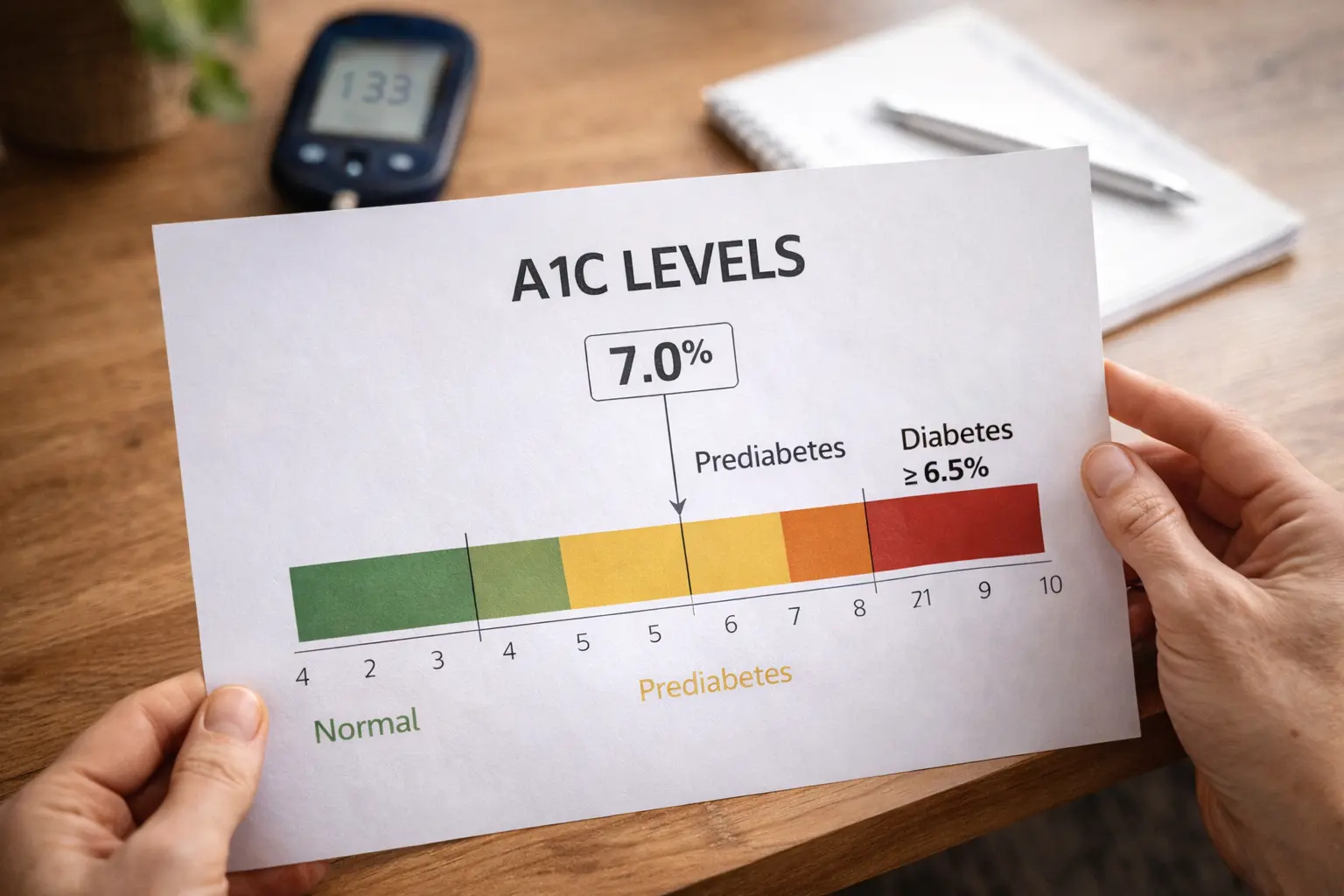
Your A1C levels chart just came back and you’re staring at numbers that feel like a foreign language, wondering if you’re headed toward diabetes or if you’re actually fine.
Understanding A1C levels
A1C measures your average blood sugar over the past two to three months, giving you a much clearer picture than a single finger prick ever could. Think of it like a report card for your glucose management. For young adults, staying below 5.7% is the target that signals good metabolic health. Here’s what happens: your red blood cells pick up glucose from your bloodstream, and some of that glucose sticks to the hemoglobin protein. The higher your average blood sugar, the more glucose attaches, and the higher your A1C reading climbs. A reading between 5.7% and 6.4% suggests prediabetes, while 6.5% and above typically indicates diabetes. The key insight is that this number reflects months of your eating habits, activity levels, and stress patterns all rolled into one. If you’ve been inconsistent with exercise or leaning on processed foods, your A1C will show it. Conversely, if you’ve been disciplined, the results reward that effort.
- Check your A1C at least twice yearly if your levels are stable, or every three months if you’re actively managing or newly diagnosed.
- Ask your healthcare provider to explain what your specific number means for your individual risk profile and health goals.
- Build sustainable habits like meal planning, consistent movement, and stress management to naturally lower your A1C over time.
Interpreting your results
Getting a result that’s higher than you expected can feel like a wake-up call, but it’s actually valuable information. An elevated A1C doesn’t mean you’ve failed or that your situation is hopeless. It means your body is signaling that your current routine needs adjustment. Picture this: a 26-year-old college graduate gets their A1C back at 6.2%, sitting in the prediabetes range. They panic initially, but then realize they’ve been working long hours, skipping meals, and relying on energy drinks and takeout. That number becomes a turning point. The same person could recheck in three months after switching to meal prep, adding evening walks, and cutting back on sugary drinks, and see it drop to 5.9%. The interpretation matters less than what you do with it. Normal range is below 5.7%, prediabetes is 5.7% to 6.4%, and diabetes is 6.5% or higher. But these aren’t fixed sentences. They’re invitations to change. Many young adults reverse prediabetes entirely through lifestyle shifts alone, without ever needing medication.
📘 Fix your day in under 2 minuteschoose where to begin:
Managing high A1C levels
If your A1C is elevated, your healthcare team will work with you to create a personalized action plan. This isn’t one-size-fits-all. Some people respond best to dietary changes, others to increased exercise, and some need medication alongside lifestyle modifications. Start by scheduling a detailed conversation with your doctor or a registered dietitian. They’ll review your eating patterns, activity level, sleep quality, and stress to identify the biggest leverage points. For many young adults, the biggest wins come from reducing refined carbohydrates and added sugars, increasing fiber intake, and moving your body more consistently. A practical example: swapping your morning pastry and coffee for eggs and whole grain toast, then taking a 20-minute walk after lunch, can shift your trajectory. Some people benefit from continuous glucose monitoring devices that show real-time blood sugar patterns, revealing which foods spike their glucose most. Others find success with structured programs like diabetes prevention programs, which combine education, accountability, and community support. Medication like metformin might be recommended if lifestyle changes alone aren’t moving the needle within three to six months. The goal is to work with your team, not against yourself.
Tracking progress
Monitoring your A1C over time is where the real motivation lives. Instead of fixating on a single number, think of it as a trend line. Your first recheck might show a small drop, maybe from 6.5% to 6.3%. That’s progress worth celebrating because it proves your efforts are working. Set realistic expectations: A1C typically drops about 0.5% to 1% per three-month period when you’re making genuine lifestyle changes. Between official A1C tests, you can track daily or weekly patterns using a home glucose meter or continuous monitor, which gives you immediate feedback on how specific foods and activities affect you. Keep a simple log noting what you ate, how much you moved, and how you felt. Over weeks, patterns emerge. You’ll notice that certain meals stabilize your energy while others cause crashes. You’ll see that a 30-minute walk after dinner smooths out your evening glucose spike. This granular awareness builds confidence and keeps you engaged. Many young adults find that setting a specific A1C goal, like dropping from 6.2% to 5.8% within six months, gives them something concrete to work toward. Share your progress with your healthcare provider at each visit. They can adjust your plan if needed and celebrate milestones with you.
Seeking support
Managing your A1C doesn’t have to be a solo journey. The emotional and practical support you gather around this process matters as much as the diet and exercise. Tell your close friends and family what you’re working on. You might be surprised how many have dealt with similar situations or want to support your efforts. Some people find that having an accountability partner, whether a friend also managing their health or a formal support group, makes the difference between sticking with changes and sliding back. Online communities dedicated to prediabetes and diabetes management offer real stories from people in your exact situation, which normalizes the experience and provides practical tips you won’t find in clinical settings. Consider working with a registered dietitian who specializes in diabetes prevention. They can teach you how to read labels, navigate restaurants, and handle social situations where food is central. Mental health matters too. If you’re feeling anxious or overwhelmed by your diagnosis, talking to a counselor or therapist helps you process the emotions and build resilience. Your healthcare provider can refer you to resources. Remember that managing your A1C is a long-term commitment, not a sprint. You’ll have good days and off days. The goal is progress, not perfection.
Your A1C levels chart is a tool for understanding where you stand and where you’re heading. Young adults who take action early, whether through diet changes, increased activity, or medication when needed, can often reverse prediabetes or achieve excellent diabetes control. The number itself matters less than what you do with the information. Work with your healthcare team, track your progress honestly, and build sustainable habits that fit your life. Small consistent changes compound into significant health improvements over months and years.
How often should I check my A1C levels?
If your blood sugar is stable and in a healthy range, checking twice yearly is standard. If you’re newly diagnosed, managing prediabetes, or have recently changed your treatment plan, your doctor may recommend every three months. Some people benefit from checking more frequently during the first year to see how their efforts affect the number. Ask your healthcare provider what schedule makes sense for your situation.
Can I lower my A1C levels through diet and exercise alone?
Diet and exercise are powerful tools and many young adults successfully lower their A1C through lifestyle changes alone, especially if caught early in the prediabetes stage. However, genetics, underlying health conditions, and how your body processes glucose all play a role. Some people need medication alongside lifestyle changes to reach their target. Your healthcare provider can assess your individual situation and recommend the best approach. The key is being honest about what’s working and adjusting your plan if needed.
Others also read:
Disclaimer: This article is for informational purposes only and is not a substitute for professional medical advice. Always consult a healthcare professional for personal guidance.
This guide has been prepared and reviewed by the GlobalHealthBeacon editorial team and reflects current medical research as of 2026. It provides structured, evidence-based information to support informed health decisions.

