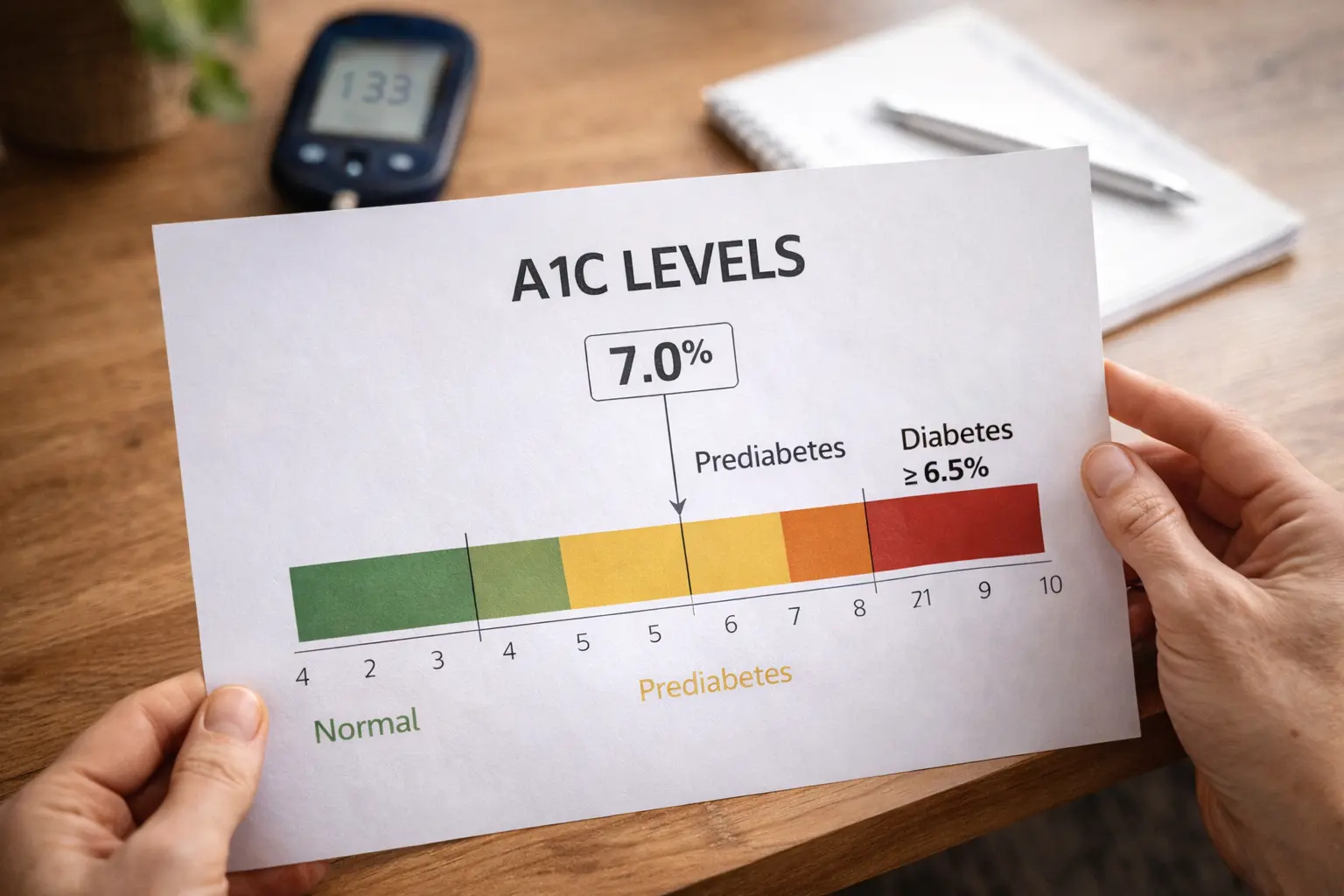
Your doctor keeps mentioning your A1C number like it’s the most important thing in the world, but nobody really explains what that a1c levels chart actually means or why it matters so much for your health.
What is A1C?
A1C, or glycated hemoglobin, is a blood test that reveals your average blood sugar levels over the past two to three months. Think of it as a window into your glucose patterns rather than a single snapshot. When sugar enters your bloodstream, it attaches to hemoglobin, the protein in red blood cells that carries oxygen throughout your body. This attachment is permanent for the life of that red blood cell, which is roughly 120 days. By measuring how much hemoglobin has been glycated (bonded with sugar), doctors can calculate your average blood glucose without needing daily readings. For seniors managing diabetes or prediabetes, this test is invaluable because it shows whether your current lifestyle and medication regimen are actually working. Unlike a fasting glucose test that captures one moment in time, A1C tells the real story of your blood sugar control over months.
Interpreting the A1C levels chart
An A1C levels chart translates your test result into a percentage that correlates directly to your average daily blood glucose. The chart typically shows ranges: below 5.7% is considered normal, 5.7% to 6.4% indicates prediabetes, and 6.5% or higher suggests diabetes. For seniors, understanding where you fall on this chart is crucial for assessing your current health status. A result of 7% means your average blood sugar has been around 154 mg/dL over the past three months. If your A1C is 8%, that translates to approximately 183 mg/dL average daily glucose. The beauty of this measurement is its consistency and reliability. Your healthcare provider uses this chart not just to diagnose but to track whether adjustments to your diet, exercise, or medications are moving you in the right direction. Many seniors find it helpful to keep their own record of A1C results over time, watching the trend rather than fixating on a single number.
Factors influencing A1C levels
Your A1C result is shaped by multiple interconnected factors that extend far beyond what you eat at breakfast. Diet plays an obvious role, but the timing of meals, portion sizes, and how different foods affect your individual metabolism all matter. Physical activity influences A1C by helping your muscles use glucose more efficiently without requiring as much insulin. Medications, whether for diabetes or other conditions, can raise or lower blood sugar in unexpected ways. Stress hormones like cortisol can elevate glucose levels even when you are eating well and exercising. Sleep quality affects insulin sensitivity, meaning poor sleep can worsen A1C despite your best efforts elsewhere. Age-related changes in metabolism and kidney function also influence how your body processes glucose. Illness and infection temporarily spike blood sugar. Even seasonal changes and emotional events can shift your numbers. Understanding these interconnections helps seniors recognize that A1C management is not about perfection in one area but rather balance across many lifestyle dimensions.
- Adopt a balanced diet rich in fruits, vegetables, whole grains, and lean proteins while paying attention to portion sizes and meal timing to maintain steady glucose levels.
- Engage in regular physical activity such as walking, swimming, or strength training to improve insulin sensitivity and help your muscles utilize glucose more effectively.
- Follow your healthcare provider’s recommendations for medications and insulin therapy exactly as prescribed, and report any side effects or concerns promptly.
🔬 Science-backed benefits in 2 minuteschoose where to begin:
Managing A1C levels
Effective A1C management is an ongoing conversation between you and your healthcare team rather than a one-time fix. It begins with regular blood sugar monitoring, whether through home glucose meters or continuous monitoring devices that some seniors use. Your personalized diabetes management plan should account for your specific health conditions, medications, lifestyle, and goals. Many seniors benefit from working with a diabetes educator who can teach practical skills like carbohydrate counting or insulin injection techniques. Lifestyle modifications might include gradually increasing daily steps, adjusting meal composition, or finding stress-reduction activities that work for you. Regular A1C testing every three to six months provides feedback on whether your current approach is working. Some seniors discover that small, sustainable changes like a daily 20-minute walk or swapping sugary drinks for water make measurable differences in their A1C over time. The key is viewing management as a series of manageable adjustments rather than an overwhelming overhaul.
Potential risks of high A1C levels
Persistently elevated A1C levels expose seniors to serious long-term complications that develop gradually and often silently. High blood sugar damages blood vessels and nerves over time, increasing the risk of heart disease and stroke, which remain leading causes of death in older adults. Diabetic neuropathy, or nerve damage, can cause numbness, tingling, or pain in the feet and hands, affecting balance and increasing fall risk. Vision problems including diabetic retinopathy can develop when high glucose damages the tiny blood vessels in the eyes, potentially leading to vision loss. Kidney disease progresses when high blood sugar damages the filtering units in the kidneys, sometimes requiring dialysis in advanced stages. Poor wound healing becomes more common, meaning a small cut on the foot might take weeks to heal and risk infection. Cognitive changes and increased dementia risk have been linked to long-term high blood sugar. These complications are not inevitable, however. Keeping A1C within a healthy range significantly reduces the risk of developing or worsening these conditions, making management efforts genuinely worthwhile.
Consulting your healthcare provider
Your healthcare provider is your essential partner in understanding and managing your A1C levels effectively. They can interpret your individual results in context of your age, other health conditions, medications, and life expectancy to set realistic targets for you. Some seniors benefit from a lower A1C target like 6.5%, while others with multiple health issues or limited life expectancy may have a higher target like 8% to avoid low blood sugar episodes. Your provider can identify which factors are most influencing your A1C and help prioritize changes that will have the biggest impact for you personally. They can adjust medications if lifestyle changes alone are not sufficient, and they can refer you to specialists like endocrinologists, diabetes educators, or nutritionists when needed. Regular appointments allow you to discuss challenges you are facing, whether that is difficulty affording medications, trouble sticking to dietary changes, or side effects from treatments. Bringing a list of questions and your A1C results to appointments ensures productive conversations. Your provider wants you to succeed and can offer resources and support tailored to your specific situation.
Understanding A1C levels is vital for monitoring blood sugar control and overall health. By interpreting the A1C levels chart, considering influencing factors, and managing your levels effectively, seniors can reduce the risks associated with high blood sugar.
What is a normal A1C level for seniors?
A normal A1C level for seniors is typically below 5.7%. However, the target range may vary based on individual health factors and should be established in consultation with a healthcare provider.
How often should seniors check their A1C levels?
Seniors with diabetes should have their A1C levels checked at least every 3-6 months to monitor blood sugar control and adjust treatment plans accordingly.
Others also read:
Disclaimer: This article is for informational purposes only and is not a substitute for professional medical advice. Always consult a healthcare professional for personal guidance.
This article has been prepared and reviewed by the GlobalHealthBeacon editorial team and is based on current medical research and published scientific literature available in 2026. It provides structured, evidence-based information to support informed health decisions.

