You’re exhausted all the time, your vision feels blurry, and you keep wondering if something’s seriously wrong, but nobody’s given you a straight answer about what an A1C test explained actually means for your body and your future.
Understanding A1C test basics
Think of your A1C test as a three-month window into your blood sugar story. Instead of just checking your glucose right now, this test measures the average amount of sugar that’s been sticking to your red blood cells over the past 90 days. It’s like looking at your driving record instead of just one moment behind the wheel. For seniors especially, this matters because your body’s ability to manage blood sugar changes over time. A simple blood draw is all it takes, and unlike some tests, you don’t need to fast or prepare in any special way. The results come back as a percentage, which your doctor will explain in context with your overall health picture. Many seniors find this reassuring because it gives them concrete data to work with, not just vague feelings of something being off.
- Provides insight into your long-term blood sugar control
- Usually performed using a simple blood draw
- Results are given as a percentage
Interpreting your A1C results
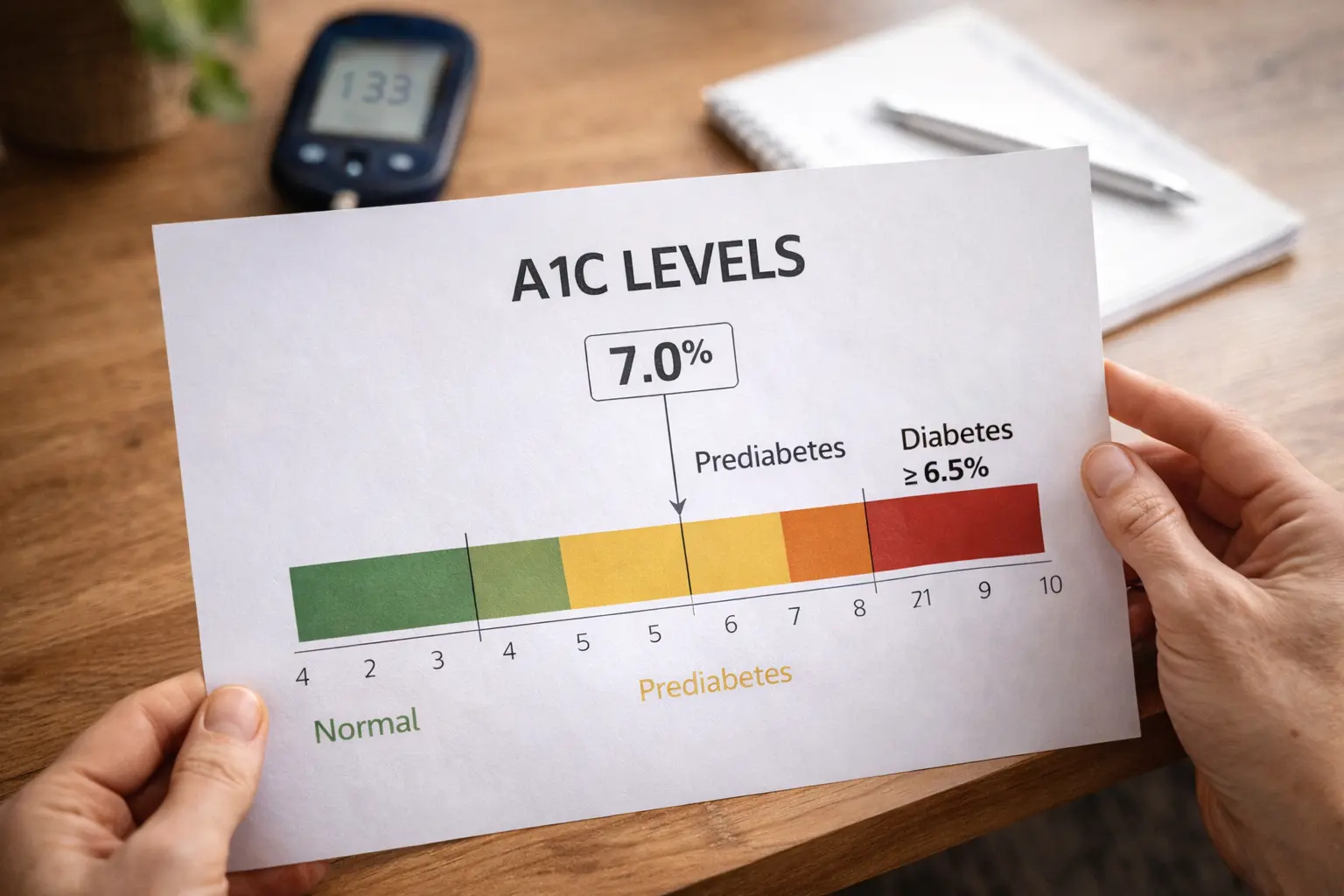
When you get your results back, the numbers might feel confusing at first. Below 5.7% is considered normal range, meaning your blood sugar has been well-controlled. Between 5.7% and 6.4% signals prediabetes, which is your body’s way of saying pay attention now before things progress. At 6.5% or higher, you’re looking at a diabetes diagnosis. But here’s what matters: these numbers aren’t judgments about you as a person. They’re information. A 68-year-old retired teacher might get a 6.8% result and feel scared, but with her doctor’s guidance, she learns that modest changes to her routine can shift this trajectory. Understanding where you fall on this scale helps you and your healthcare team make real decisions about diet, activity, and monitoring going forward.
💬 Ready to feel better in 2 minutes?choose where to begin:
Taking control of your health
Regular A1C testing transforms from something that feels like bad news into a tool for empowerment. If you’re tracking your results every three to six months, you’re watching your own progress in real time. Some seniors start seeing improvement within three months of making small adjustments like adding evening walks or swapping sugary drinks for water. Others notice that their numbers stay stable, which is also a win because it means their current routine is working. The key is consistency and communication with your doctor about what’s realistic for your life. You’re not competing with anyone else’s numbers. Your baseline is your starting point, and any positive movement is worth celebrating. This ongoing relationship with your test results keeps you engaged and informed rather than passive.
Seeking support and guidance
Your A1C result shouldn’t be a number you hear once and then forget about. Sit down with your healthcare provider and ask questions until you truly understand what it means for you specifically. Maybe it means adjusting medications, maybe it means lifestyle changes, maybe it means more frequent monitoring. You’re not alone in this journey, and good healthcare providers know that managing blood sugar is a partnership. Many communities offer diabetes education classes specifically for seniors where you can learn alongside people facing the same concerns. Some clinics have dietitians who specialize in helping older adults make sustainable food choices. Don’t hesitate to ask for these resources. Taking control doesn’t mean doing it all by yourself. It means knowing where to turn when you need help and being willing to reach out.
The A1C test is a valuable tool for managing diabetes and understanding your blood glucose levels over time. By taking control of your health with regular testing and seeking professional guidance, you can make informed decisions to improve your well-being.
Is fasting necessary for an A1C test?
No, unlike other blood tests, an A1C test does not require fasting. You can have it done at any time of the day.
How often should I get an A1C test?
For most people, having the test at least twice a year is recommended. However, your healthcare provider may suggest more frequent tests based on your individual health needs.
Others also read:
Disclaimer: This article is for informational purposes only and is not a substitute for professional medical advice. Always consult a healthcare professional for personal guidance.
This article presents an experience-based perspective and has been reviewed by the GlobalHealthBeacon editorial team in 2026. It provides structured, evidence-based information to support informed health decisions.
